J.C Home Decor and Lighting Manufactory

Introduction
Understanding pendant shade materials helps retail content teams, designers, lighting brands, importers, and product developers separate visible design choices from details that still require product confirmation. The goal is to make a confident design or product-brief decision without inventing dimensions, materials, performance, or market suitability. By the end, you will have a practical way to compare transparency, reflection, texture, visual weight, care, and packaging questions across glass, metal, and ceramic shade directions.
This guide uses direct comparisons, two fact checks, a topic-specific worksheet, and a final action checklist. It keeps Europe as the first market context and the United States second, while asking buyers to confirm product-specific packaging, labeling, electrical, care, and documentation needs where relevant.
The Topic in Brief
The clearest approach is to compare transparency, reflection, texture, visual weight, care, and packaging questions across glass, metal, and ceramic shade directions. Begin with the real application instead of selecting a product from one attractive photograph. Then record the design relationship, product details, and confirmation points separately.
For collection teams, this distinction matters. A styling direction can guide shape, color, and assortment, but it cannot confirm material, construction, dimensions, electrical components, planting function, care, or packaging by itself.
Material name alone predicts the lighting effect. False.
Thickness, finish, color, geometry, and light source all influence the result.
Illuminated and unlit samples reveal different information. True.
A shade can change in transparency, reflection, color, and perceived weight when the light is on.
Compare What the Material Does Visually
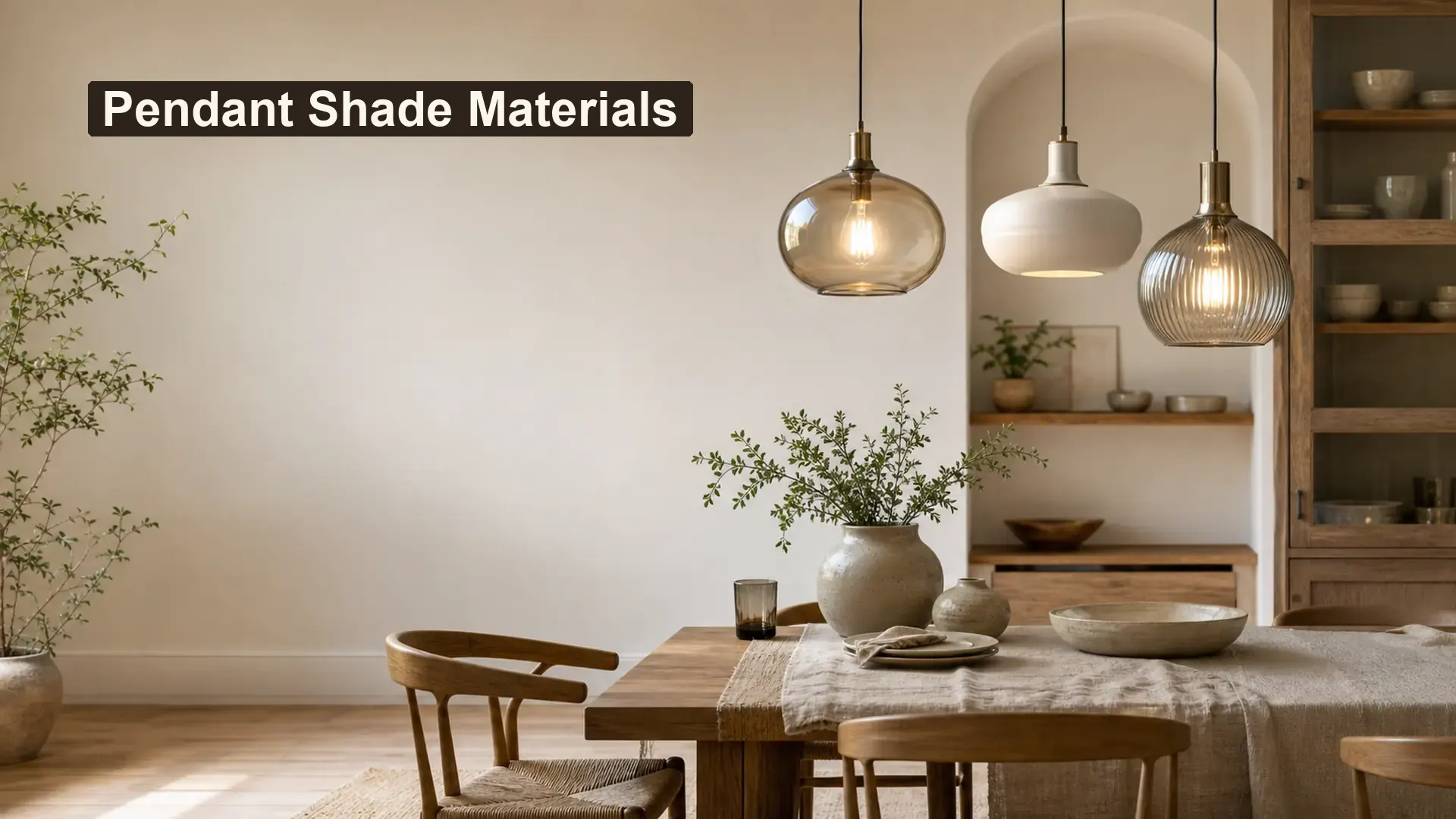
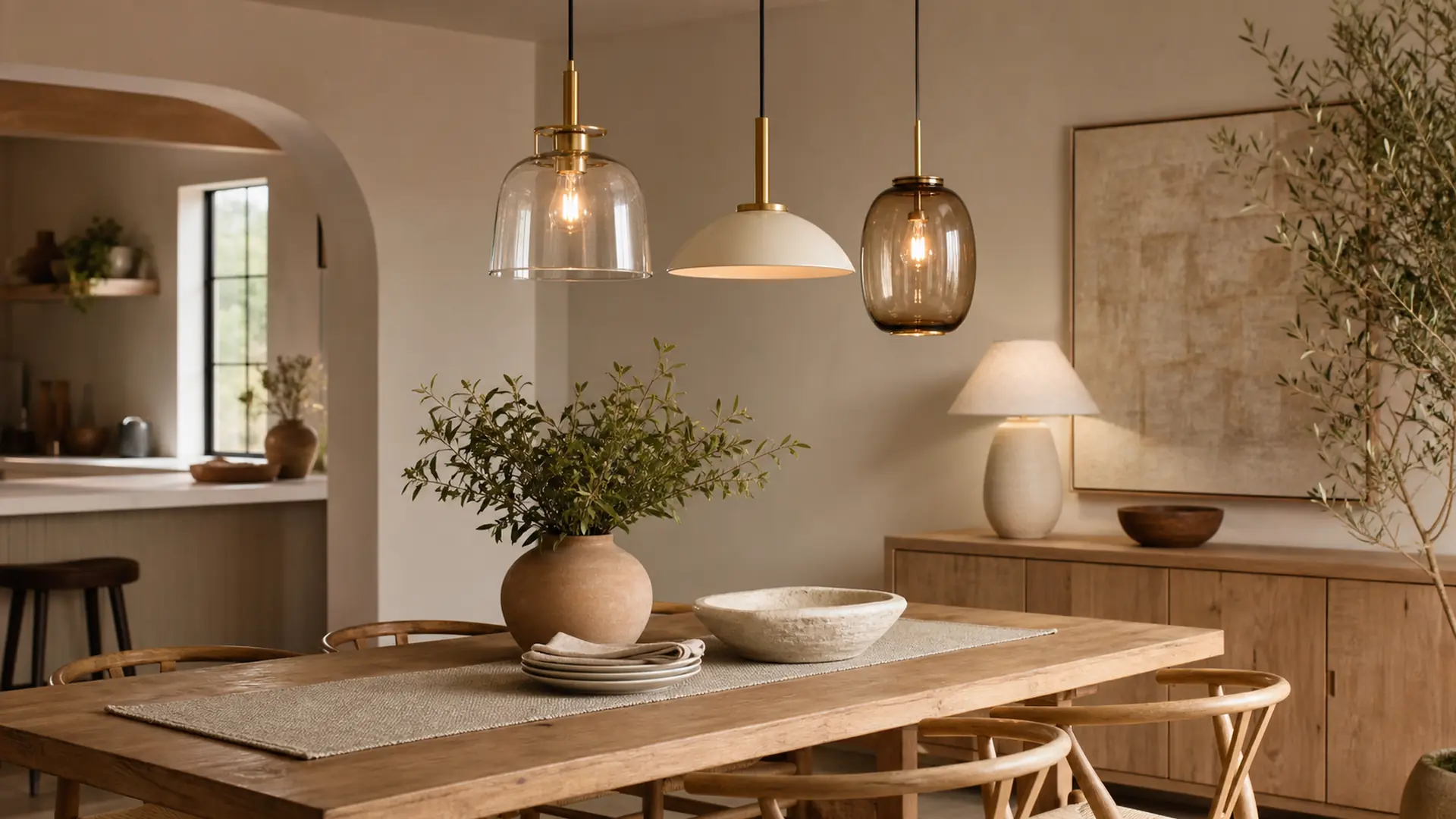
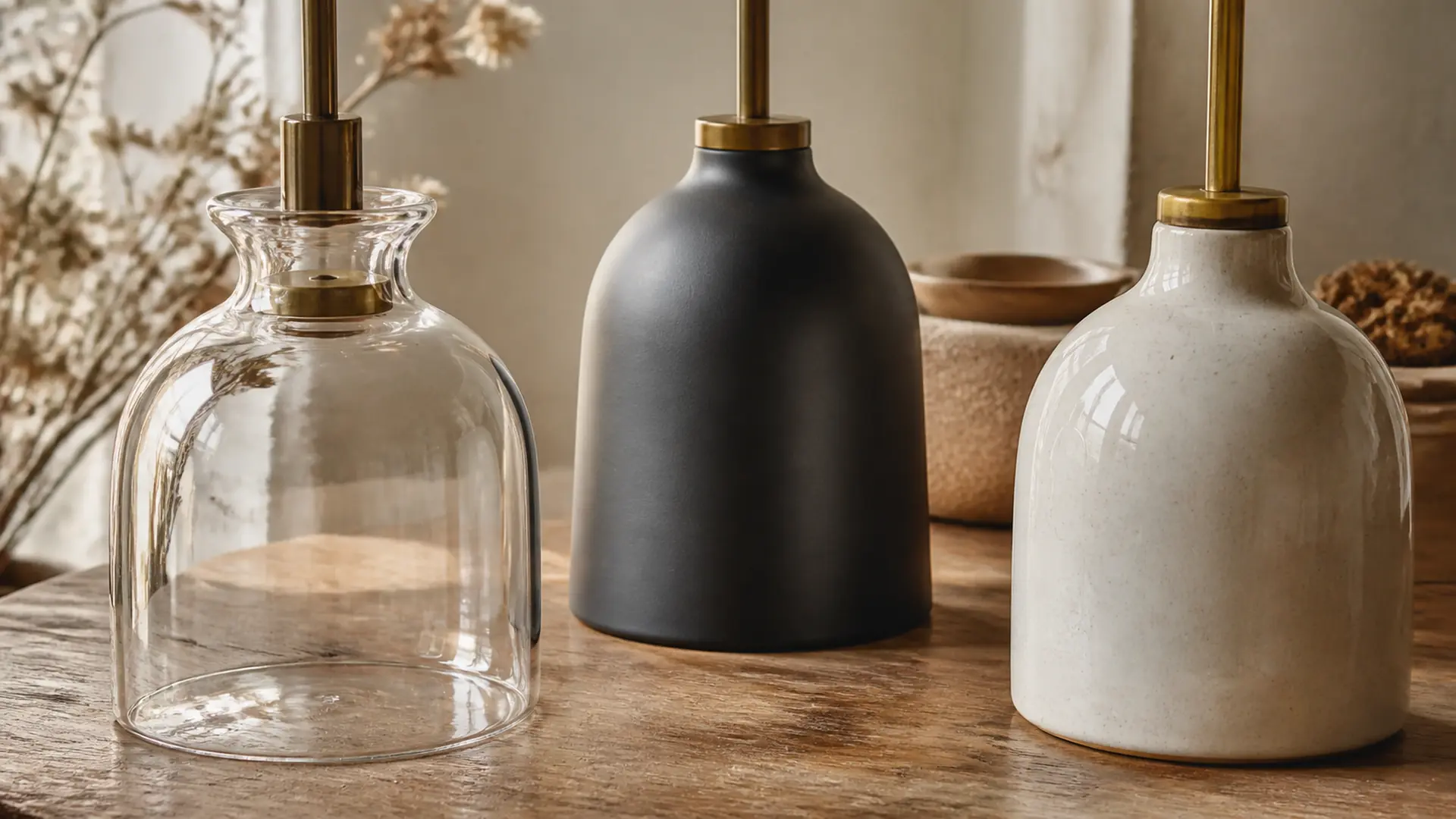
Glass can transmit or diffuse light, metal usually creates a more opaque outline, and ceramic can add tactile surface and visual mass. The exact effect depends on thickness, finish, color, and construction. Material name alone does not define performance.
Review the shade both illuminated and unlit. Reflection, edge detail, interior color, and the visible light source can change the character of the same silhouette.
| Application or option | Useful direction | What to confirm |
|---|---|---|
| Glass | Transparency, glow, reflection | Edge quality, thickness, fragility, cleaning |
| Metal | Crisp opaque outline | Finish, interior surface, heat and care information |
| Ceramic | Tactile color and visual weight | Glaze, variation, edge and packaging |
| Mixed material | Layered detail and contrast | Joints, finish coordination, handling |
Start with the Ceiling Pendants and the broader Lighting collection to keep the article connected to the correct product taxonomy. Compare the visual direction with Products, P0462 glass pendant direction, and P0006 metal pendant direction. For product development, collection, or packaging context, use the P0648 ceramic pendant direction as a related planning resource. These links provide directions for review; they do not replace confirmed specifications for an individual model.
Match Material to Collection and Handling Needs
A retail collection may use glass for lightness, metal for graphic structure, and ceramic for tactile warmth. The strongest assortment gives each material a distinct role rather than making every model compete for attention.
Packaging should follow real construction. Fragile shades need support and separation from hardware, while finished metal needs abrasion protection. Instructions and care copy should follow verified product details.
| Palette or context | Product response | Planning note |
|---|---|---|
| Warm minimalist | Soft ceramic and quiet metal | Tactile restrained family |
| Modern graphic | Painted metal and limited glass | Clear silhouette contrast |
| Layered neutral | Opal glass, sand ceramic, muted bronze | Soft variation |
| Color accent | One colored material with neutral support | Controlled focal story |
A ceramic-style finish can always be called ceramic. False.
Physical material must be verified; visual effects need accurate material-look wording.
Packaging should follow material and construction risk. True.
Glass, finished metal, and ceramic forms need different support, separation, and surface protection.
Practical Tool: Shade Material Review Matrix
Use this tool during a room review, retail assortment meeting, or sample discussion. Complete every row with observable information. Leave uncertain specifications blank until product information or samples confirm them.
| Review area | Action | Expected result |
|---|---|---|
| Light behavior | Transparent, diffused, or opaque | Room effect |
| Surface behavior | Reflective, matte, glazed, textured | Visual and care direction |
| Handling | Fragility, edges, abrasion risk | Packaging priorities |
| Product copy | Confirmed material versus material-look | Accurate communication |
The tool is intentionally specific to pendant shade materials. It converts an inspiration image into a short decision record and makes it easier for design, merchandising, purchasing, and product teams to discuss the same direction.
From Visual Direction to a Confirmed Product Brief
A useful pendant brief should record product category, dimensions, material description, color, finish, opening or shade details, visible hardware, care needs, packaging, target market, and any labeling or documentation questions. Custom options can be discussed based on product type and order requirements, but feasibility and final details must be confirmed.
Light quality changes how colors and surfaces are perceived. The U.S. Department of Energy explains that color appearance and color fidelity are separate aspects of light quality that can affect material perception1. Therefore, finish review should include both the unlit and illuminated product.
Electrical and installation decisions require responsible product-specific review. The NFPA consumer checklist advises matching light sources to the safe information provided for the fixture instead of treating every lamp and fixture as interchangeable2. For European markets, applicable electrical equipment may require technical documentation and safety review under the Low Voltage Directive according to the product and voltage scope3. Your Europe also outlines the need to identify applicable requirements and maintain technical documentation before placing covered products on the market4. None of these references certifies a JC product.

When the direction is ready for discussion, use Request a Quote and send the intended application, target market, product references, dimensions, finish direction, packaging needs, and open questions. Clear inputs make the next conversation more useful without implying a fixed price, quantity, delivery time, or result.
FAQ
Which pendant shade material gives the softest look?
Softness depends on opacity, color, finish, shape, and light source. Opal glass and pale tactile surfaces can both feel soft in different ways.
Are glass shades harder to package?
They are fragile and need product-specific inner protection, separation from hardware, and careful handling.
Do metal shades always look modern?
No. Shape, finish, edge detail, and color can support modern, industrial, transitional, or softer directions.
How much can ceramic glaze vary?
Variation depends on the product and finish. Define an acceptable range through approved samples rather than making a general promise.
Can one collection mix glass, metal, and ceramic?
Yes, when it repeats a controlled silhouette, finish tone, hardware cue, or color story.
What should buyers confirm before final selection?
Confirm verified material, dimensions, finish, light behavior, care, electrical parts, packaging, labels, and target-market documentation.
Conclusion
Pendant Shade Materials: Glass, Metal, and Ceramic is most useful when visual inspiration leads to a clear record of application, proportion, finish, and confirmation points. Use the article as a design and communication guide, then confirm real product information before selection or ordering.
Action checklist
- Define the real room, shelf, furniture, or display context.
- Record the critical dimensions and viewing directions.
- Choose one dominant shape, color, finish, or grouping relationship.
- Complete the Shade Material Review Matrix with the design and product teams.
- Review physical samples for surface, color, proportions, and visible construction.
- Confirm packaging, care, labels, target-market documentation, and other product-specific details.
- Contact JC Home Decor only after the open questions and reference materials are organized.
References
-
U.S. Department of Energy – LED Basics – Supports the note that light color appearance and color fidelity affect how materials and finishes are perceived.
↩ -
National Fire Protection Association – Electrical Safety Checklist – Supports checking lamp compatibility and following responsible electrical-safety guidance.
↩ -
EUR-Lex – Low Voltage Directive 2014/35/EU – Supports product-specific technical documentation and safety review for electrical equipment within the Directive scope.
↩ -
Your Europe – Technical Documentation and EU Conformity – Supports confirming applicable technical documentation before electrical products enter a target market.
↩