J.C Home Decor and Lighting Manufactory


A custom ceramic decor manufacturer helps distributors develop coordinated products for retail, gift, and interior collections. Common offerings include ceramic vases, pots, tabletop accessories, and matching decorative lighting.
However, buyers should evaluate far more than appearance. They should also assess design support, finish consistency, packaging, sample approval processes, and market requirements.
This guide explains how wholesale distributors can compare manufacturers and prepare a clearer sourcing brief.
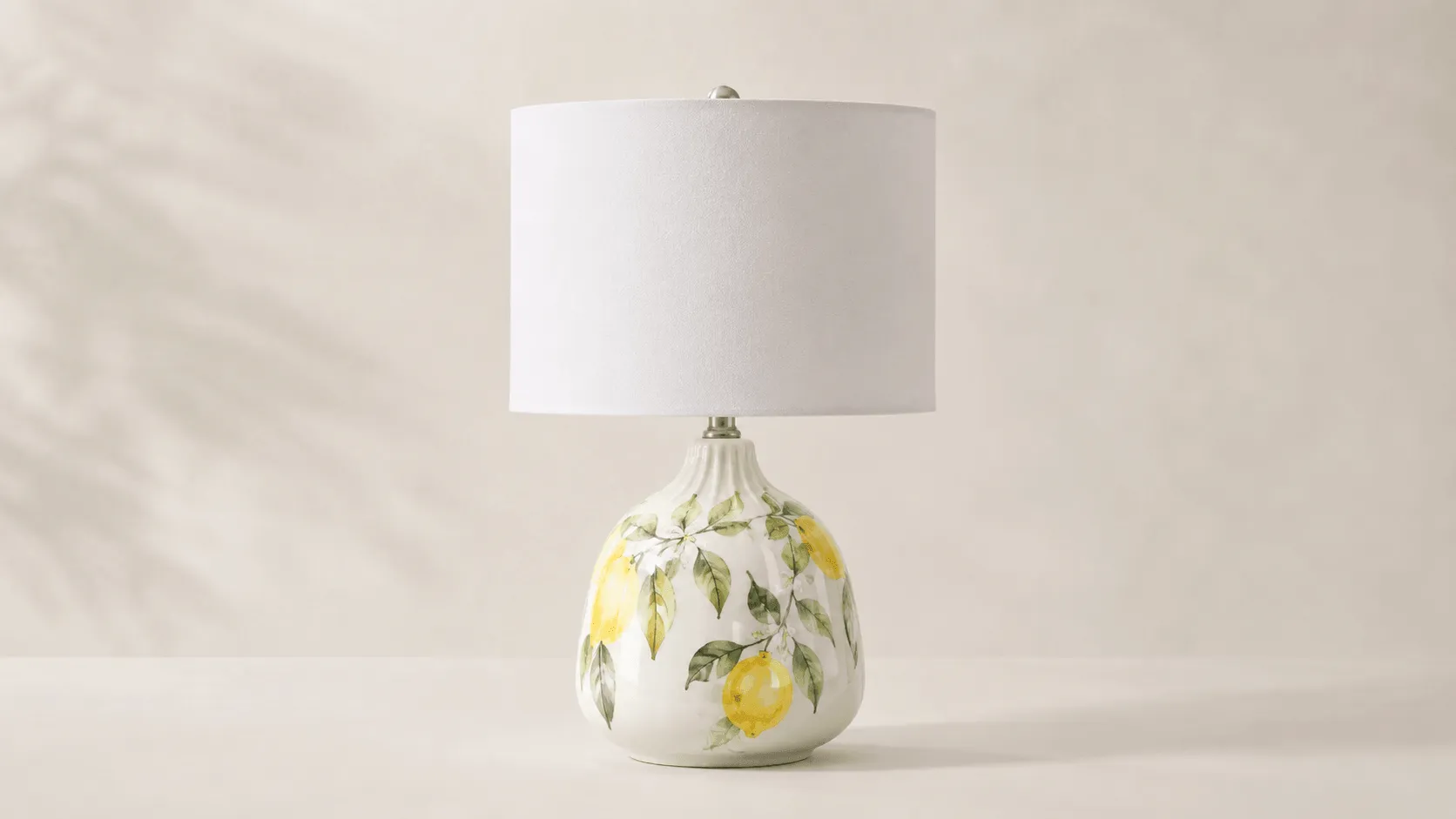
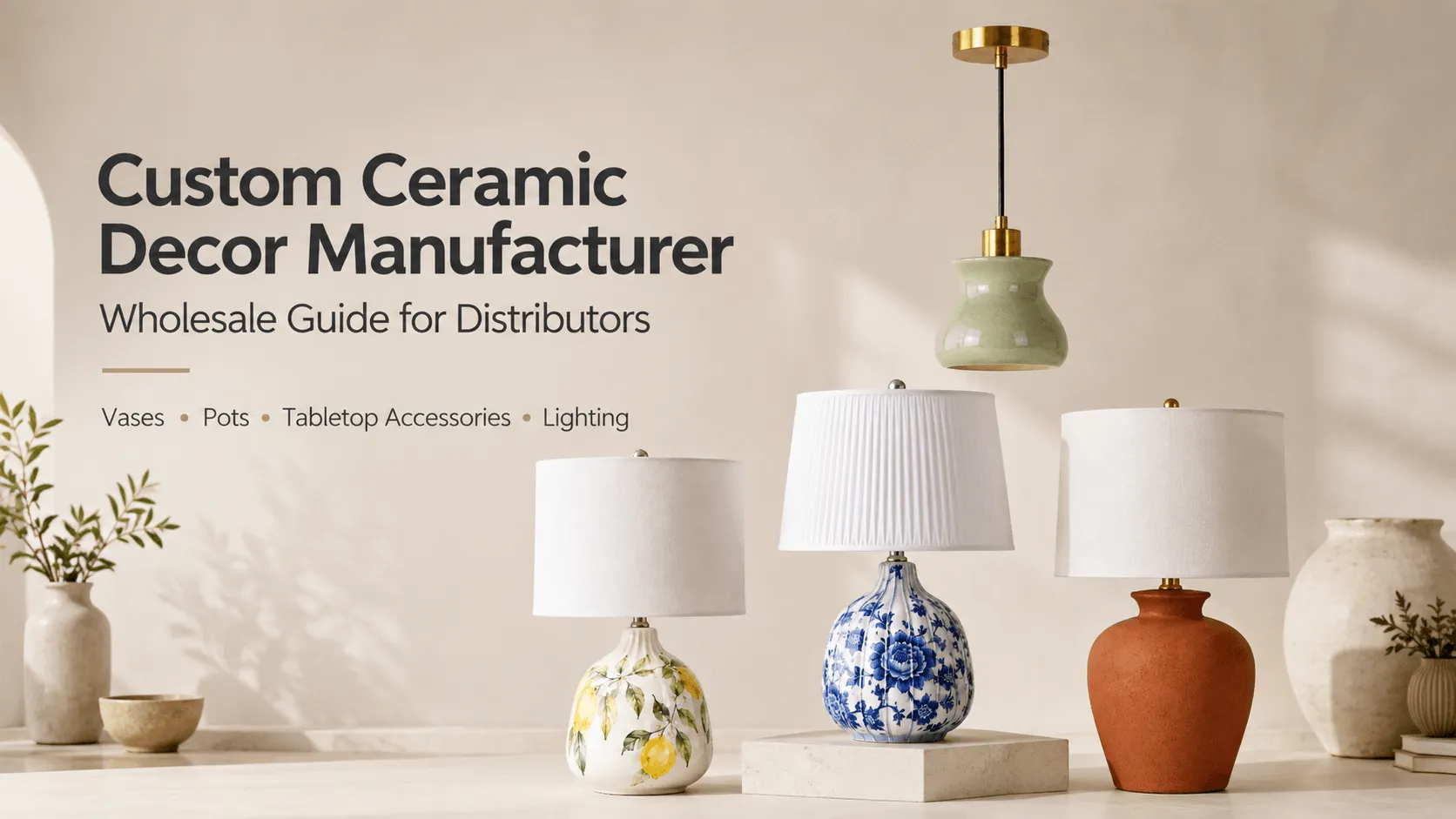
A white ceramic-style table lamp body features yellow fruit motifs, green leaves, and a simple white shade.
What Does a Custom Ceramic Decor Manufacturer Provide?
A custom manufacturer develops products around your collection plan. The process may begin with an existing shape, a reference image, a sketch, or a complete design brief.
You can typically discuss several product elements:
- Product shape and proportion
- Size and weight targets
- Surface color
- Glossy, matte, textured, or reactive-looking finishes
- Printed, painted, embossed, or relief details
- Coordinated products within one collection
- Logo, label, and packaging requirements
In addition, many manufacturers support matching ceramic decor and lighting products. This approach helps distributors create a more cohesive store presentation.
JC Home Decor supports custom home decor and lighting development. Its product scope includes vases, pots, tabletop accessories, table lamps, floor lamps, rechargeable lamps, and ceiling pendants.
Explore the available ceramic decor and home accessories before preparing your custom request.
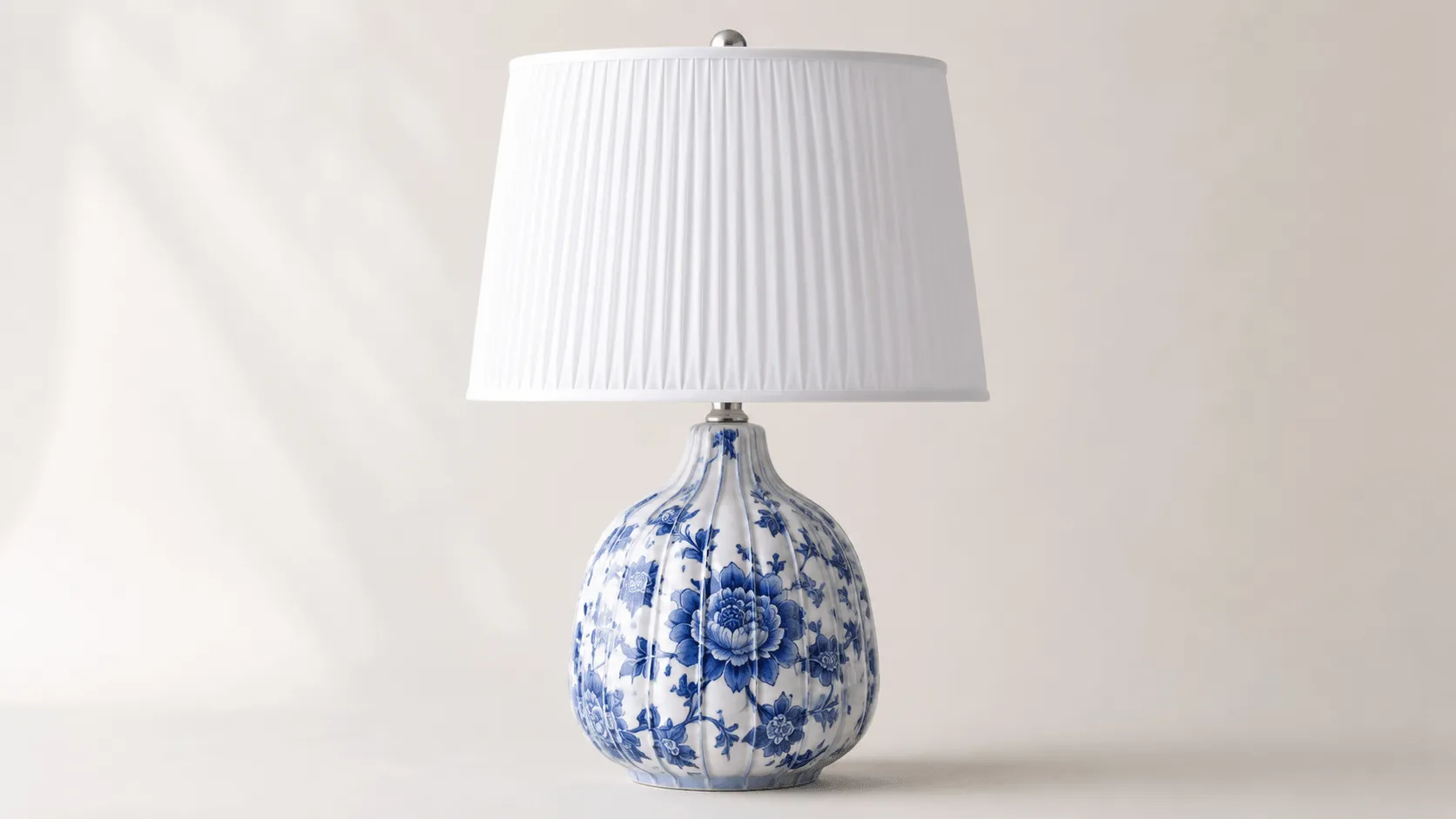
A blue-and-white floral lamp body shows how detailed patterns can support decorative retail collections.
Custom Manufacturer vs. Stock Wholesaler
Both sourcing models serve distributors, but they address different purchasing needs.
| Buying Factor | Stock Wholesaler | Custom Ceramic Decor Manufacturer | Buyer Impact |
|---|---|---|---|
| Product design | Existing products only | Existing shapes or custom development | Custom development supports collection differentiation |
| Color options | Limited stock colors | Colors can be discussed for your project | You can match seasonal or brand palettes |
| Size options | Usually fixed | Size adjustments may be possible | You can fit shelf, carton, or interior requirements |
| Surface finish | Existing finish only | Matte, glossy, textured, or decorative options available | Finish choices affect style and retail positioning |
| Branding | Limited options | Logo, label, and packaging options available | You can develop private label collections |
| Sampling | Stock sample | Development or approval sample | Custom samples require clearer approval standards |
| Packaging | Standard packaging | Packaging tailored to your project | You can plan retail, gift, or e-commerce protection |
| Order planning | Based on inventory | Based on confirmed production | MOQ and schedule require factory confirmation |
A stock wholesaler suits urgent replenishment. A custom manufacturer suits planned collections and repeat purchasing.
Choose your sourcing model based on design control, schedule, volume, and packaging needs.
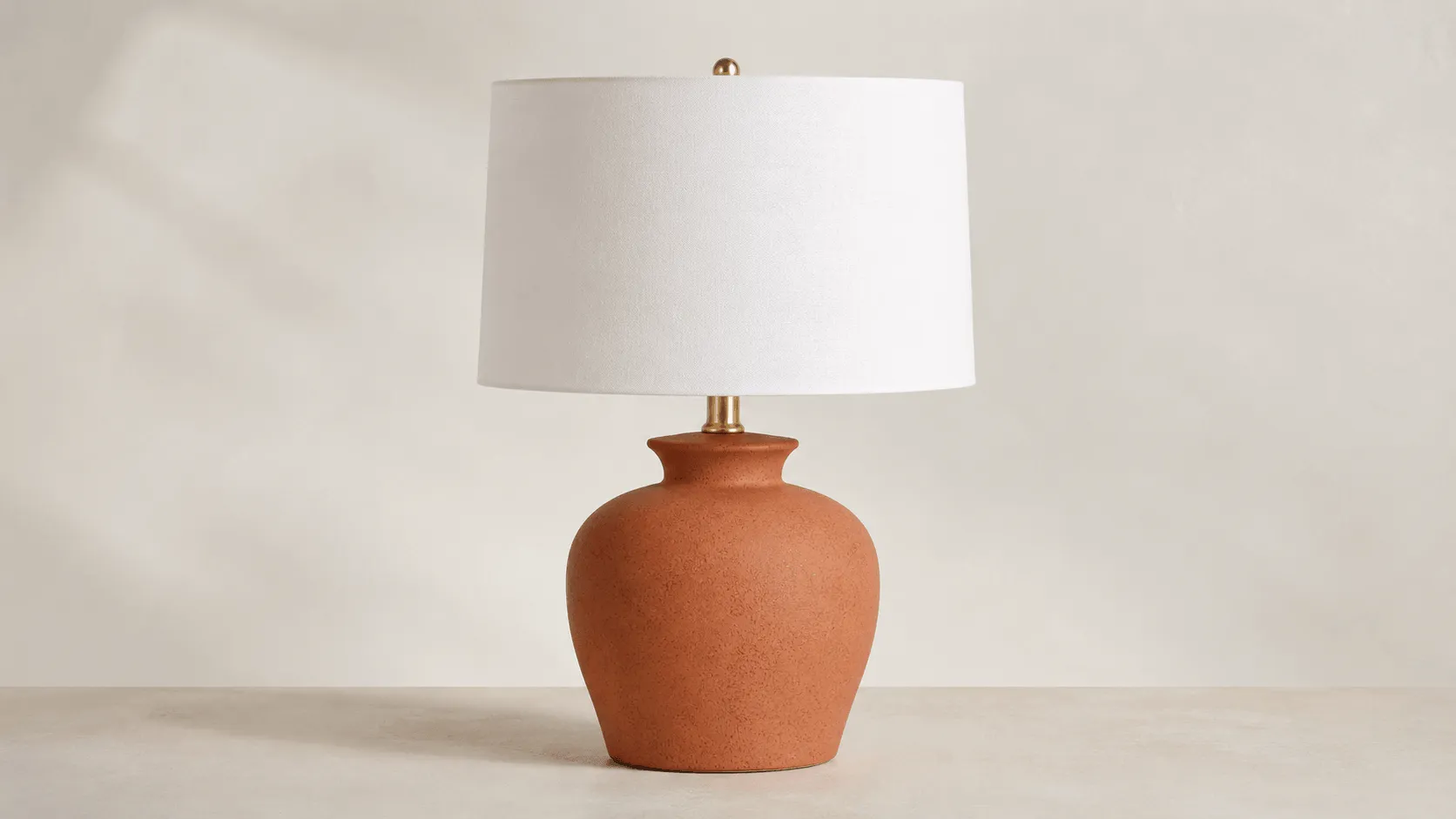
A large rounded terracotta-red lamp body provides a reference for warm, natural ceramic collection colors.
Why Wholesale Distributors Choose Custom Ceramic Decor
More Control Over Product Collections
Retailers typically need coordinated ranges rather than isolated products. A vase may need matching pots, bowls, decorative objects, or lamp bases.
A custom ceramic decor manufacturer can discuss common colors, textures, and shape families. Your collection will look more cohesive as a result.
Better Alignment With Retail Positioning
Modern ceramic decor ranges from smooth minimal forms to detailed botanical patterns. You can select styles that match your target customers.
A home decor retailer may prefer neutral matte surfaces. A gift distributor, by contrast, may need brighter patterns and stronger shelf impact.
Private Label Development
Distributors often need more than a product logo. You may also require product labels, care cards, barcode positions, colored boxes, or export cartons.
Packaging must also match your sales channel. E-commerce packaging may need different protection than store-ready packaging.
Coordinated Decor and Lighting
Some distributors source ceramic decor and lighting within the same collection. Matching colors or surface treatments connect table lamps, vases, pots, and tabletop accessories.
This approach can simplify collection planning. However, confirm which finishes can match across different product shapes and production batches.
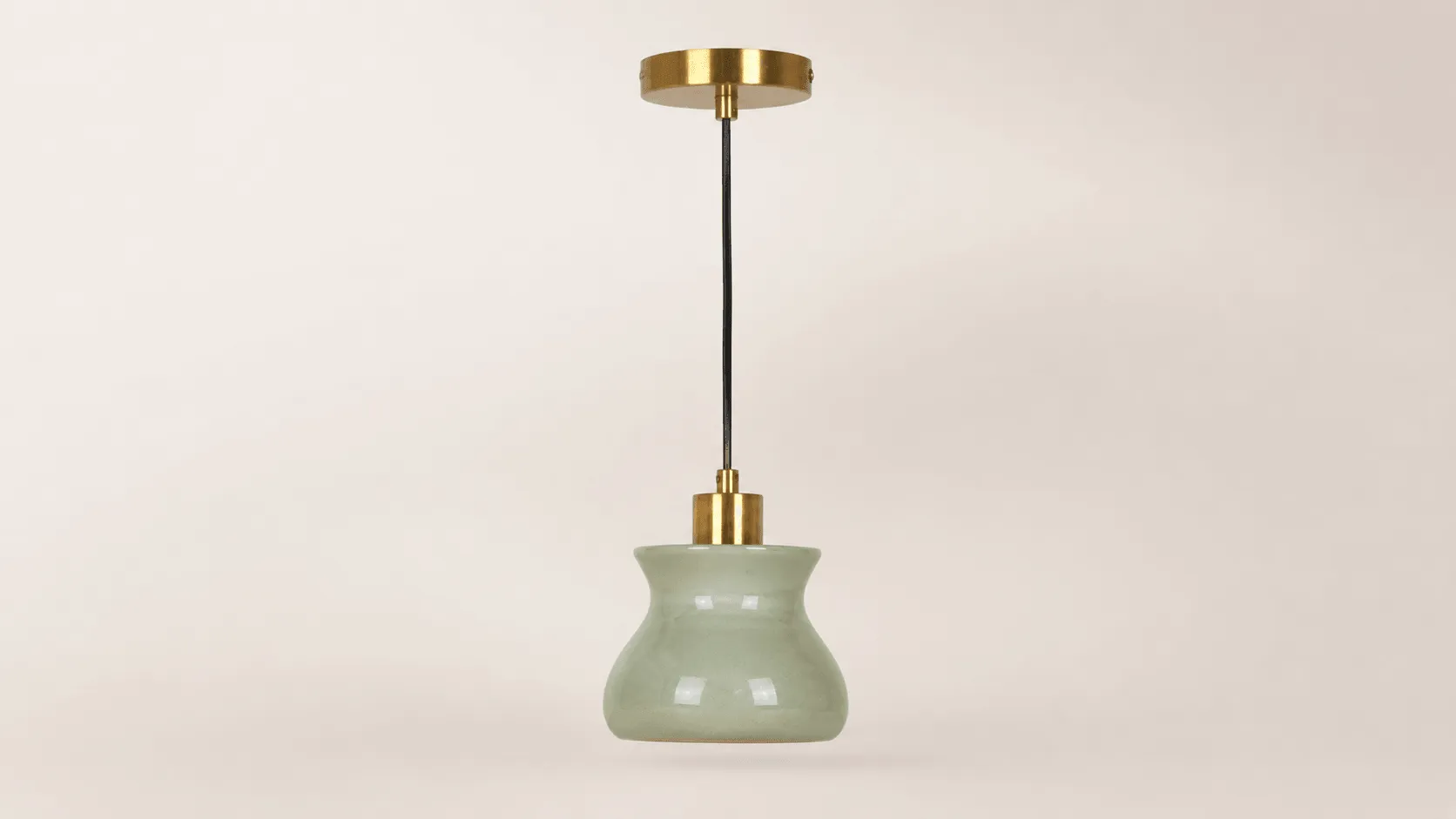
A pale green glazed pendant shows how ceramic colors can extend across decor and lighting collections.
Ceramic Material and Finish Options to Discuss
Ceramic is a broad material category. Do not approve a product based solely on the word "ceramic."
Confirm the body type, surface finish, color standard, intended use, and acceptable variation.
| Product Direction | Visible Character | Common Collection Use | Points to Confirm |
|---|---|---|---|
| Glossy glazed ceramic | Smooth and reflective surface | Decorative vases, pots, lamp bodies | Glaze color, gloss level, surface marks, color range |
| Matte ceramic | Soft and low-reflection finish | Modern ceramic decor and neutral collections | Texture, cleaning method, scratch visibility |
| Textured ceramic | Raised, carved, ribbed, or rough surface | Statement decor and tabletop accessories | Texture depth, dust collection, packing protection |
| Porcelain-style finish | Fine surface with detailed patterns | Blue-and-white decor and decorative lamps | Pattern placement, print or paint method, color consistency |
| Terracotta-style finish | Warm earthy color and natural look | Pots, sculptural decor, rustic collections | Sealing, surface variation, water use, indoor application |
| Hand-finished ceramic | Small visual differences between pieces | Handmade ceramic collections | Acceptable variation, sample standard, inspection limits |
Confirm the exact clay body and production method before ordering. Also define whether a product is decorative only.
If a vase or pot must hold water, plants, food, or candles, state that use clearly. Different uses may require different construction and testing.
Key Factors When Choosing a Ceramic Decor Factory
1. Product Scope
Start by confirming whether the factory develops the product types in your collection. A supplier may specialize in vases but not support lighting, wall pieces, or figurines.
The confirmed JC Home Decor scope includes:
- Vases
- Pots
- Tabletop accessories
- Table lamps
- Floor lamps
- Rechargeable battery lamps
- Ceiling pendants
Buyers seeking ceramic wall art or handmade ceramic figurines should confirm availability before planning your range.
2. Design Development Process
Ask how the factory receives and reviews design information. A useful development brief includes dimensions, reference colors, finish direction, intended use, and packaging needs.
Confirm how revisions work and which sample becomes your final approval standard.
3. Surface and Color Control
Ceramic finishes often show natural variation. Define an acceptable color and surface range instead of expecting every piece to look identical.
Useful approval references include:
- A signed physical sample
- Approved color chips
- Clear product photos
- Surface defect limits
- Pattern position requirements
- Gloss or texture references
A photograph alone may not show the exact finish. Physical sample approval reduces misunderstandings.
4. Shape and Size Tolerance
Ceramic production creates small differences in shape and size. Discuss acceptable limits for height, diameter, opening size, and base stability.
These limits matter because products must fit shelves, inserts, cartons, and coordinated accessories.
5. Packaging Development
Ceramic products need packaging that protects edges, handles, narrow necks, raised patterns, and glazed surfaces.
Provide your sales channel before approving packaging. A gift channel may need a color box; an online seller may need stronger transit protection.
Packaging discussions may include:
- Inner protection and product bags
- Surface protection, dividers, or inserts
- Individual boxes
- Master carton layout
- Barcode and label position
- Private label artwork
- Drop-test requirements, if applicable
- Target shipping method
The factory should confirm final packaging once the product and shipping route are clear.
6. Order Quantity and Production Planning
MOQ depends on the product, size, finish, decoration method, tooling, and packaging. Do not assume one MOQ applies to every ceramic item.
The factory should also confirm sample time and production time for each project.
Applications for Modern Ceramic Decor
Home Decor Retailers
Build coordinated groups by color, finish, shape, or seasonal theme. One group might combine matte pots, rounded vases, and simple tabletop objects. Another may use detailed botanical patterns. Your stores can serve different customer styles within one collection.
Interior Designers
Interior designers often need decor for consoles, shelves, reception areas, meeting rooms, and hospitality interiors.
A ceramic decor supplier for interior designers should support clear finish references and project quantities. Also confirm replacement and repeat-order requirements.
Cross-Border Online Sellers
Online sellers need products that photograph clearly and survive long transport routes. Packaging dimensions and product weight also affect logistics costs.
Consider variation between photographed samples and production pieces. Explain natural handmade or glaze differences on product pages when relevant.
Gift Distributors
Gift channels may need small decorative objects, coordinated sets, individual boxes, and private label information.
Confirm whether each item needs a gift box, display box, or protective mail-order carton.
Commercial Interior Purchasing
Vases, pots, and tabletop accessories support hotels, restaurants, offices, resorts, and display projects.
Provide the placement, cleaning needs, expected handling, and replacement plan for commercial use.
Custom Ceramic Decor Options
Discuss OEM and ODM development based on your project requirements.
Possible customization areas include:
- Custom product shape and dimensions
- Custom ceramic body or finish
- Custom color
- Matte or glossy surface direction
- Textured or relief surface details
- Painted or printed pattern direction
- Coordinated vase, pot, and tabletop collections
- Matching ceramic lighting products
- Logo or private label
- Product label and care card
- Barcode position
- Individual box, color box, or export carton
- E-commerce or retail-ready packaging
The factory must confirm feasibility for each design. Final options depend on the shape, finish, order quantity, and production method.
How to Verify Sustainability Claims
If you seek an eco-friendly ceramic decor factory, request evidence before using environmental claims.
Useful questions include:
- What ceramic materials does the factory use?
- Does the finish contain restricted substances?
- Can the factory provide material information?
- Does the packaging use recyclable or reduced-plastic materials?
- Can the factory provide packaging specifications?
- How does the factory handle damaged or rejected products?
- Which environmental claims do documents support?
Terms such as "eco-friendly," "green," and "sustainable" require clear support. Avoid adding these claims to packaging without documentation.
Quality and Compliance Notes
Quality approval should cover both appearance and function. Define inspection points before production starts.
Common ceramic decor checks include:
- Product dimensions
- Base stability
- Cracks or chips
- Surface marks
- Glaze coverage
- Color range
- Pattern position
- Openings and edges
- Product cleanliness
- Logo position
- Packaging protection
- Carton information
Certification and compliance needs depend on product use and destination market. Confirm target-market requirements before ordering.
Decorative ceramic items, plant pots, food-contact products, candle holders, and electrical lamps may follow different requirements. State the final use in your RFQ.
This article does not confirm any certification, test report, or material report for a specific product.
Common Sourcing Mistakes to Avoid
Choosing Only From Product Photos
Photos help you review shape and style. However, they cannot confirm exact color, texture, weight, or surface quality. Request and approve a physical sample when finish is important.
Using an Unclear Color Description
Words such as beige, green, or blue cover many shades. A clearer reference reduces color disagreements. Provide a physical sample, color reference, or approved finish board.
Ignoring Natural Variation
Handmade ceramic and reactive-looking finishes may show differences. Define the acceptable range before production. Otherwise, the factory and you may apply different quality standards.
Confirming Packaging Too Late
Packaging affects product protection, carton dimensions, and shipping costs. Discuss packaging during product development, not after.
Requesting a Quote Without Enough Information
A quotation may change when size, finish, packaging, or order quantity changes. Send a complete RFQ rather than only a reference photo.
Ceramic Decor RFQ Checklist
Include the following information when contacting a manufacturer:
| RFQ Item | Information to Provide |
|---|---|
| Product category | Vase, pot, tabletop accessory, lamp, pendant, or coordinated collection |
| Reference | Drawing, photo, existing sample, or product link |
| Dimensions | Height, width, diameter, opening size, and key proportions |
| Intended use | Decorative use, plant use, water use, lighting, gift, retail, or commercial interior |
| Finish | Matte, glossy, textured, patterned, painted, or another reference |
| Color | Color reference, physical sample, or approved visual direction |
| Quantity | Quantity per design, color, and size |
| Branding | Logo, label, barcode, care card, or private label requirements |
| Packaging | Individual box, color box, export carton, or online shipping needs |
| Target market | Country or sales region |
| Compliance | Required documents or testing needs |
| Schedule | Required sample and shipment dates |
| Inspection | Approval sample and quality inspection requirements |
A complete request helps the factory review feasibility and reduces quotation changes during development.
How to Choose a Custom Ceramic Decor Manufacturer
Use a step-by-step evaluation process:
- Confirm the product scope. Check whether the manufacturer supports your required categories.
- Send a complete brief. Include dimensions, finish, quantity, use, packaging, and target market.
- Review development feedback. The factory should identify unclear or difficult details.
- Request a sample. Confirm the sample type, cost, and revision process.
- Approve measurable standards. Define size, color, surface, stability, and packaging expectations.
- Confirm order terms. Check MOQ, price, schedule, payment terms, and packing method.
- Confirm compliance needs. State the destination market and product use.
- Keep the approved reference. Use the signed sample or approved standard during inspection.
A clear process protects both you and the manufacturer. Repeat orders become easier to manage as a result.
Frequently Asked Questions
1. What products can a custom ceramic decor manufacturer supply?
Common categories include ceramic vases, pots, tabletop accessories, and decorative objects. Some manufacturers also develop ceramic lighting products. Confirm the exact product scope before sending a collection brief.
2. Can buyers develop custom ceramic vase shapes?
Yes. You can discuss custom ceramic vase shapes, dimensions, colors, and finishes. However, the manufacturer must confirm tooling and production feasibility. Final requirements should appear in the approved drawing or sample.
3. Does JC Home Decor support OEM and ODM projects?
The supplied company information confirms OEM and ODM support, including material, color, and packaging customization. However, each project requires a separate feasibility review.
4. Are handmade ceramic products completely identical?
No. Handmade or hand-finished products may show small differences. Define an acceptable variation range and use the approved sample to guide production and inspection.
5. What is the MOQ for custom ceramic decor?
MOQ is not fixed and may depend on size, shape, finish, decoration, tooling, and packaging. Send your required quantity for a project-specific review.
6. Can buyers request private label packaging?
Yes. JC Home Decor supports packaging customization. You can provide logo files, label information, barcode requirements, and box artwork. However, final packaging structure and cost require confirmation.
7. Can the factory supply ceramic wall art for interior designers?
Ceramic wall art is not confirmed within the supplied product categories. Ask whether the factory can support the shape, hanging structure, weight, and packaging. The manufacturer should review safety and installation requirements before development.
8. Can buyers order handmade ceramic figurines for home decor?
The supplied scope confirms tabletop accessories but does not specifically confirm ceramic figurines. Provide a reference design and request a feasibility review.
9. Are the ceramic products sustainable or eco-friendly?
No environmental documents or material reports were provided for this article. Request supporting information before making sustainability claims.
10. Which certifications do ceramic decor products need?
Requirements depend on product use and target market. Decorative products, food-contact items, candle holders, planters, and lamps may have different requirements. Confirm compliance requirements before ordering.
11. How long does custom development take?
No sample or production lead time was provided. Schedule may depend on design complexity, tooling, finish, revisions, quantity, and packaging. Include your required dates in the inquiry.
12. What should buyers send when requesting a quotation?
Provide reference images, dimensions, quantity, finish, intended use, target market, branding, and packaging requirements. Also list any testing or documentation needs.
Conclusion
A suitable custom ceramic decor manufacturer should offer more than attractive product images. The supplier should help you clarify shape, finish, acceptable variation, packaging, and approval standards.
Wholesale distributors should provide a complete RFQ. Clear information supports more accurate feasibility reviews and quotations.
Browse the JC Home Decor decor collection to review available product directions.
For custom ceramic vases, pots, tabletop accessories, coordinated lighting, or private label packaging, contact JC Home Decor for a project review and quotation.
Include your product reference, dimensions, quantity, finish, packaging needs, target market, and required delivery date.
Internal Link Suggestions
-
Anchor Text: ceramic decor and home accessories
URL: https://jchomedecor.com/product-category/decor/
Placement: Introduction or product scope section -
Anchor Text: JC Home Decor custom manufacturing capabilities
URL: https://jchomedecor.com/about-us/
Placement: Manufacturer evaluation or company introduction section -
Anchor Text: request a custom ceramic decor quotation
URL: https://jchomedecor.com/contact-lighting-manufacturer-get-quote-jchomedecor/
Placement: Conclusion and final CTA