J.C Home Decor and Lighting Manufactory

Introduction
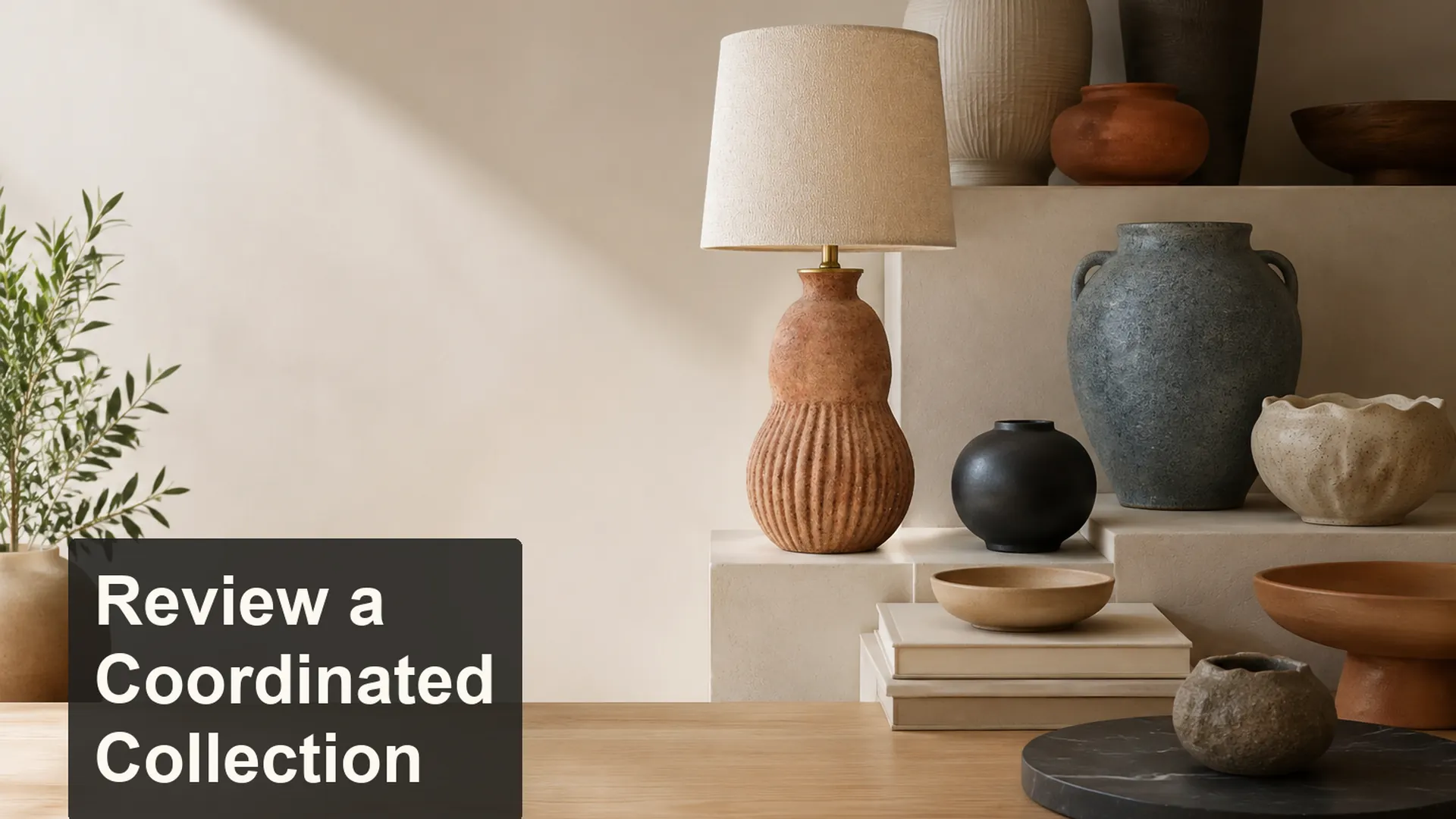
Coordinated Lamps And Decor Collection requires more than collecting attractive reference images. This article gives brands, retailers, importers, and designers a step-by-step way to review lamps, vases, pots, and tabletop decor for hierarchy, consistency, gaps, and confirmation needs, with a Cross-Category Collection Review that separates visible direction, confirmed information, and open questions. The immediate reader value is a repeatable decision sequence, not a universal style rule.
Define Category Balance in Context
The first question is not which option looks most attractive in isolation. It is whether the direction works in the planned cross-category assortment review. Review the collection by category role, then look for repetition, gaps, and unnecessary duplication. From that point, the review can move from category balance to shape rhythm without losing the original goal.
A useful record distinguishes "visible in the reference" from "confirmed for the product." Note shape, scale, color relationship, texture, reflection, and shape rhythm and finish distribution across categories; do not infer a production method, certification, or guaranteed result from appearance.
For coordinated lamps and decor collection, use Lighting collection as the primary category reference and compare it with the broader Decor collection. Related directions such as Table Lamps, Vases, Table Top Accessories, and Decorative Pots connect the review with existing JC categories and practical examples.
| Review variable | Why it matters | Next confirmation |
|---|---|---|
| Category Balance | Review the collection by category role, then look for repetition, gaps, and unnecessary duplication. | Review it in the intended context |
| Shape Rhythm | Compare it with category balance | Review it in the intended context |
| Color Continuity | Compare it with category balance | Review it in the intended context |
| Finish Variety | Compare it with category balance | Review it in the intended context |
| Missing Role | Compare it with category balance | Record the unresolved question |
Coordinated Lamps And Decor Collection follows one universal visual rule. False.
The result changes with product scale, room or display context, material behavior, viewing distance, and confirmed specifications. A coordinated collection is not simply a group of products sharing one color.
A clear category balance decision improves the review. True.
Review the collection by category role, then look for repetition, gaps, and unnecessary duplication. The remaining variables can then reinforce the hierarchy instead of competing with it.

Coordinate Category Balance, Shape Rhythm, and Color Continuity
A clear direction has one dominant relationship. Compare category balance with shape rhythm; then ask whether color continuity, finish variety, and missing role reinforce that relationship or introduce a second competing idea.
The editorial palette for this review is cream, terracotta, smoky blue, and blackened bronze. It helps the team see shape rhythm and finish distribution across categories, but it is not a fixed product specification. Check physical samples or verified product information because undertone, reflection, texture, scale, and surrounding light can alter the relationship between shape rhythm and color continuity.
| Context | Recommended priority | Risk control |
|---|---|---|
| Single-category display | Review the collection by category role, then look for repetition, gaps, and unnecessary duplication. | Avoid adding equal-strength details without hierarchy |
| Cross-category collection | Prioritize shape rhythm | Avoid a coordinated collection is not simply a group of products sharing one color. |
| Material and color review | Prioritize color continuity | Avoid adding equal-strength details without hierarchy |
| Packaging or sample communication | Prioritize finish variety | Separate confirmed facts from open questions |
Compare two options from the same distance and under the same light. First isolate category balance; next review shape rhythm; only then introduce color continuity. This controlled method makes the final Cross-Category Collection Review easier for another team member to understand.
A screen image settles shape rhythm, color continuity, and finish variety. False.
For coordinated lamps and decor collection, camera processing, display settings, viewing light, texture, and scale can change what the team sees. Images communicate direction, but decisions about shape rhythm or color continuity need verified details and, where relevant, samples.
A written Cross-Category Collection Review makes the comparison repeatable. True.
Recording category balance, shape rhythm, color continuity, finish variety, missing role under the same review conditions makes later sample, display, and product discussions easier to compare.
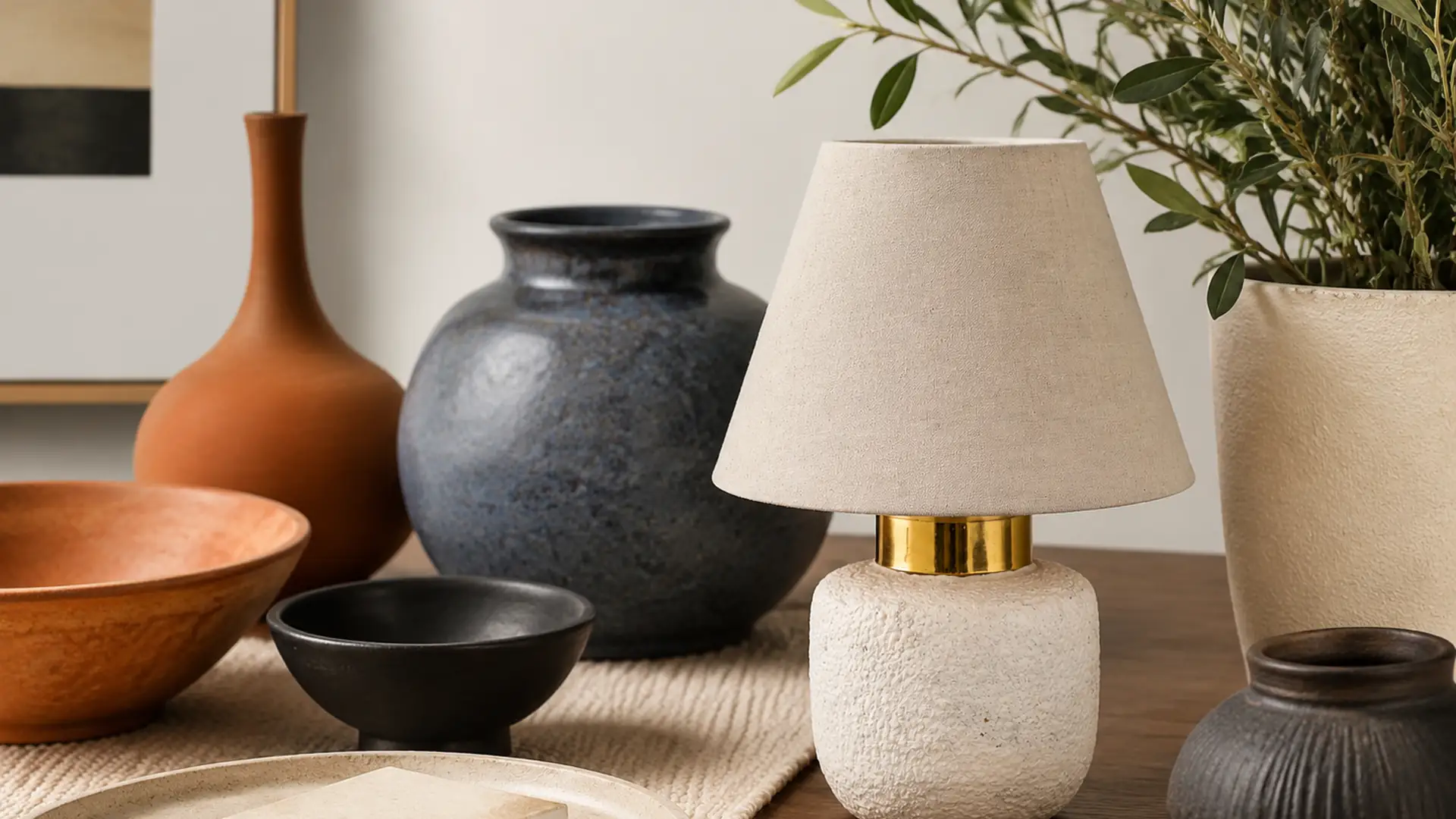
Practical Tool: Cross-Category Collection Review
Complete the Cross-Category Collection Review while the options or samples are still together. Preserve why category balance led the decision, how shape rhythm was judged, and which questions about color continuity, finish variety, or missing role remain open.
| Field | What to record | Decision test |
|---|---|---|
| Category Balance | Review the collection by category role, then look for repetition, gaps, and unnecessary duplication. | Does it support category balance? |
| Shape Rhythm | Describe the current shape rhythm direction | Does it support category balance? |
| Color Continuity | Describe the current color continuity direction | Does it support category balance? |
| Finish Variety | Describe the current finish variety direction | Does it support category balance? |
| Missing Role | Describe the current missing role direction | Is the evidence sufficient for approval? |
Read the completed tool once from the end user’s or retail viewer’s position and once from the product-review position. The first pass checks whether category balance remains clear at normal distance. The second looks more closely at shape rhythm and finish distribution across categories, visible joints or edges, base contact, shade or opening details, and relevant packaging contact points.
Add an owner beside every open missing role question. One person may confirm product information, another may review the sample, and another may approve packaging, electrical, label, or target-market details. The Cross-Category Collection Review should show that responsibility without inventing a fixed sample or delivery schedule.
Translate the Cross-Category Collection Review into a Product Brief
A usable coordinated lamps and decor collection brief has three layers: the visual intention, facts confirmed for the selected item, and questions awaiting evidence. State the application, viewing direction, available or confirmed dimensions, material and finish language, and the chosen relationship between category balance, shape rhythm, and color continuity. Add reference images only when their purpose is clear.
For a lighting-and-decor collection, make one row per item rather than applying one assumption to every category. Record category balance, shape rhythm, color continuity, and finish variety for each lamp, vase, pot, or decorative object. Lighting rows need separate electrical and target-market questions; fragile or finished decor rows need separate base-contact, surface-separation, and inner-protection questions. Use missing role to show what remains unresolved.
Collection planning should keep target-market documentation and product data questions visible when a team evaluates coordinated lamps and decor collection, especially where category balance and shape rhythm interact. This principle is supported by Your Europe – Technical Documentation and Conformity1. For the next review layer, U.S. Consumer Product Safety Commission – Business Guidance2 helps keep color continuity and product-specific questions separate from visual preference. GS1 – Standards3 provides context for documenting finish variety without turning a general reference into an unverified product claim.

Use Request a Quote to send the completed Cross-Category Collection Review, selected references, intended cross-category assortment review context, target market, and open missing role questions. Contact Us is another route for an initial discussion. Customization, sample timing, delivery, packaging, electrical, and documentation details must be confirmed for the specific product and request.
FAQ
What should I review first for coordinated lamps and decor collection?
Start in the intended cross-category assortment review, or in the nearest real display or sample-review context. Record category balance, shape rhythm, and color continuity before debating finish variety; that order keeps the review tied to review lamps, vases, pots, and tabletop decor for hierarchy, consistency, gaps, and confirmation needs.
What can a product photo confirm about category balance?
A photograph can show the direction of category balance, but it cannot independently confirm final color, finish, scale, construction, or performance. For coordinated lamps and decor collection, compare the image with dimensions, verified product information, and a physical sample whenever shape rhythm or color continuity affects approval.
How can retailers apply the Cross-Category Collection Review?
Use the Cross-Category Collection Review to give every option the same review fields. A retailer can record the intended display zone, category balance, shape rhythm, supporting color or finish cues, usable space, and the unresolved missing role question before narrowing an assortment.
What should a designer add to a coordinated lamps and decor collection brief?
Add the intended placement, viewing direction, available dimensions, confirmed material information, finish direction, and references that explain shape rhythm and finish distribution across categories. Mark assumptions about finish variety, construction, packaging, or target-market documents as open questions rather than specifications.
Must related colors or finishes look identical?
No. Coordination depends on the material response and the intended hierarchy. Review the collection by category role, then look for repetition, gaps, and unnecessary duplication. Judge the relationship between category balance and shape rhythm under a defined light instead of relying on identical screen colors.
When should I request a sample for coordinated lamps and decor collection?
Request or review a sample when shape rhythm, color continuity, finish variety, or visible variation could change the decision. Use cream, terracotta, smoky blue, and blackened bronze only as the planning direction, and record the viewing light and comparison reference used for approval.
What product and target-market details remain to be confirmed?
For a cross-category request, identify which items are lighting and which are decorative objects. Confirm category balance, shape rhythm, and color continuity by item, with separate packaging, electrical, label, and documentation questions where they apply.
How should I send this direction to JC Home Decor?
Send the completed Cross-Category Collection Review, relevant product references, intended application, target market, dimensions, and unresolved points covering category balance, shape rhythm, color continuity, finish variety, missing role. Customization, samples, packaging, timing, and documentation remain product- and request-specific.
Conclusion
How to Review a Coordinated Lamps and Decor Collection becomes actionable when the team can explain how category balance relates to shape rhythm, what evidence supports color continuity, and which missing role questions remain open. The Cross-Category Collection Review provides that record for a sample, assortment, display, or product-development conversation.
Action checklist
- Define the cross-category assortment review or nearest real review context and viewing direction.
- Record available dimensions and the current category balance evidence.
- Compare shape rhythm and color continuity without changing every variable at once.
- Use finish variety to check whether the main direction remains coherent.
- Complete the Cross-Category Collection Review, including unresolved missing role questions.
- Review relevant samples under a stated light and from the intended distance.
- Separate confirmed materials, construction, packaging, electrical, label, and target-market facts from assumptions.
- Send the organized coordinated lamps and decor collection brief to JC Home Decor for product-specific discussion.
References
- Your Europe – Technical Documentation and Conformity – Supports target-market documentation planning.↩
- U.S. Consumer Product Safety Commission – Business Guidance – Supports product-specific safety and importer guidance.↩
- GS1 – Standards – Supports product identification and data-planning context.↩