J.C Home Decor and Lighting Manufactory

Introduction
sculptural tabletop accessories can become a useful collection idea when the room, product, and display are planned together. The goal is to make a confident design or product-brief decision without inventing dimensions, materials, performance, or market suitability. By the end, you will have a practical way to use silhouette, visual weight, negative space, and controlled grouping to make sculptural objects readable on modern shelves.
This guide uses direct comparisons, two fact checks, a topic-specific worksheet, and a final action checklist. It keeps Europe as the first market context and the United States second, while asking buyers to confirm product-specific packaging, labeling, electrical, care, and documentation needs where relevant.
The Topic in Brief
The clearest approach is to use silhouette, visual weight, negative space, and controlled grouping to make sculptural objects readable on modern shelves. Begin with the real application instead of selecting a product from one attractive photograph. Then record the design relationship, product details, and confirmation points separately.
For collection teams, this distinction matters. A styling direction can guide shape, color, and assortment, but it cannot confirm material, construction, dimensions, electrical components, planting function, care, or packaging by itself.
Every shelf gap should be filled. False.
Negative space helps sculptural forms remain readable and reduces visual clutter.
Dark color can increase visual weight. True.
Color, texture, density, and silhouette all influence how strong an object feels.
Choose One Lead Shape per Shelf Zone
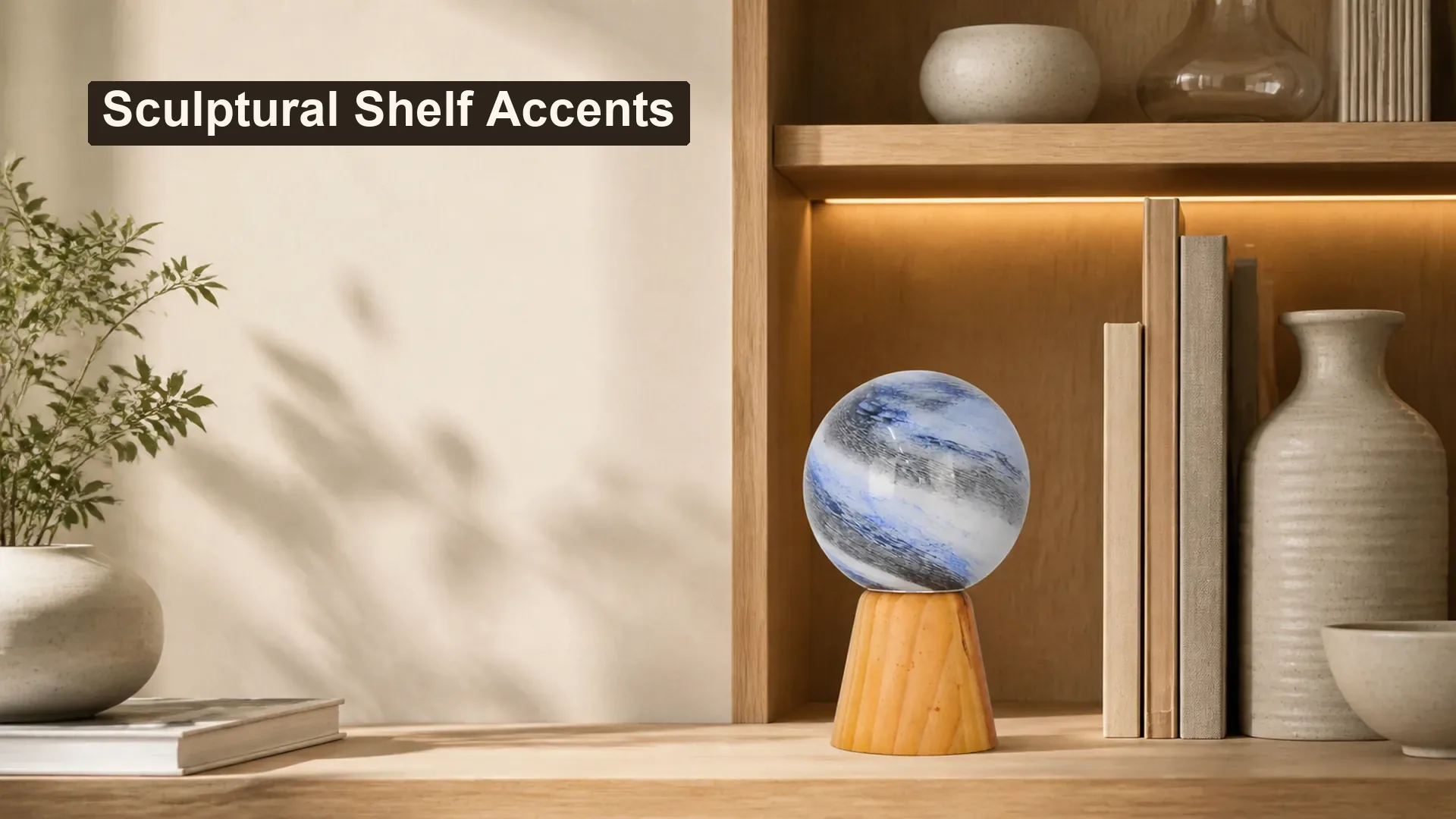
A sculptural object works best when the shelf gives it enough space. One lead shape can sit beside books or a lower supporting object, while several equally strong forms may compete.
Review the accessory from the front, side, and common room angle. Open forms, spheres, arches, and irregular profiles can change substantially as the viewer moves.
| Application or option | Useful direction | What to confirm |
|---|---|---|
| Single lead object | Strong silhouette with negative space | Best for a focal shelf zone |
| Object plus books | Height and texture contrast | Creates an anchored vignette |
| Two related objects | Shared color or material cue | Builds a small collection story |
| Retail group | Varied scale with one dominant form | Shows assortment breadth |
Start with the Table Top Accessories and the broader Decor collection to keep the article connected to the correct product taxonomy. Compare the visual direction with Products, DSC0012 tabletop direction, and HAC04 tabletop direction. For product development, collection, or packaging context, use the DSC0014 tabletop direction as a related planning resource. These links provide directions for review; they do not replace confirmed specifications for an individual model.
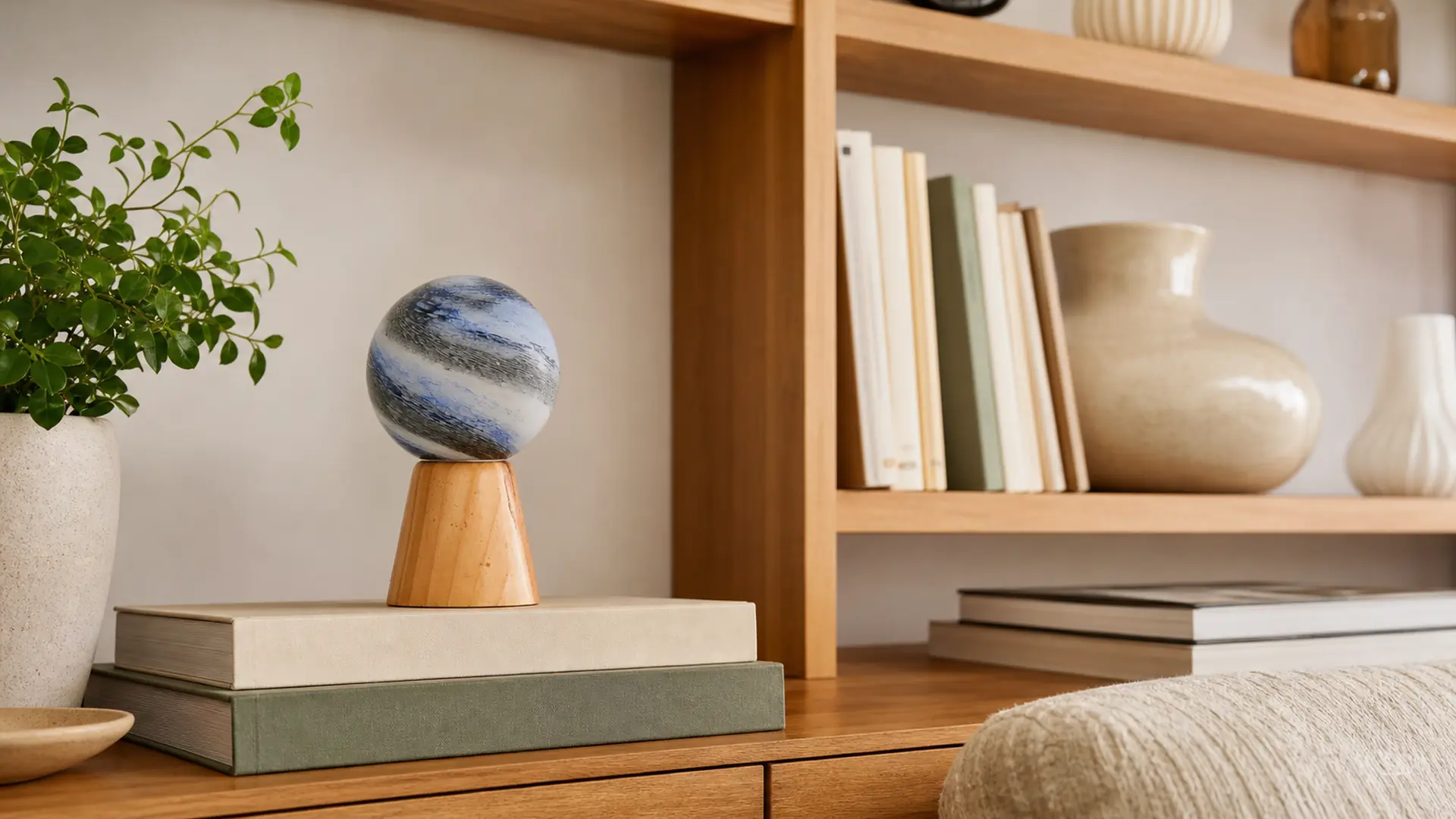
Balance Visual Weight with Negative Space
Visual weight comes from more than physical size. Dark color, dense texture, and broad form can make a small object feel strong. Pair it with quieter books, a pale vessel, or open shelf area.
For a collection, repeat one curve, color family, or base detail across several accessories. This creates recognition while allowing each object to remain distinct.
| Palette or context | Product response | Planning note |
|---|---|---|
| Warm white shelf | Blue-white, wood-tone, and one dark accent | Fresh balanced contrast |
| Light oak shelf | Pale ceramic direction and muted metal | Soft tactile story |
| Dark shelving | Ivory or light sculptural forms | Clear silhouette |
| Color-led books | Quiet neutral object | Prevents visual competition |
A collection needs identical objects. False.
Related curves, colors, bases, or material language can connect distinct forms.
Stable placement and careful handling matter for brittle decor. True.
Sculptural accessories should be protected from shelf edges, impact, and crowded handling zones.
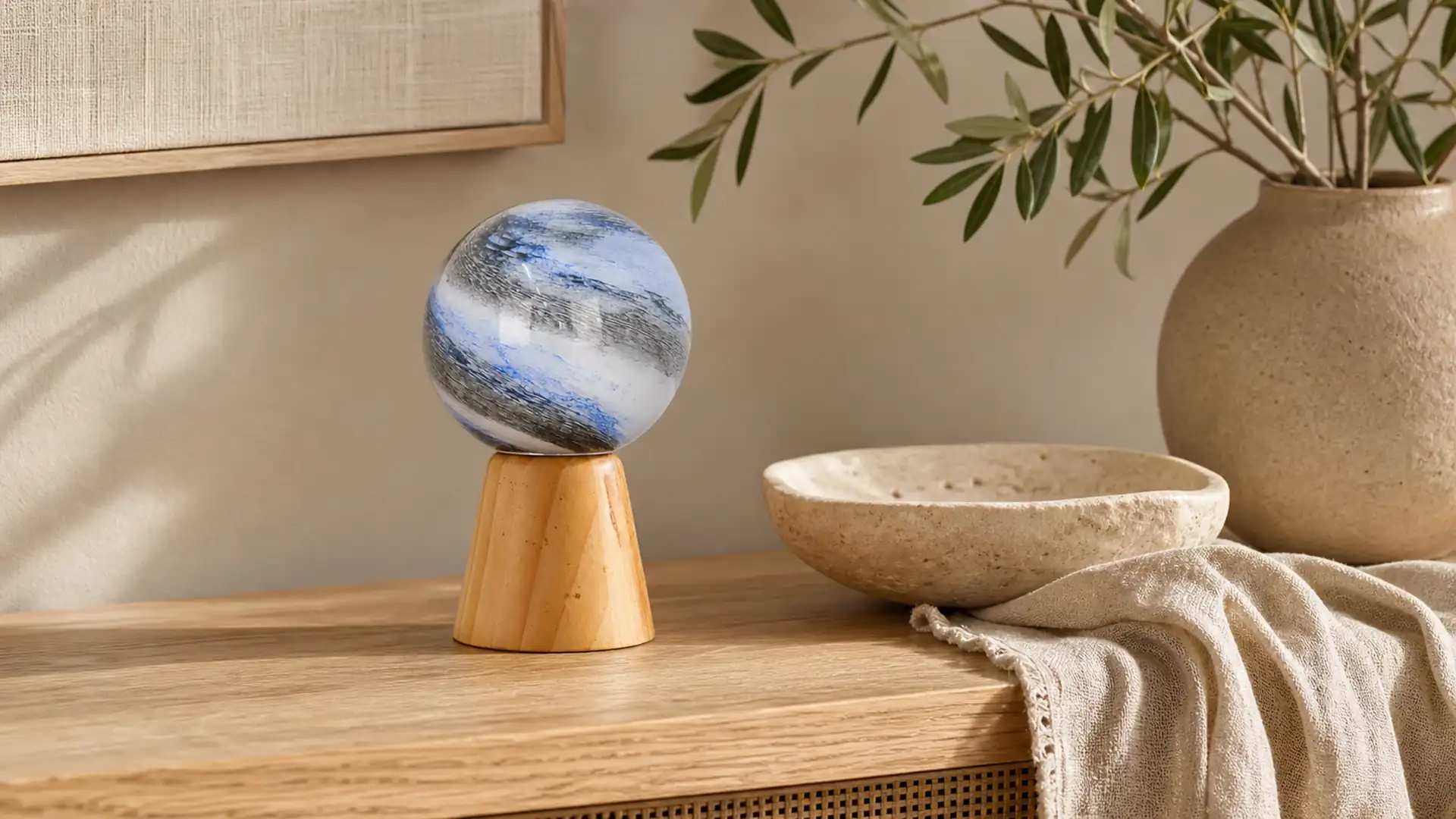
Practical Tool: Visual Weight Shelf Map
Use this tool during a room review, retail assortment meeting, or sample discussion. Complete every row with observable information. Leave uncertain specifications blank until product information or samples confirm them.
| Review area | Action | Expected result |
|---|---|---|
| Lead shape | Mark the dominant silhouette | Clear focal point |
| Support object | Choose lower or quieter companion | Creates hierarchy |
| Negative space | Reserve visible shelf area | Improves readability |
| Repeat cue | Echo one curve, color, or base | Connects the collection |
The tool is intentionally specific to sculptural tabletop accessories. It converts an inspiration image into a short decision record and makes it easier for design, merchandising, purchasing, and product teams to discuss the same direction.
From Visual Direction to a Confirmed Product Brief
A useful accessory brief should record product category, dimensions, material description, color, finish, opening or shade details, visible hardware, care needs, packaging, target market, and any labeling or documentation questions. Custom options can be discussed based on product type and order requirements, but feasibility and final details must be confirmed.
Sculptural accessories need stable display and careful handling. The Canadian Conservation Institute notes that ceramic and glass objects are brittle and can crack or break on impact even when they appear visually solid1. Its preventive-care guidance recommends supporting objects securely and reducing avoidable handling on shelves and in storage2. The same institution advises conservative cleaning for decorated or uncertain surfaces because improper handling can damage applied decoration3. Retail care copy should follow verified product information.
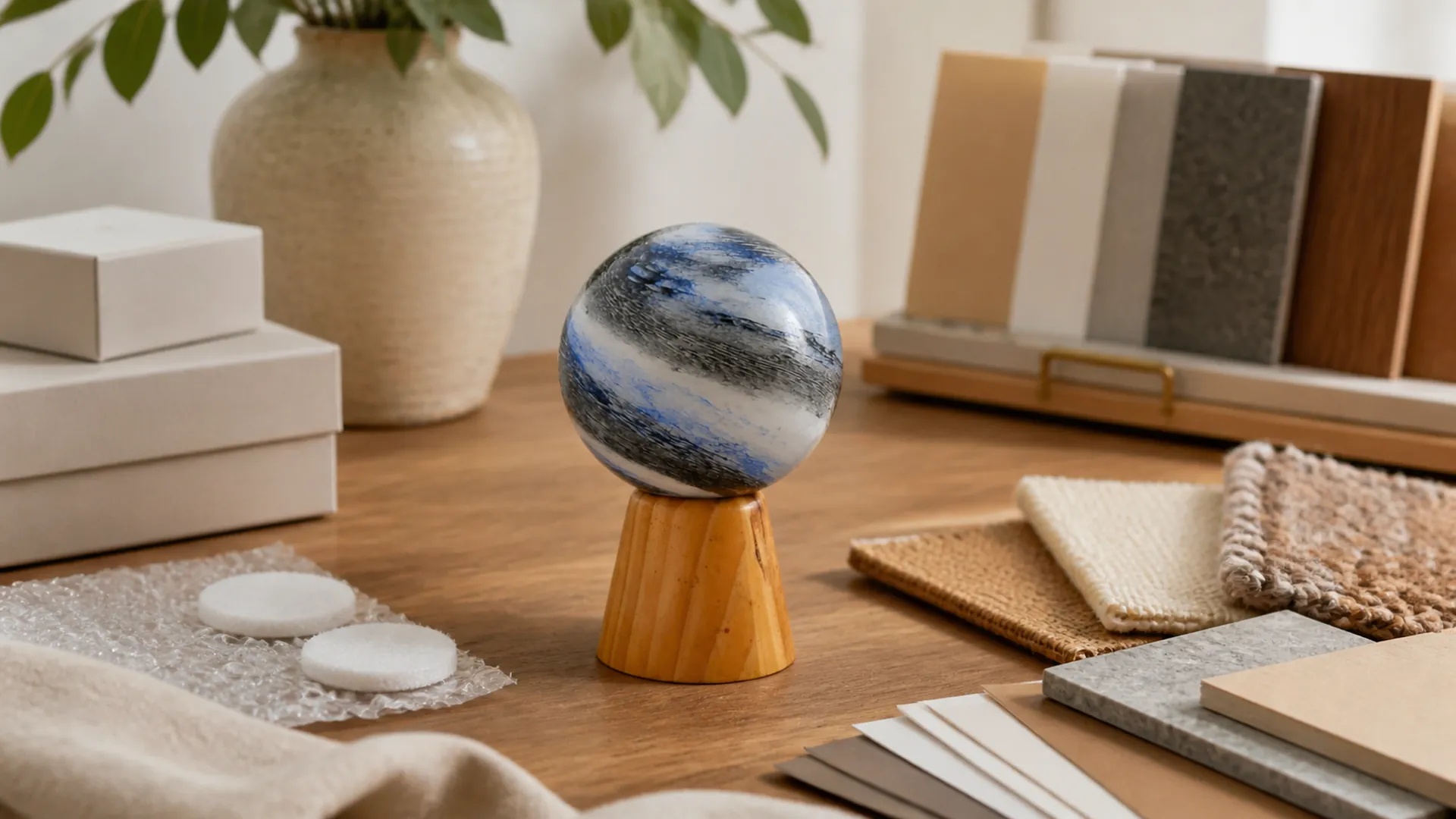
When the direction is ready for discussion, use Request a Quote and send the intended application, target market, product references, dimensions, finish direction, packaging needs, and open questions. Clear inputs make the next conversation more useful without implying a fixed price, quantity, delivery time, or result.
FAQ
How do sculptural tabletop accessories work on modern shelves?
Use one lead silhouette, a quieter support, and enough negative space for the form to remain clear.
How many objects should sit in one shelf zone?
Use only enough to create hierarchy. One lead object plus books or one smaller companion is a useful starting point.
Can sculptural accessories mix with vases and pots?
Yes, when intended uses remain clear and the silhouettes, heights, and finish cues are balanced.
Which colors suit modern shelf decor?
Warm neutrals, blue-white accents, muted metal, wood tones, and one controlled dark note can create a flexible palette.
What should retailers confirm before ordering?
Confirm dimensions, material, finish, base stability, orientation, care, packaging, and accurate product copy.
How should fragile shelf objects be protected?
Use stable surfaces, adequate edge distance, careful handling, and fitted protection during storage and transport.
Conclusion
Sculptural Tabletop Accessories for Modern Shelves is most useful when visual inspiration leads to a clear record of application, proportion, finish, and confirmation points. Use the article as a design and communication guide, then confirm real product information before selection or ordering.
Action checklist
- Define the real room, shelf, furniture, or display context.
- Record the critical dimensions and viewing directions.
- Choose one dominant shape, color, finish, or grouping relationship.
- Complete the Visual Weight Shelf Map with the design and product teams.
- Review physical samples for surface, color, proportions, and visible construction.
- Confirm packaging, care, labels, target-market documentation, and other product-specific details.
- Contact JC Home Decor only after the open questions and reference materials are organized.
References
-
Canadian Conservation Institute – Ceramics and Glass – Supports protecting brittle decorative objects from impact during handling and display.
↩ -
Canadian Conservation Institute – Preventive Care for Ceramics and Glass – Supports stable shelf placement, careful handling, and padded protection for fragile objects.
↩ -
Canadian Conservation Institute Notes 5/1 – Care of Ceramics and Glass – Supports conservative cleaning and avoidance of unnecessary handling for decorated objects.
↩