J.C Home Decor and Lighting Manufactory

Introduction
You need a custom home decor manufacturer when private label lighting must look like your brand, not a generic catalog item. You may sell in Europe or the United States, so your development system must connect design, labeling, packaging, and compliance confirmation before production. You also need a workflow that protects collection consistency across ceramic table lamps, vases, pots, and related decor, instead of treating each SKU as an isolated sample. You will learn how to build a private label manufacturing system for ceramic lighting products with design adaptation, OEM lighting production, brand customization, and repeatable product development steps.
If your brand is planning a ceramic lighting or decor line, you can also review JC Home Decor’s custom lighting and decor solutions to understand available development directions.
What Private Label Development Means for Ceramic Lighting
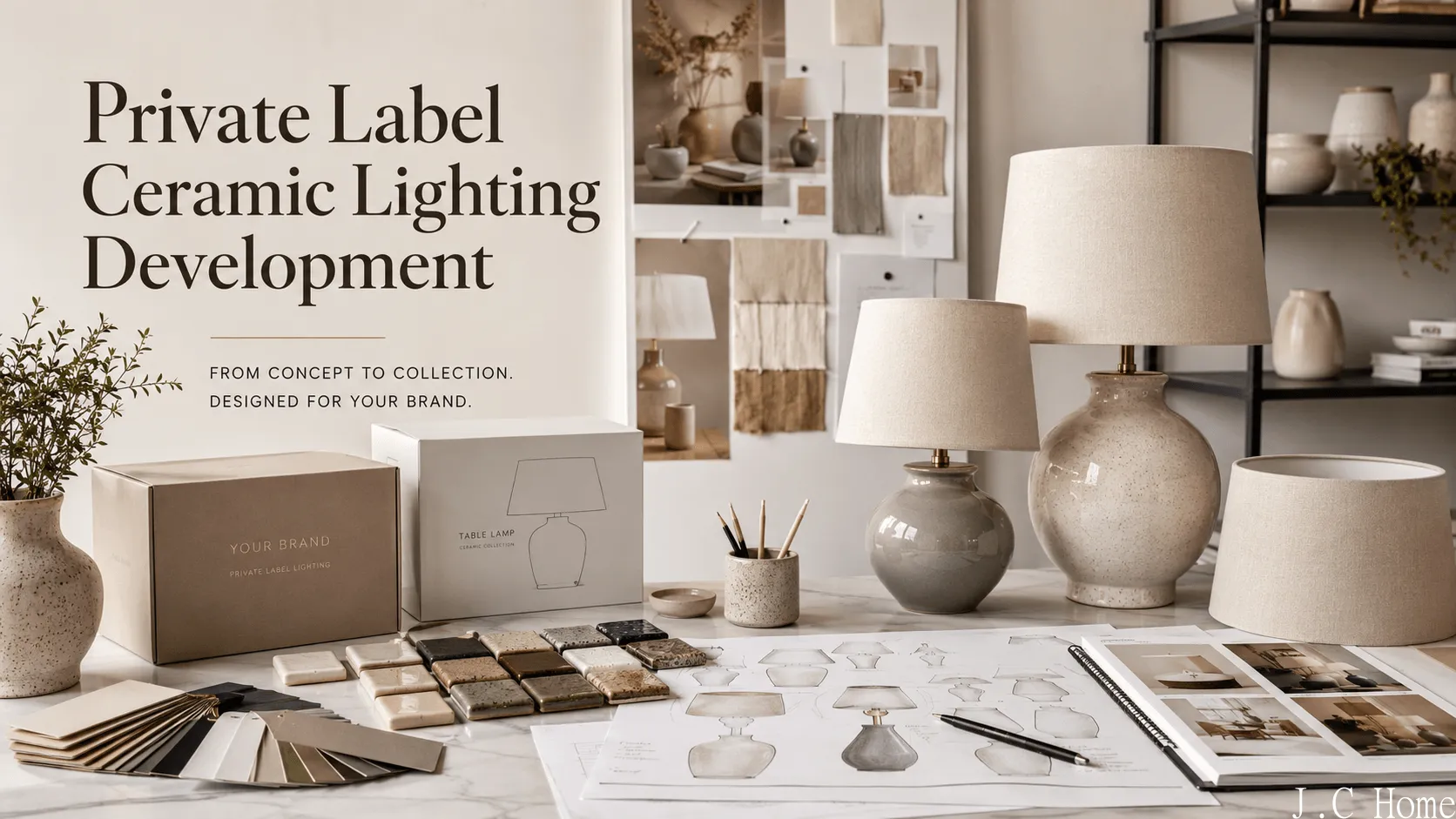
Private label development means creating products that carry your brand identity while using a manufacturer’s production, material, and development support. In ceramic lighting, this may include lamp body shape, glaze color, shade style, hardware finish, label design, carton structure, and retail presentation.
However, private label manufacturing should not stop at logo placement. A serious private label system connects product concept, design adaptation, sample approval, packaging, production control, and future replenishment.
For this reason, ceramic lighting is different from many simple home decor products. A table lamp combines decorative material, electrical parts, surface finish, shade proportion, packing protection, and market compliance. Therefore, every decision affects both visual value and repeatability.
How a Custom Home Decor Manufacturer Builds Private Label Lines
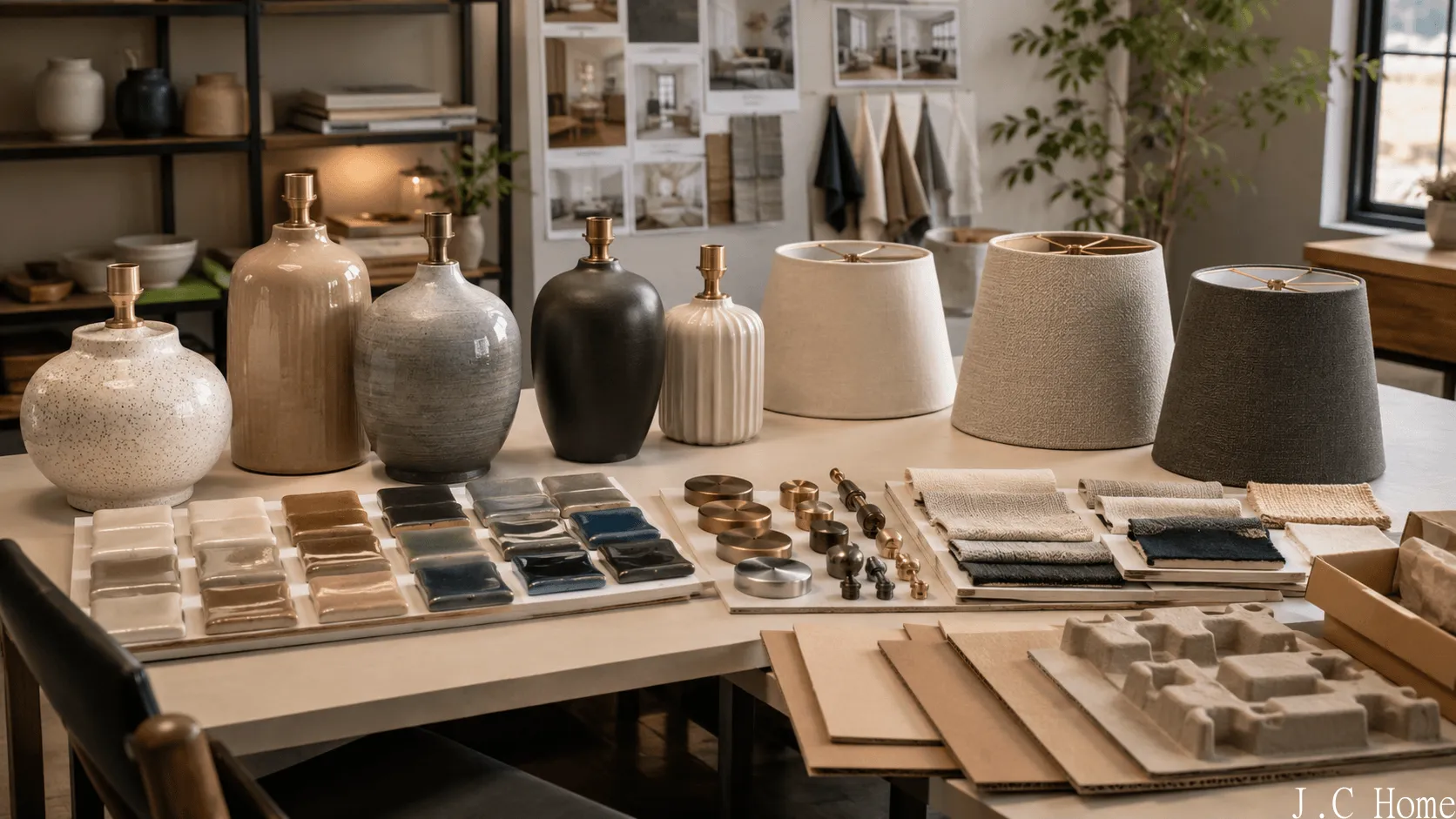
A custom home decor manufacturer should help buyers turn a brand idea into a controlled product file. This file becomes the base for sampling, revision, production, packaging, and repeat orders.
The system below shows a practical development workflow for ceramic lighting and related decor collections.
| Development Stage | Main Decision | Output Buyers Should Confirm |
|---|---|---|
| Brand direction | Style, customer profile, price position, market channel | Mood board, product family direction, target market |
| Product architecture | Table lamps, vases, pots, tabletop decor, or mixed collection | SKU plan, size range, product hierarchy |
| Design adaptation | Shape, ceramic finish, shade, hardware, color family | Sketch, 3D reference, sample target, material notes |
| Private label branding | Logo, hangtag, label, instruction sheet, carton design | Brand file, label placement, packaging artwork |
| Sample development | Prototype, finish sample, shade sample, packing sample | Approved sample, revision record, specification sheet |
| Production preparation | Material standard, process details, quality checkpoints | Production file, inspection points, approved tolerances |
| Launch and replenishment | Collection continuity and repeat order control | SKU records, packing standard, update plan |
This workflow helps brands reduce confusion between creative design and production execution. Moreover, it gives the manufacturer a clearer basis for quotation and sampling.
If your first product direction is decorative lighting, you can start by comparing JC Home Decor’s wholesale table lamps and then prepare a private label brief based on your market position.
Private label lighting only means adding a logo. False
Logo placement is only one part of brand customization. A complete private label system also controls product shape, finish, shade, packaging, labels, instructions, and future repeatability.
A development file protects collection consistency. True
When buyers approve a written product file, the manufacturer can follow the same material, finish, size, shade, and packaging references during sampling and future production.
Design Adaptation: From Brand Mood to Ceramic Product
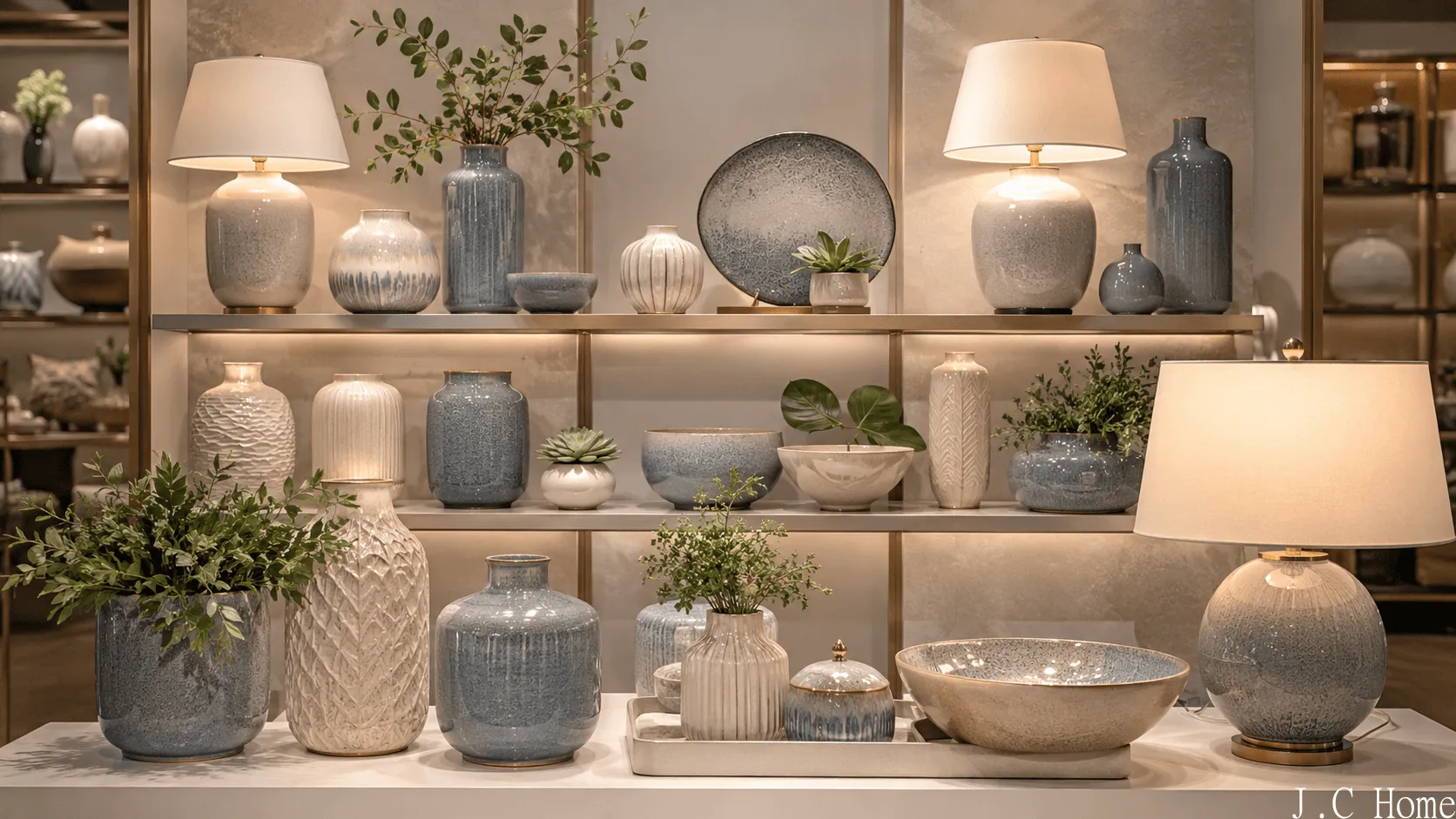
Design adaptation is the bridge between brand identity and factory execution. It does not mean copying a reference image. Instead, it means translating a brand’s visual direction into manufacturable details.
For ceramic lighting, this usually starts with three questions. What style does the brand want to own? Which ceramic surface supports that style? How should the lamp work inside a wider home decor collection?
For example, a lifestyle brand may prefer soft matte ceramics, warm neutral shades, and simple silhouettes. Meanwhile, a design-led retailer may prefer sculptural ceramic bases, stronger glazes, or handmade textures. In addition, a gift channel may need a smaller size, safer packing, and stronger shelf identity.
| Product Element | Adaptation Options | Why It Matters for Private Label |
|---|---|---|
| Ceramic body | Shape, height, texture, relief pattern, glaze effect | Builds the visual identity of the lamp family |
| Color direction | Neutral, earthy, glossy, reactive, blue-and-white, seasonal | Helps the line match target interiors and retail trends |
| Lampshade | Fabric, shape, diameter, height, color, lining | Changes the full lamp proportion and light feel |
| Hardware | Metal finish, switch style, base ring, socket detail | Connects the product to the brand’s price position |
| Packaging | Gift box, mail-order carton, retail carton, insert structure | Supports brand presentation and damage control |
| Decor extension | Matching vases, pots, tabletop accessories | Helps the brand build a collection, not only one lamp |
Because ceramic production involves shaping, firing, glazing, and finishing, buyers should agree on acceptable visual variation. Therefore, sample approval should include color range, surface texture, glaze expectation, and packing method.
For brands that want a wider collection, JC Home Decor’s ceramic vases can support design continuity alongside ceramic table lamps.
OEM Lighting Production vs Private Label Customization
OEM lighting production and private label customization often overlap, but they are not the same. OEM production usually follows a buyer’s design or specification. Private label customization may begin from an existing product direction and adapt it for a brand.
In practice, many ceramic lighting projects combine both models. A buyer may start from a manufacturer’s existing lamp structure, then adjust the ceramic color, shade, hardware, label, and carton. Later, the buyer may develop exclusive shapes or a more complete product family.
The table below helps clarify the difference.
| Model | Buyer Control Level | Manufacturer Role | Suitable Situation |
|---|---|---|---|
| Existing product with branding | Low to medium | Provide product base, label, and packaging support | Fast brand testing or small collection launch |
| Private label adaptation | Medium | Adapt finish, color, shade, packaging, and product details | Retail brand needs a differentiated line |
| OEM lighting production | Medium to high | Produce according to buyer’s design and specification | Buyer owns clear design direction |
| Co-development | High collaboration | Help refine concept, sample, material, and production logic | Brand wants a long-term product development partner |
However, buyers should avoid over-customizing too early. If every detail changes before market testing, the project becomes slower and harder to control. Therefore, many brands start with controlled adaptations, then develop exclusive shapes after confirming the product direction.
Brand Customization Should Include Packaging and Product Data
Brand customization is not only visible on the product. It also appears in labels, instruction sheets, carton marks, barcode placement, product names, and digital listings.
For retail and online channels, product data matters because it affects inventory control, marketplace listings, scanning, and fulfillment. GS1 explains that standardized product identity helps products become easier to find, buy, trace, and fulfill across the supply chain through GS1 product identification standards4.
Therefore, buyers should prepare branding requirements before final sample approval. If barcode, label size, product name, warning text, or carton layout arrives too late, the manufacturer may need to revise packaging after the product is already approved.
A practical private label file should include:
- Brand logo file and approved color version
- Product name format and SKU naming rule
- Label placement on product, box, or hangtag
- Instruction sheet language needs
- Carton mark layout and barcode position
- Product image requirements for online listings
- Packaging type for retail shelves or parcel delivery
In addition, brands should define which details remain flexible. For example, a ceramic glaze may allow a natural range, while a printed logo or barcode must remain fixed.
Compliance Should Enter the Workflow Early
Private label lighting carries more responsibility than non-electrical decor. For Europe, buyers should understand that EU CE marking rules1 may treat the company selling a product under its own name or brand as the manufacturer for compliance responsibility. Therefore, private label buyers should confirm applicable duties before launch.
Also, decorative lighting can include electrical and electronic components. In Europe, the RoHS Directive2 restricts certain hazardous substances in electrical and electronic equipment. As a result, material and component confirmation should not wait until shipment.
For the U.S. market, portable luminaires may require safety review based on product type, power source, and use scenario. UL notes that the scope of UL 153 for portable electric luminaires3 has expanded to include some battery-operated portable luminaires.
This does not mean every lamp follows the same route. However, it does mean buyers should discuss target market, plug type, voltage, battery structure, labels, documents, and test needs before finalizing the product.
A beautiful approved sample is enough for private label production. False
A sample confirms appearance, but production also needs specification sheets, packaging files, label details, compliance notes, and agreed inspection points.
Compliance and packaging should be discussed before final sample approval. True
Early confirmation helps buyers avoid late changes to labels, instructions, cartons, electrical parts, and market documentation after the product design is already approved.
Packaging Is Part of the Product Development System
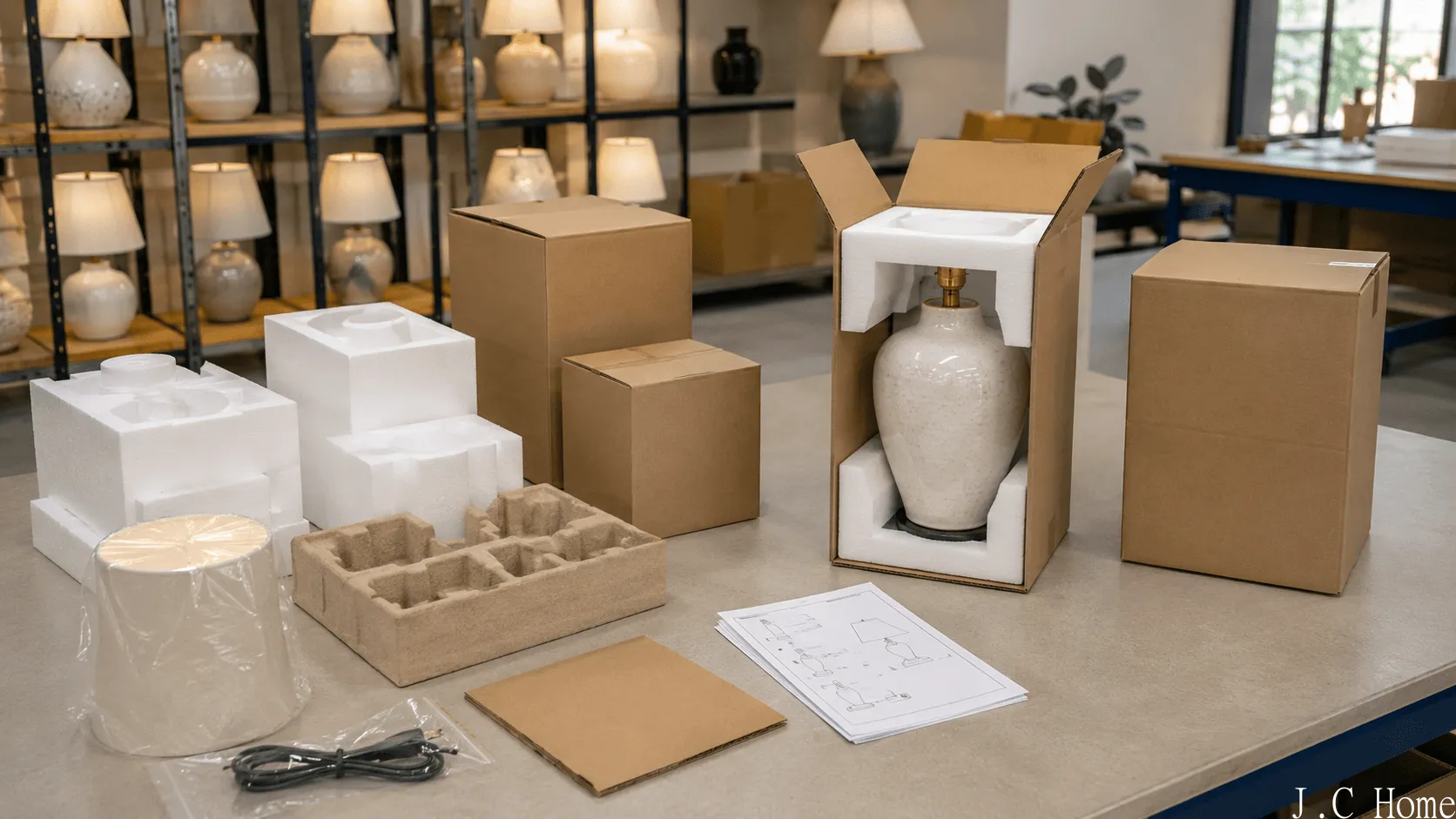
For ceramic lighting, packaging is not a back-office detail. It affects breakage risk, shipping cost, retail display, unboxing experience, and brand perception.
Because ceramic lamp bodies can be fragile, brands should discuss insert structure, carton strength, shade protection, hardware separation, and drop-test expectations. The International Safe Transit Association states that effective package design helps organizations reduce product damage during distribution through transport packaging practices5.
A private label packaging plan should answer these questions:
| Packaging Question | Why It Matters | What to Prepare |
|---|---|---|
| Is the product for retail shelf, wholesale carton, or direct parcel delivery? | Different channels require different protection and presentation | Channel type and display needs |
| Does the lamp include shade, bulb, charger, or hardware? | Accessories change the inner packing structure | Component list and packing layout |
| Does the brand need printed gift packaging? | Packaging may carry brand value and product information | Artwork, color, logo, label file |
| Will the product ship internationally? | Long-distance handling requires stronger protection | Carton requirement and test expectation |
| Does the line need repeat replenishment? | Consistent packing reduces warehouse and customer service issues | Standard carton file and SKU record |
Therefore, packaging should be developed with the product, not after it. This is especially important for private label ceramic table lamps, where product weight, shade shape, and ceramic surface need coordinated protection.
Building a Repeatable Product Development Workflow
A strong private label system should support more than one launch. It should also support future color updates, seasonal extensions, and repeat production.
For ceramic lighting products, buyers can build a repeatable workflow in five layers.
1. Collection Strategy
First, define the collection logic. For example, a brand may build a neutral ceramic table lamp family, then extend the same glaze direction into vases and tabletop decor. This makes the collection easier to merchandise.
2. Product Specification
Next, document dimensions, material, finish, shade, hardware, cord, label, and packing details. In addition, keep approved photos and sample notes in the same file.
3. Sample Revision Record
Then, track each sample change clearly. If the buyer adjusts shade height, glaze color, or base shape, the manufacturer should know which version becomes the approved reference.
4. Production and Inspection Points
After approval, define inspection points for the product body, surface, assembly, shade fitting, packing, and label placement. This helps the factory avoid subjective judgment during production.
5. Replenishment and Line Extension
Finally, keep SKU records for repeat orders. Moreover, if a collection performs well, buyers can use the same development system to add floor lamps, vases, pots, or tabletop accessories.
If you want to understand JC Home Decor’s broader factory background before developing a private label line, you can review the About Us page.
What Buyers Should Send Before Requesting Development
A clear brief saves time for both the brand and the manufacturer. It also reduces unclear sampling decisions.
Before contacting a custom home decor manufacturer, prepare the following information:
- Target product category: ceramic table lamps, vases, pots, or mixed decor
- Target market: Europe, United States, or another market
- Brand style: modern, classic, handmade, neutral, colorful, sculptural, or seasonal
- Reference images: product shape, finish, shade, packaging, or display style
- Expected customization: color, glaze, size, logo, shade, label, packaging
- Channel type: retail store, online shop, distributor, design project, or gift channel
- Quantity direction: test order, collection launch, or repeat replenishment plan
- Compliance expectation: plug type, voltage, label needs, documents, test discussion
- Packaging direction: retail box, mail-order protection, master carton, or gift packaging
However, buyers do not need to have every detail solved before discussion. A good manufacturer can help refine the brief. Still, the clearer the direction, the faster the product development workflow becomes.
For a private label lighting or decor discussion, you can contact JC Home Decor with your target style, category, material, packaging needs, and market requirements.
FAQ
What is a private label lighting product?
A private label lighting product is made by a manufacturer but sold under the buyer’s brand. In ceramic lighting, this can include custom finish, shade, label, carton, instruction sheet, and product data.
How is private label manufacturing different from OEM lighting production?
Private label manufacturing often adapts existing or co-developed products for a brand. OEM lighting production usually follows a buyer’s design or specification more closely. However, many real projects combine both models.
Why is ceramic suitable for private label home decor lighting?
Ceramic gives brands strong design flexibility through shape, glaze, texture, and color. Therefore, it works well for table lamps, decorative vases, and coordinated home decor collections.
Can a brand customize both the lamp and the packaging?
Yes, buyers can usually discuss product and packaging customization together. For example, they may adjust ceramic finish, shade color, label placement, gift box artwork, carton marks, and product instructions.
Should compliance be discussed before or after sample approval?
Compliance should be discussed before final sample approval. This helps buyers confirm target market requirements, electrical details, label needs, and documentation before production preparation.
What information helps a manufacturer develop a private label sample?
Buyers should send style references, target size, material direction, finish expectation, market, quantity direction, label needs, and packaging request. As a result, the manufacturer can prepare a more accurate development plan.
Is private label development only for large retailers?
No. Private label development can also support lifestyle brands, interior design channels, gift sellers, online stores, and distributors. However, the level of customization should match the buyer’s launch plan.
How can buyers keep private label products consistent in repeat orders?
Buyers should keep approved samples, specification sheets, color references, packaging files, SKU names, and inspection notes. In addition, they should record sample revisions before confirming production.
Conclusion
A private label lighting line needs more than a logo. It needs a controlled product development system that connects design adaptation, ceramic material choices, sample approval, brand customization, packaging, compliance discussion, and repeat production.
Therefore, buyers should treat the manufacturer as a product development partner, not only a supplier of finished items. A custom home decor manufacturer can help translate brand direction into ceramic table lamps, vases, pots, and related decor products that feel consistent across a collection.
If you are preparing a private label ceramic lighting or home decor line, start with a clear product brief. Then, explore JC Home Decor’s table lamp collection, review custom development solutions, and send your requirements with target market, product category, style direction, customization needs, and packaging expectations.
References
-
Your Europe — CE Marking Requirements — Supports the explanation of CE marking responsibility and private label brand responsibility in the EU.
↩ -
European Commission — RoHS Directive — Supports the discussion of hazardous substance restrictions for electrical and electronic equipment.
↩ -
UL Solutions — UL 153 Portable Electric Luminaires — Supports the note on portable and battery-operated luminaires for U.S. market discussions.
↩ -
GS1 US — Product Identification Standards — Supports the explanation of product identity, barcodes, traceability, and retail data preparation.
↩ -
International Safe Transit Association — Supports the packaging section on reducing damage during distribution through better package design.
↩
Buyer Checklist Before Requesting a Quote
| Information to Prepare | Why It Helps |
|---|---|
| Product category and target use | Helps confirm the right lighting or decor direction. |
| Target market | Supports electrical, packaging, labeling, and document discussion. |
| Material, color, and finish direction | Reduces misunderstanding during sample communication. |
| Packaging and label needs | Important for fragile products and retail-ready planning. |
| Reference images or collection mood | Helps align design language before quotation. |
Clear buyer information helps reduce misunderstanding before sample and order communication.