J.C Home Decor and Lighting Manufactory



Introduction
You need a lighting and decor supplier that can support design intent, project schedules, and repeatable product decisions across Europe and the United States. You may already have an interior sourcing list, but comparing suppliers only by catalogue images can create problems during sampling, approval, packaging, and installation. You also need to check product safety expectations, light source requirements, documentation needs, and commercial design supply details before a project becomes urgent. You can use the following model to compare suppliers by design fit, category coverage, material control, documentation, and project-based sourcing support.
Interior design procurement teams do not buy products in isolation. Instead, they translate a design concept into real items that must fit the space, budget, timeline, and client approval process.
For this reason, the right supplier selection model should combine creative judgment with operational checks. It should help your team compare table lamps, floor lamps, ceiling pendants, rechargeable lamps, vases, pots, and tabletop accessories without losing control of the project brief.
If your team is building a product schedule or preparing a style direction, you can also review JC Home Decor’s lighting collections and home decor solutions while using this framework.

Why Interior Design Teams Need a Supplier Model
Interior projects often move through several approval stages before products reach the site. According to the AIA’s description of interiors and FF&E services, interior and FF&E work may include programming, schematic design, design development, FF&E documents, procurement, and contract administration.AIA interior and FF&E service structure1
Therefore, a supplier must do more than provide attractive products. The supplier should help your team move from concept to comparison, then from comparison to sampling, approval, packaging, and delivery preparation.
A clear supplier comparison system also reduces internal disagreement. Designers may focus on visual language, while procurement teams may focus on documentation, cost control, packaging, and delivery risk. Meanwhile, project managers may care most about timelines and replacement planning.
A supplier selection model gives every team the same language. It turns a subjective decision into a structured review.
The Six-Part Supplier Selection Model
A practical model for choosing a lighting and decor supplier should include six dimensions:
- Design fit
- Category coverage
- Material and finish control
- Project documentation
- Packaging and delivery readiness
- Communication and repeat supply support
Each dimension answers a different question. Together, they help your team compare suppliers for interior sourcing, retail projects, commercial spaces, and product development programs.
| Selection Dimension | What to Check | Why It Matters for Interior Design Procurement |
|---|---|---|
| Design fit | Style direction, proportions, finish options, collection logic | Keeps products aligned with the approved interior concept |
| Category coverage | Lamps, pendants, vases, pots, tabletop accessories | Helps teams build coordinated spaces instead of isolated items |
| Material and finish control | Ceramic glazing, surface texture, shade material, colour tolerance | Reduces visual mismatch between samples and approved schemes |
| Project documentation | Specifications, images, packaging details, electrical notes when relevant | Supports internal review, client approval, and project records |
| Packaging readiness | Export carton direction, retail box needs, protection for fragile items | Reduces damage risk and supports smoother site or warehouse handling |
| Communication rhythm | Clear response, sample feedback, issue tracking, repeat order records | Helps teams manage changes without losing decision history |
This model is especially useful when different suppliers look similar at first glance. For example, two table lamp suppliers may offer a similar shape. However, one may provide better finish consistency, clearer shade options, and stronger packaging discussion.
In that case, the second supplier may be easier for a project team to work with, even if the first supplier looks attractive in a catalogue.
Start With Design Fit, Not Product Quantity
Many procurement teams start by asking how many SKUs a supplier has. However, design procurement should start with design fit.
A supplier with thousands of items is not always easier to use. If the catalogue lacks a coherent style direction, your team may spend more time filtering, comparing, and replacing products.
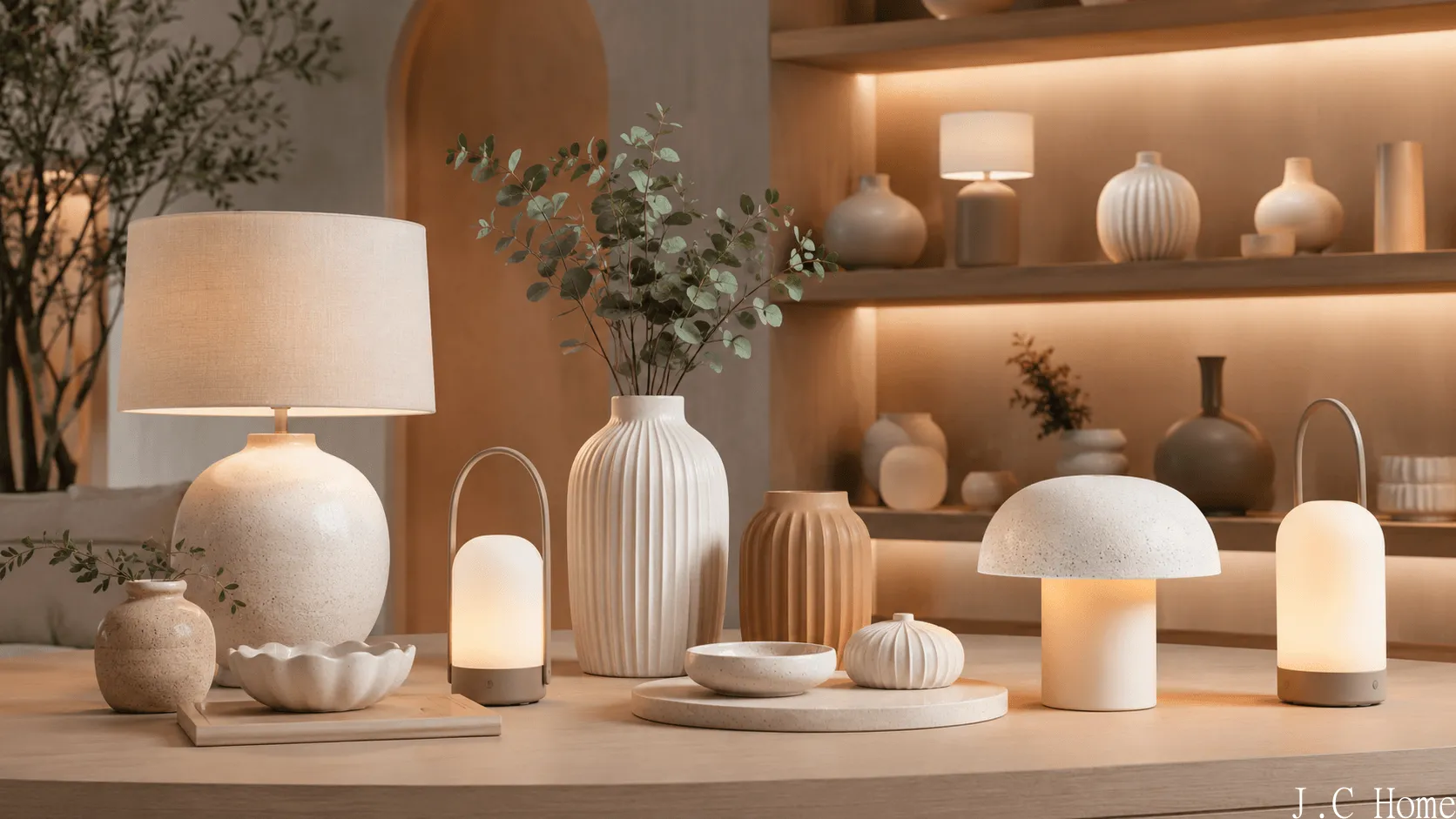
Instead, you should ask whether the supplier can support a clear design language. For example, a soft ceramic table lamp collection may suit residential-style hotel rooms, boutique retail displays, and warm living room concepts. Meanwhile, a rechargeable lamp group may work better for restaurants, lounges, cafés, and flexible commercial settings.
For project-based sourcing, design fit includes scale, texture, colour temperature, surface finish, and how products relate to nearby furniture and decor.
JC Home Decor’s table lamps and rechargeable battery lamps can be reviewed as different lighting directions during early concept comparison.
A larger catalogue always means an easier supplier decision. False
A large catalogue can still slow down selection if the products do not match the design brief. Interior teams need curated options, clear categories, and suitable finishes.
Design fit should be checked before price comparison. True
Price only becomes useful after the product direction is suitable. Otherwise, teams may compare items that cannot meet the project concept or client approval requirements.
Match Supplier Type to Project Type
Different projects need different supplier strengths. Therefore, your team should not use one fixed supplier checklist for every situation.
A retail-style interior may need products that photograph well, display well, and repeat well. A restaurant may need compact rechargeable lamps that fit table layouts. A commercial lobby may need decorative vases, floor lamps, or pendants that create a stronger visual point.
For this reason, project type should guide supplier selection.
| Project Type | Supplier Strength Needed | Suitable Product Direction |
|---|---|---|
| Retail store display | Collection logic, packaging options, repeatable finishes | Table lamps, ceramic vases, tabletop accessories |
| Restaurant or café | Compact scale, rechargeable options, easy placement | Rechargeable lamps, small decorative lamps |
| Showroom or model room | Strong visual coordination, material consistency | Ceramic lamps, floor lamps, vases, decor sets |
| Commercial lobby | Larger scale, statement forms, durable packaging discussion | Floor lamps, ceiling pendants, large vases |
| Lifestyle brand collection | Custom finish options, label and packaging discussion | Ceramic lamps, decor accessories, coordinated sets |
| Interior design studio sourcing | Fast comparison, sample logic, specification support | Mixed lighting and decor categories |
In addition, the supplier should understand how products behave inside a space. A lamp that looks good alone may feel too small beside a sofa. A vase may photograph well but become too fragile for repeated retail handling. A pendant may suit the design mood but require market-specific electrical review.
Therefore, supplier selection should connect product aesthetics with practical use.

Evaluate Material and Finish Control
Material choice can define the whole interior mood. Ceramic, metal, glass, rattan, marble-look finishes, fabric shades, and textured surfaces all create different effects.
However, material selection also affects consistency, packaging, and approval risk. For example, ceramic glazing can create rich colour depth and tactile texture. At the same time, buyers should confirm acceptable colour variation, surface effect, and sample approval standards before larger orders.
This is why ceramic-led suppliers can be useful for design teams that need shape, glaze, colour, and texture flexibility. However, your team should still ask for clear finish references and approval records.
JC Home Decor is positioned around ceramic-led lighting and home decor, while also supporting complementary materials for broader collections. Therefore, it can fit projects that need coordinated lamps and decorative accessories rather than one isolated product direction.
For additional product comparison, your team can review decorative vases alongside lighting items. This helps designers build a more complete material palette.
Check Documentation Before Final Approval
Documentation should not wait until the last stage. Instead, it should be part of the supplier comparison process.
For lighting and decor, documentation may include product dimensions, material description, finish direction, shade details, packaging notes, label needs, and market-specific electrical information when required.
In Europe, buyers should also pay attention to product safety expectations. The European Commission explains that EU product safety rules aim to ensure that only safe products are available on the market.EU product safety rules2
In addition, lighting products may involve energy label or light source questions depending on the product configuration. The European Commission notes that luminaire energy label obligations changed, while some products may still meet the definition of a light source under EU lighting rules.EU light source requirements3
For the United States, the CPSC provides business guidance to help companies understand product safety responsibilities and applicable requirements.CPSC business guidance4
Because rules can vary by product type and target market, procurement teams should confirm details before ordering. A supplier can support the discussion, but importers and project owners should also verify final obligations for their market.
Build a Project-Based Sourcing Checklist
Project-based sourcing works better when your team collects requirements early. A good checklist reduces unclear revisions and avoids repeated email loops.
| Project Stage | What Your Team Should Prepare | What to Ask the Supplier |
|---|---|---|
| Concept stage | Mood board, colour palette, space type, product role | Which categories match this direction? |
| Design development | Dimensions, finish preference, quantity range, installation context | Can similar products be grouped as a collection? |
| Sample stage | Sample priority list, approval criteria, finish tolerance | What sample details should be confirmed before production? |
| Documentation stage | Product schedule, item codes, packaging notes, market requirements | What specifications and images can be provided? |
| Final review | Approved sample notes, packaging direction, label needs | How will changes be tracked before order confirmation? |
| Repeat planning | Reorder logic, finish records, packaging version | How can consistency be managed for future replenishment? |
This checklist does not replace professional compliance review. However, it helps procurement teams organise product information before discussing details with a supplier.
In addition, it helps designers keep the creative concept visible during operational decisions. This matters because project pressure often pushes teams to make fast substitutions.
Assess Lighting-Specific Risk Separately
Decor products and lighting products should not be evaluated in exactly the same way. Decorative vases and pots often focus on material, finish, size, and packaging. Lighting products also need electrical configuration, light source details, and safety-related review.
UL Solutions explains that portable luminaire safety evaluations may assess risks such as fire, electric shock, contact burns, mechanical injury, and instability.portable luminaire safety evaluation factors5
Therefore, a lighting and decor supplier should be able to separate decorative discussion from lighting-specific discussion. For example, a table lamp conversation should include body material, shade, finish, plug direction, label needs, and target market details. Meanwhile, a vase discussion may focus more on finish consistency, carton protection, and visual grouping.
This separation helps your team avoid one common mistake: treating every decorative product as if it has the same sourcing risk.
One approved sample proves every future shipment will match. False
A sample is only one checkpoint. Teams should also keep finish records, packaging notes, product specifications, and change history for future orders.
Lighting products need separate specification checks. True
Lighting items may involve electrical details, light sources, labels, and target market requirements. These points should be discussed earlier than final order confirmation.
Compare Communication Quality
Communication quality is often overlooked during supplier selection. However, it strongly affects interior design procurement.
A supplier may have suitable products but still create delays if communication is unclear. For example, if product names, dimensions, finishes, or packaging details change without records, your team may struggle to manage approvals.
A better supplier should help organise information. This does not mean every detail must be final at the first discussion. Instead, it means the supplier should help turn project ideas into clear options.
When comparing suppliers, review how they respond to these questions:
- Can they group products by style direction?
- Can they explain which details are customizable?
- Can they identify which product details need confirmation?
- Can they support both lighting and decor categories?
- Can they help prepare information for project review?
- Can they track sample comments and revised requirements?
In addition, supplier communication should support long-term cooperation. Repeat orders often depend on small records: finish name, shade type, carton version, label placement, and approved image reference.
If your team wants to discuss a project brief, material direction, packaging, or target market needs, you can contact JC Home Decor with your product list and design references.
A Practical Scoring System for Supplier Comparison
A scoring system helps your team compare suppliers without relying only on instinct. You can adjust the weighting based on your project type, but the following model works for many interior sourcing teams.
| Criteria | Suggested Weight | Questions to Ask |
|---|---|---|
| Design alignment | 25% | Does the supplier understand the visual direction and product role? |
| Category coverage | 15% | Can lighting and decor items support the same concept? |
| Material and finish control | 20% | Are finish options, samples, and acceptable variation clearly discussed? |
| Documentation support | 15% | Can the supplier provide useful specifications and project records? |
| Packaging and handling planning | 10% | Are fragile items and retail or project packaging considered early? |
| Market requirement awareness | 10% | Can the supplier discuss EU or US details without making unsupported claims? |
| Communication quality | 5% | Are responses clear, organised, and easy to track? |
This scorecard does not choose the supplier automatically. However, it helps design, procurement, and project teams reach a shared decision.
For example, one supplier may score higher on price but lower on documentation and communication. Another may offer fewer items but stronger material control and better project support. In many design procurement situations, the second option may reduce revision risk.
What to Send Before Requesting a Quote
A clear request helps a supplier respond with useful options. Instead of sending only a product image, your team should send a project brief.
Include these details when possible:
- Project type and location market
- Target product categories
- Style direction or mood board
- Quantity estimate or project scale
- Required dimensions or size limits
- Preferred materials and finishes
- Packaging expectations
- Label or brand presentation needs
- Electrical details for lighting products, if relevant
- Sample review expectations
- Target approval schedule
If you are still in early exploration, you do not need every detail. However, the more context you provide, the easier it becomes to compare suitable products.
You can also use JC Home Decor’s About Us page to understand factory background before sending a project request.
FAQ
1. What is a lighting and decor supplier?
A lighting and decor supplier provides products such as table lamps, floor lamps, ceiling pendants, rechargeable lamps, vases, pots, and tabletop accessories. For interior design procurement teams, the supplier should also support product comparison, sample discussion, customization details, and project documentation.
2. How should interior design teams compare suppliers?
Interior design teams should compare suppliers by design fit, material control, category coverage, documentation, packaging readiness, communication, and target market awareness. Price matters, but it should be compared after the product direction and project requirements are clear.
3. Why is project-based sourcing different from standard product buying?
Project-based sourcing connects products to a specific space, schedule, approval process, and client brief. Therefore, the supplier must support design intent, dimensions, finishes, samples, and documentation rather than only sending a catalogue.
4. Should procurement teams choose one supplier for both lighting and decor?
One supplier can be useful when the project needs a coordinated look across lighting and accessories. However, teams should still check whether the supplier can manage the different risks of lighting products and decorative items.
5. What documents should buyers request for lighting products?
Buyers may need product dimensions, materials, shade details, packaging notes, label information, electrical configuration, and market-related documentation. Requirements vary by product and market, so teams should confirm details before ordering.
6. Are ceramic lamps suitable for interior design projects?
Ceramic lamps can be suitable when the project needs texture, glaze, colour depth, and decorative character. However, buyers should confirm finish tolerance, sample approval standards, packaging, and repeat order records.
7. How can design teams reduce product substitution risk?
Teams can reduce substitution risk by approving products early, recording finish details, keeping sample comments, confirming packaging, and choosing suppliers with clear communication. In addition, backup options should follow the same design direction.
8. What should I send to JC Home Decor for a project quote?
You can send the project type, target market, product categories, mood board, quantity range, size needs, material direction, packaging expectations, and sample requirements. For lighting products, also include electrical or market-specific requirements if available.
Conclusion
A lighting and decor supplier should help your team connect design intent with practical project execution. Therefore, supplier selection should not rely only on catalogue size, unit price, or visual preference.
A better model compares design fit, product category coverage, material control, documentation, packaging, market requirement awareness, and communication quality. This approach helps interior design procurement teams make clearer decisions for retail spaces, commercial interiors, lifestyle brand collections, and project-based sourcing.
If your team is preparing a product schedule, you can explore JC Home Decor’s lighting category, compare table lamps, review rechargeable battery lamps, or send your project brief through the Contact Us page.
References
-
AIA Contract Documents — Interiors Family — Supports the explanation that interior and FF&E work can involve structured project stages and procurement-related services.
↩ -
European Commission — Product Safety — Supports the statement that EU product safety rules focus on ensuring safe products are available on the market.
↩ -
European Commission — Light Sources — Supports the discussion about luminaire energy label changes and light source requirements.
↩ -
U.S. Consumer Product Safety Commission — Business Education — Supports the recommendation that U.S. market buyers should review applicable product safety responsibilities.
↩ -
UL Solutions — Portable Luminaires — Supports the lighting-specific risk discussion for portable luminaires, including safety evaluation factors.
↩
Buyer Checklist Before Requesting a Quote
| Information to Prepare | Why It Helps |
|---|---|
| Product category and target use | Helps confirm the right lighting or decor direction. |
| Target market | Supports electrical, packaging, labeling, and document discussion. |
| Material, color, and finish direction | Reduces misunderstanding during sample communication. |
| Packaging and label needs | Important for fragile products and retail-ready planning. |
| Reference images or collection mood | Helps align design language before quotation. |
Clear buyer information helps reduce misunderstanding before sample and order communication.