J.C Home Decor and Lighting Manufactory

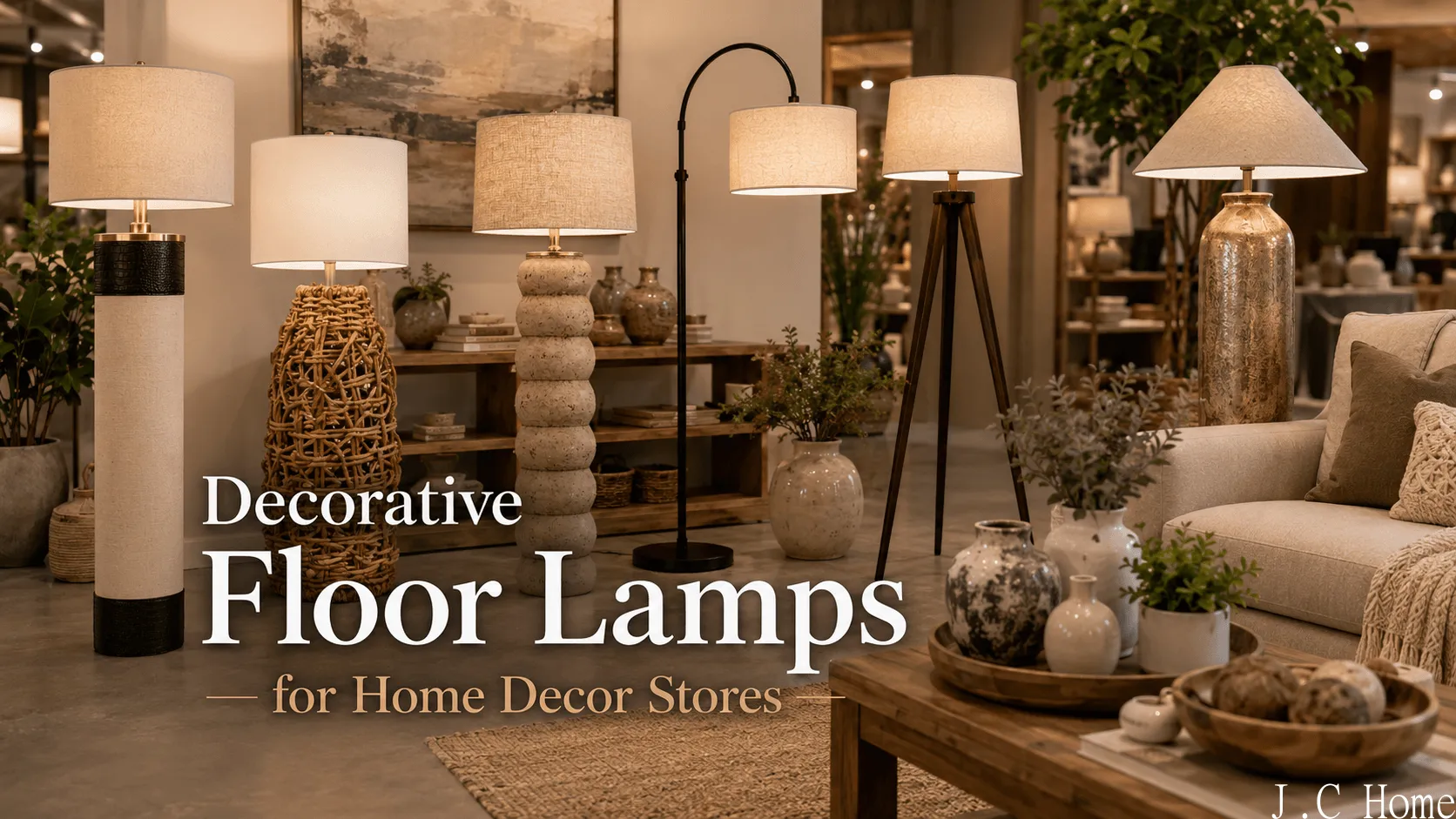
Decorative floor lamps for home decor stores should do more than fill an empty corner. They should help retail buyers build a clear lighting collection, support living room and bedroom display stories, match target customer styles, and reduce avoidable sourcing risks.
For home decor stores, floor lamps sit between furniture, lighting, and decorative accessories. Therefore, buyers need to compare style direction, scale, materials, shade construction, packaging, target-market requirements, and long-term replenishment plans before placing an order.
JC Home Decor supports decorative lighting and home decor categories for retail partners, importers, design-related buyers, and selected project needs. You can review current floor lamps or contact JC Home Decor with your style direction, target market, quantity range, and packaging needs.
Why Floor Lamps Matter in Home Decor Retail Collections
Floor lamps help home decor stores create complete room stories. A table lamp may decorate a console or bedside table, but a floor lamp gives height, vertical rhythm, and stronger visibility in a retail display.
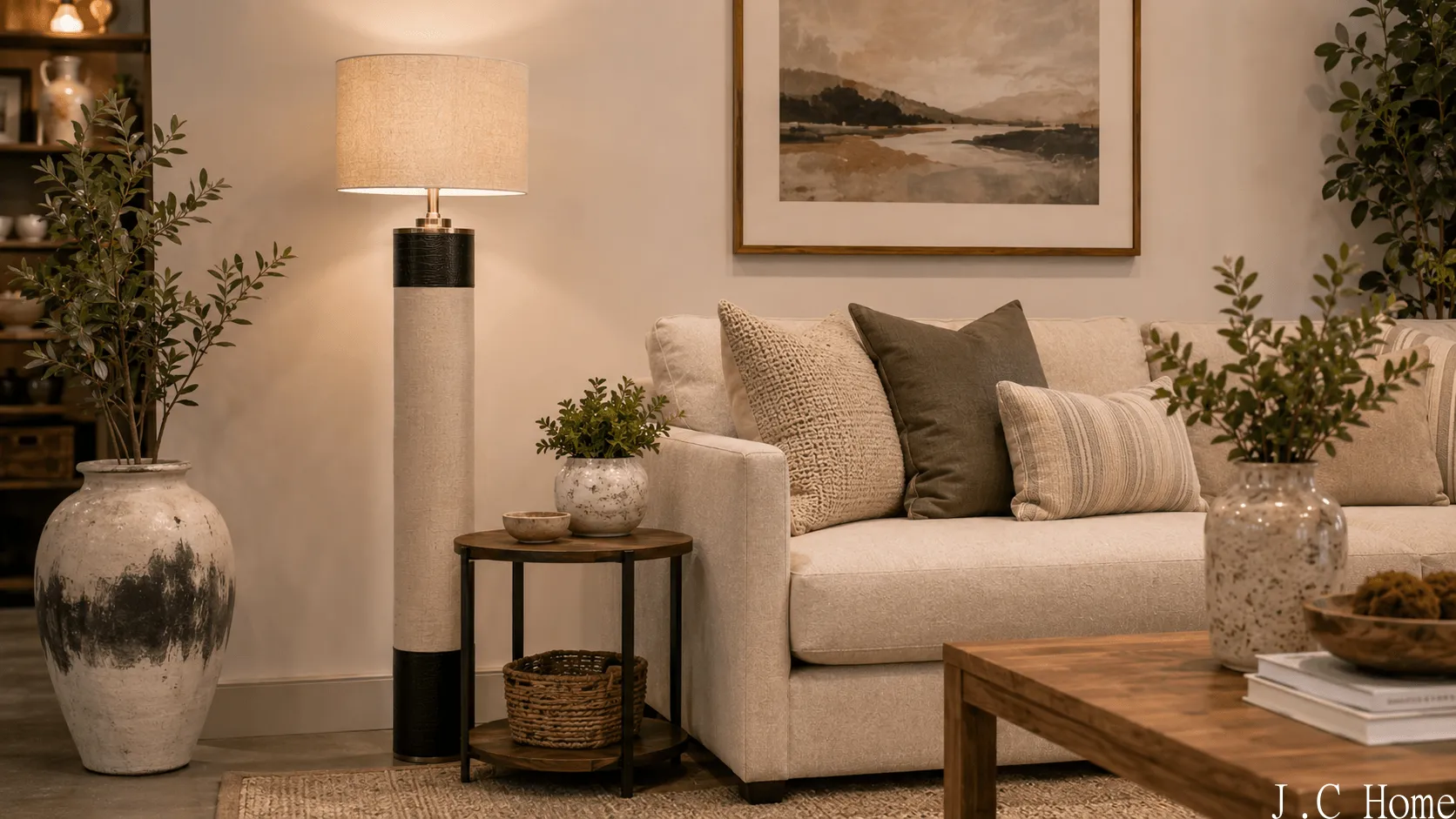
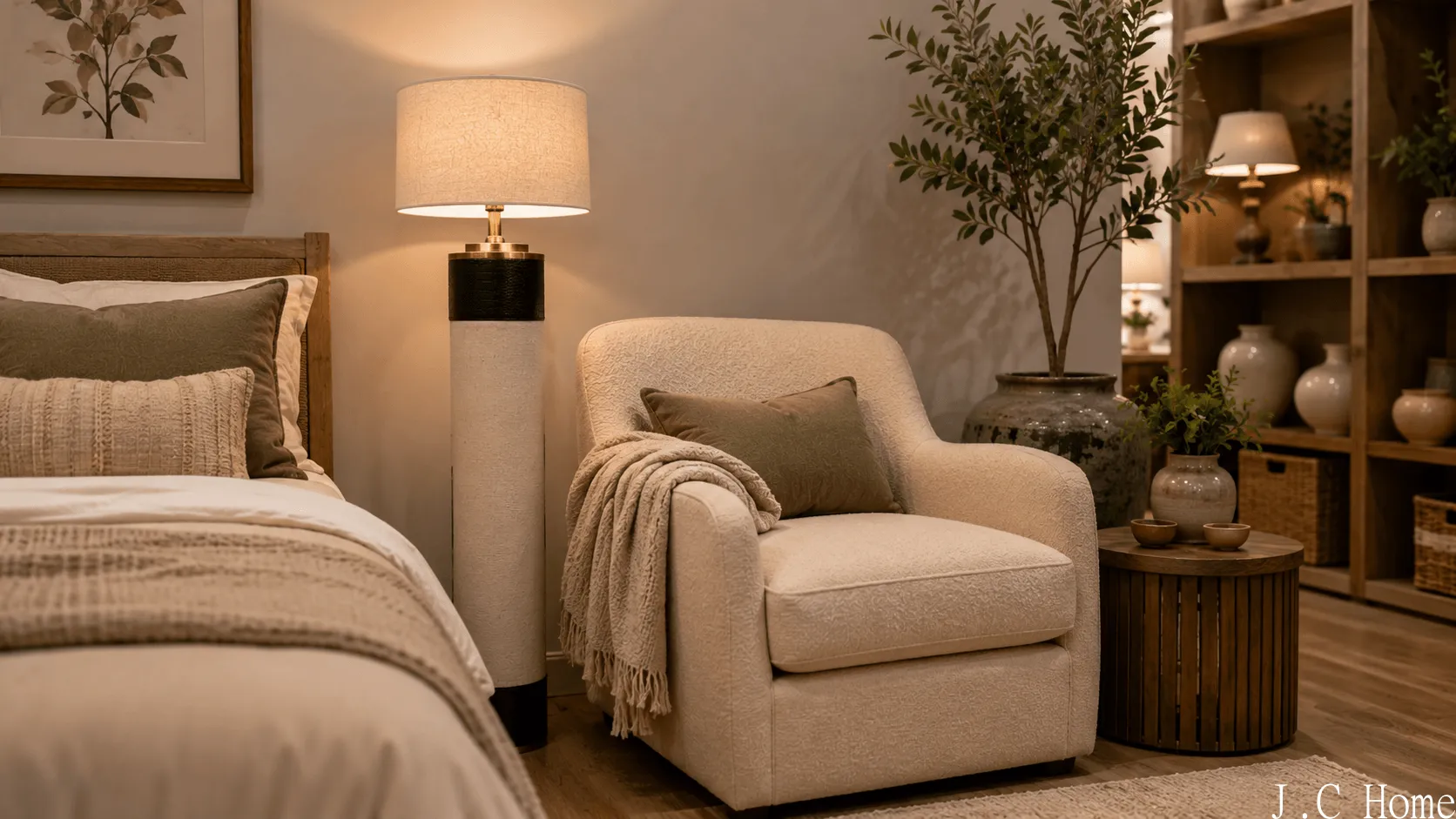
In a living room display, a floor lamp can sit beside a sofa, lounge chair, media unit, or reading corner. In a bedroom display, it can support a softer night-time mood near a chair, wardrobe, or bed corner.
For retailers, this means floor lamps are not only single products. They can connect lighting, furniture, vases, rugs, wall decor, and table top accessories into one coherent collection.
Good retail floor lamp planning should answer four questions:
- Does the style fit the store’s customer base?
- Does the scale look right beside furniture?
- Does the lamp support a clear lighting purpose?
- Can the supplier support repeat orders, packaging, and customization?
Match Floor Lamp Styles With Store Positioning
Search demand around floor lamps often includes style words. Buyers may compare mid-century modern floor lamps, rustic floor lamps, vintage floor lamps, farmhouse floor lamps, industrial floor lamps, and modern minimalist floor lamps.
These keywords are useful because they reflect real customer language. However, a retail buyer should not select styles only because a phrase is popular. The style must also fit the store’s furniture, price position, customer taste, and display plan.
Popular Floor Lamp Styles for Retail Collections
| Floor Lamp Style | Main Visual Direction | Suitable Store Direction | Details to Confirm |
|---|---|---|---|
| Mid-century modern floor lamps | Slim stems, warm metal tones, rounded or geometric forms | Design-led home decor stores, furniture showrooms, lifestyle brands | Finish color, shade shape, base stability, metal tone consistency |
| Rustic floor lamps | Natural textures, wood-tone finishes, woven details, relaxed forms | Coastal, lodge, natural home, resort-style collections | Material variation, surface finish, shade texture, color consistency |
| Vintage floor lamps | Aged finishes, decorative silhouettes, nostalgic shapes | Eclectic home stores, boutique decor retailers | Finish repeatability, aging effect, fragile details, packaging protection |
| Farmhouse floor lamps | Warm neutral colors, simple shades, wood or metal accents | Country, cottage, family home, casual living collections | Shade fabric, body finish, plug type, carton protection |
| Industrial floor lamps | Metal structure, darker finishes, exposed or structured forms | Loft, urban, masculine, commercial-style displays | Welds, coating, joint alignment, cord route |
| Modern minimalist floor lamps | Clean lines, neutral tones, simple structure | Contemporary home decor stores and apartment-focused collections | Proportion, glare control, finish smoothness, shade quality |
Aligning Style with Store Positioning
A home decor store can carry more than one style. However, each style group should have a clear display story. For example, a modern minimalist floor lamp may work with clean ceramic vases and neutral sofas, while rustic floor lamps may work better with woven baskets, textured pots, and warm wood furniture. Consequently, aligning the chosen style with the store’s overall aesthetic ensures a harmonious shopping experience and increases the likelihood of cross‑selling complementary items.
Choose by Room Use: Living Room Floor Lamps vs Bedroom Floor Lamps
Retail buyers should connect product style with room use. This helps customers understand where the lamp belongs and how it improves the room.
Living room floor lamps usually need stronger visual presence. They may sit beside sofas, lounge chairs, or display shelving. Therefore, height, shade size, and base proportion matter.
Bedroom floor lamps usually need softer light and a calmer shape. They often work near a reading chair, dressing corner, or bed area. In this case, glare control, switch access, and shade softness become more important.
Living Room vs Bedroom: Key Differences
| Room Application | Main Buyer Goal | Useful Floor Lamp Direction | Retail Display Tip |
|---|---|---|---|
| Living room floor lamps | Create a styled corner and add layered light | Tall decorative lamp, arc lamp, tripod lamp, or sculptural floor lamp | Place beside a sofa, chair, side table, rug, and vase set |
| Bedroom floor lamps | Support soft mood and secondary lighting | Fabric shade floor lamp, warm neutral finish, slim base | Display near a lounge chair, throw blanket, bedside scene, or wardrobe corner |
| Reading corner | Add task-friendly light without harsh glare | Adjustable shade, pharmacy-style lamp, or focused floor lamp | Show with a chair and books to make the function clear |
| Retail entrance display | Attract attention from a distance | Statement lamp or distinctive body finish | Use with matching table lamps or decor accessories |
| Furniture showroom | Complete room settings | Neutral, scalable, and easy-to-match designs | Rotate lamps across several furniture sets |
| Design project sample area | Help buyers compare finishes | Customizable model with finish and shade options | Show material swatches beside the lamp |
Light Output and Lumens
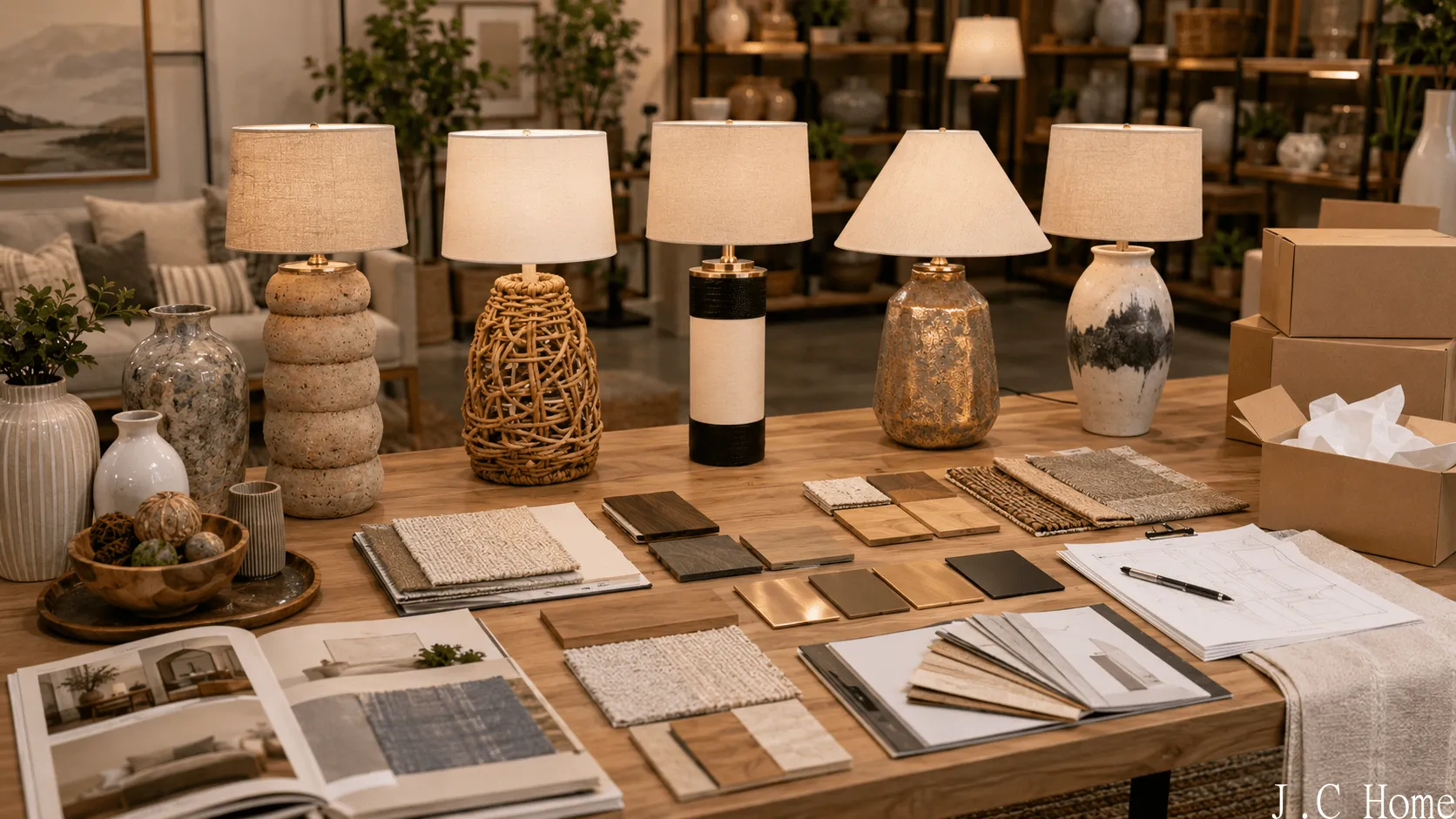
Buyers should also think about bulb and light output. The U.S. Department of Energy explains that buyers should compare lumens instead of watts3 when choosing brightness. This matters because a decorative lamp can look attractive in photos but still fail if the final bulb and shade do not support the room’s intended light level. Additionally, ensuring the correct lumen output helps retailers avoid customer complaints about dim or overly harsh lighting.
Evaluate Materials, Finishes, and Shade Construction
A decorative floor lamp combines several parts. Buyers should review the base, body, stem, shade, socket, cord, switch, finish, and packaging together.
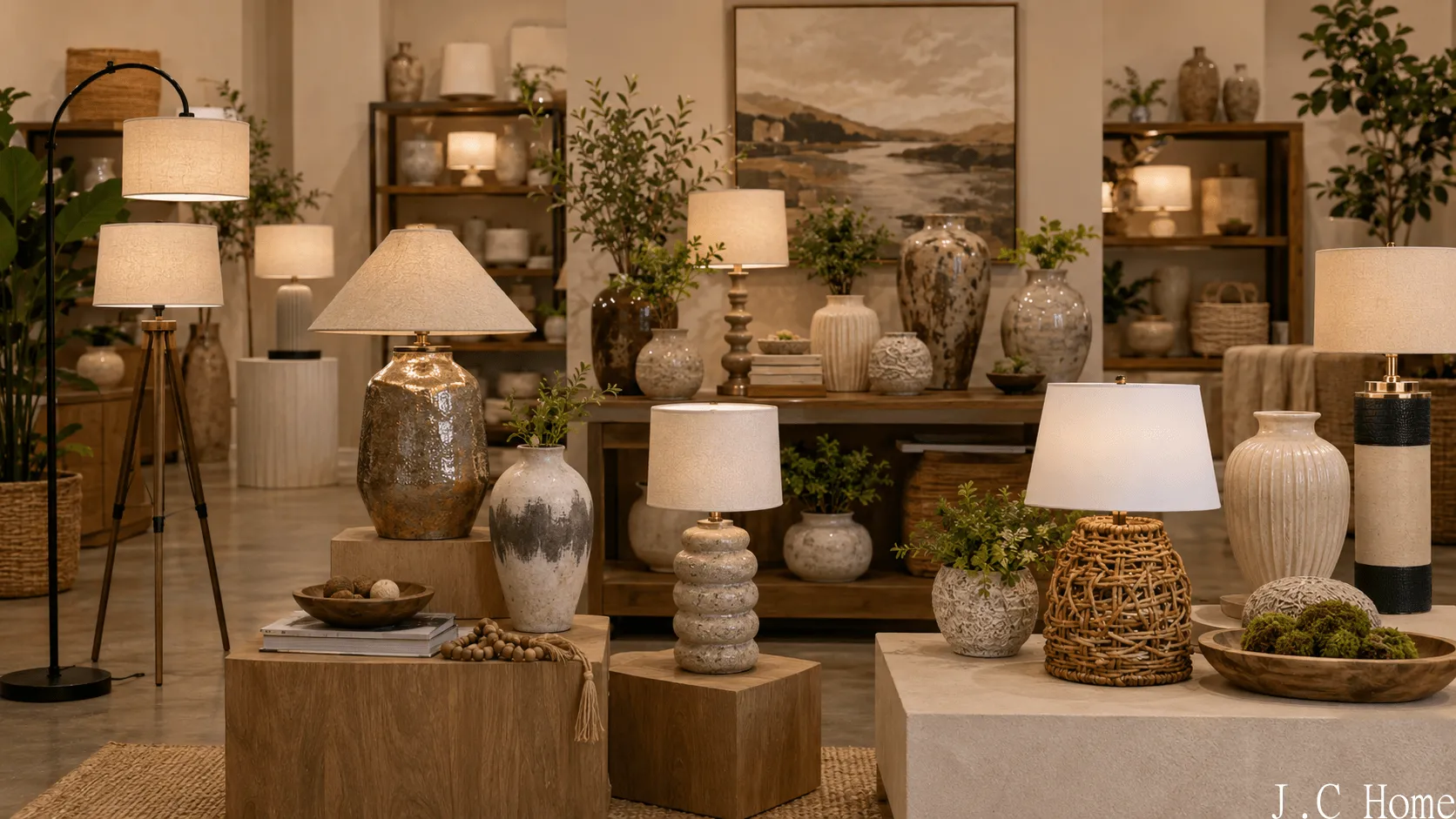
Material choice affects the lamp’s look and sourcing logic. Metal may support slim industrial or modern minimalist floor lamps. Wood-tone or woven materials may support rustic and farmhouse floor lamps. Ceramic, resin, or carved decorative bodies can create stronger visual identity for home decor stores.
The shade also matters. A fabric shade may soften the light and create a warm living room or bedroom mood. A woven trim may add natural texture. A darker shade may look dramatic, but it can reduce visible brightness.
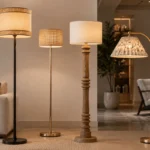
Before ordering, buyers can review JC Home Decor examples such as JH60404 with woven trim shade and YP604-58 with a natural wood-tone carved body to compare different decorative directions.
A floor lamp that looks good in one photo will always work in a retail collection. False
Product photos do not confirm scale, shade quality, base stability, wiring details, or packaging protection. Retail buyers should review samples and specifications before bulk confirmation.
A coherent floor lamp collection starts with style, scale, and repeatability. True
Home decor stores need products that look attractive together and can be reordered with consistent finishes, shade colors, packaging, and product information.
Build a Retail Collection, Not Only a Single Product
Home decor stores often need a product range, not one isolated lamp. A useful collection may include two or three floor lamp styles, matching table lamps, decorative vases, pots, and table top accessories.
This approach helps the store sell by room concept. It also helps buyers maintain a clearer purchasing plan.
For example, a modern minimalist floor lamp can be paired with clean table lamps and simple ceramic decor. A rustic floor lamp can be matched with woven table lamps, textured pots, and natural-color accessories. A vintage floor lamp can support an eclectic retail corner with aged finishes and layered decor.
JC Home Decor’s custom home decor and lighting solutions page can support buyers who want to discuss materials, finishes, dimensions, lamp shades, hardware, and packaging for coordinated collections.
Custom Options Home Decor Store Buyers Should Discuss
Customization should solve a business problem. It should not create unnecessary complexity.
For home decor stores, useful custom options often include finish color, shade material, shade shape, packaging, labels, plug type, and product information. These details affect retail display, customer experience, logistics, and repeat orders.
| Custom Area | Why It Matters | What Buyers Should Prepare |
|---|---|---|
| Lamp height and base size | Controls proportion beside sofas, beds, and display furniture | Target room use, preferred height range, display photos |
| Body material and finish | Defines style identity and collection consistency | Finish reference, color sample, target style, existing collection photos |
| Shade fabric and shape | Affects light softness, glare, and visual balance | Shade color, texture direction, shape preference, opacity needs |
| Cord, plug, switch, and socket | Must match target market and user expectations | Target country, voltage request, plug type, switch position |
| Label and instruction sheet | Supports retail sales and customer use | Language needs, barcode, care notes, safety notes |
| Packaging | Protects shade, body, finish, and hardware in transport | Retail box needs, export carton needs, drop risk concerns |
| Product series planning | Helps repeat orders and display consistency | Style family, order frequency, matching product categories |
Buyers can also discuss related categories such as table lamps and decorative accessories when building a complete store collection.
Compliance and Safety Questions Before Ordering
Electrical products should be reviewed according to the target market and product configuration. Buyers should avoid approving a product from appearance alone.
For Europe, the European Commission explains that CE marking means products sold in the EEA have been assessed for applicable safety, health, and environmental protection requirements. It also explains that manufacturers carry out conformity assessment and prepare the technical file, while importers and distributors also have responsibilities for products placed on the EEA market through CE marking responsibilities1.
For lighting, Europe also applies energy labelling and ecodesign rules for light sources2. This means buyers should confirm whether the lamp, light source, packaging, and documentation need specific information for the target market.
For the United States, buyers should pay attention to electrical safety, cords, plugs, and product documentation. The U.S. Consumer Product Safety Commission highlights household electrical product concerns such as cord and wiring safety issues4. In commercial environments, buyers may also need to understand NRTL certification marks5 when a product must meet workplace electrical safety requirements.
This does not mean every floor lamp automatically has the same certification status. Buyers should ask for product-level documents that match the exact model, configuration, plug, wiring, and target market.
A logo or mark alone is enough to approve a floor lamp order. False
Buyers should request matching declarations, reports, labels, model information, and target-market details before confirming electrical products for retail sale.
Compliance review should happen before sampling or bulk order confirmation. True
Early review helps buyers avoid wrong plugs, missing labels, unclear documentation, packaging changes, and late-stage specification revisions.
Packaging and Logistics Are Part of Product Selection
Floor lamps can be difficult to pack because they may include long stems, large shades, finished surfaces, glass or ceramic bodies, and hardware parts. Therefore, packaging should be discussed early.
A store buyer should not wait until the final stage to ask about cartons, internal supports, shade protection, labels, instructions, and assembly parts.
Useful packaging questions include:
- Will the shade ship assembled or separately protected?
- Does the body need surface wrapping to prevent scratches?
- Are the stem, base, socket, and shade parts clearly separated?
- Does the carton support retail display or only export transport?
- Are labels, barcodes, instructions, and carton marks required?
- Will replacement parts be available for long-term replenishment?
A product that arrives damaged or difficult to assemble can hurt retail sell-through. Therefore, packaging should be part of the quotation discussion, not an afterthought. Moreover, clear packaging specifications reduce the risk of returns and enhance the unboxing experience for end customers.
What to Include in a Floor Lamp Inquiry
A clear inquiry helps a manufacturer understand the style, product use, and target market. It also reduces repeated revisions.
When contacting JC Home Decor, buyers can prepare the following information:
| Inquiry Item | Why It Helps |
|---|---|
| Product category | Confirms whether the request is for floor lamps, table lamps, pendants, or matching decor |
| Target market | Helps review plug, voltage, labeling, and documentation needs |
| Style direction | Clarifies whether the buyer wants mid-century modern, rustic, vintage, farmhouse, industrial, or minimalist styles |
| Room application | Helps select living room floor lamps, bedroom floor lamps, or retail display lamps |
| Quantity range | Helps review production plan and available options |
| Finish reference | Reduces misunderstanding about color and surface effect |
| Shade request | Helps confirm fabric, shape, trim, opacity, and packing needs |
| Packaging needs | Helps plan retail box, export carton, inner protection, and labels |
| Custom requirements | Helps separate essential changes from optional changes |
| Replenishment plan | Helps evaluate long-term product consistency and repeat order needs |
You can send these details through the Contact Us page. If some details are not fixed yet, mark them as open questions so the supplier can suggest practical options.
FAQ
1. What are decorative floor lamps for home decor stores?
Decorative floor lamps for home decor stores are floor-standing lamps selected for both lighting function and visual merchandising. They help stores create living room, bedroom, and lifestyle display scenes while supporting retail product collections.
2. Which floor lamp styles are useful for retail collections?
Useful styles include mid-century modern floor lamps, rustic floor lamps, vintage floor lamps, farmhouse floor lamps, industrial floor lamps, and modern minimalist floor lamps. The right style depends on the store’s customer profile, furniture mix, and display plan.
3. Are living room floor lamps different from bedroom floor lamps?
Yes. Living room floor lamps often need stronger visual scale and a clear decorative presence. Bedroom floor lamps usually need softer light, calmer finishes, and convenient switch access.
4. What should buyers check before ordering floor lamps in bulk?
Buyers should check height, base stability, body finish, shade quality, socket, plug, cord, switch, packaging, target-market requirements, and available product documents. A sample review is useful before confirming a larger order.
5. Can floor lamps be customized for retail stores?
Yes, many floor lamp details can be discussed, including size, finish, shade material, shade color, cord, plug, switch, logo, label, barcode, instruction sheet, and packaging. Final options depend on the product design and order requirements.
6. Do decorative floor lamps need compliance documents?
Electrical floor lamps may need documents based on the target market and product configuration. Buyers should confirm model-level documents, plug type, wiring, labels, and packaging requirements before ordering.
7. How can home decor stores build a coherent floor lamp collection?
Retail buyers can group floor lamps by style, material, finish, shade color, and room application. They can also coordinate floor lamps with table lamps, vases, pots, and table top accessories for stronger display stories.
8. What information helps JC Home Decor prepare a quotation?
Buyers should provide style references, target market, quantity range, room application, required dimensions, finish direction, shade request, electrical requirements, packaging needs, and expected replenishment plan.
Conclusion
Decorative floor lamps for home decor stores should be selected through a retail collection mindset. Buyers should compare style direction, room use, scale, materials, shade construction, compliance needs, packaging, and repeat order planning.
Mid-century modern floor lamps may support design-led interiors. Rustic and farmhouse floor lamps may fit warm natural collections. Vintage floor lamps can add character, while industrial and modern minimalist floor lamps can support urban and contemporary store displays.
For practical sourcing, start with the room application and target customer. Then confirm finish, shade, electrical configuration, packaging, and product-level documentation.
Explore JC Home Decor’s floor lamps collection to review current decorative directions. For a custom retail collection, send your product category, target market, quantity range, style references, material request, packaging needs, and replenishment plan through the Contact Us page.
References
-
European Commission — CE Marking — Supports the explanation of CE marking responsibilities for manufacturers, importers, and distributors in the EEA.
↩ -
European Commission — Light Sources — Supports the discussion of energy labelling and ecodesign requirements for light sources in Europe.
↩ -
U.S. Department of Energy — Lumens and the Lighting Facts Label — Supports the recommendation to compare light output by lumens rather than watts.
↩ -
U.S. Consumer Product Safety Commission — Household Electrical Products — Supports the safety discussion around electrical product risks, cords, and wiring.
↩ -
OSHA — Nationally Recognized Testing Laboratory Program — Supports the explanation of NRTL certification marks for certain products in workplace electrical safety contexts.
↩
Buyer Checklist Before Requesting a Quote
| Information to Prepare | Why It Helps |
|---|---|
| Product category and target use | Helps confirm the right lighting or decor direction. |
| Target market | Supports electrical, packaging, labeling, and document discussion. |
| Material, color, and finish direction | Reduces misunderstanding during sample communication. |
| Packaging and label needs | Important for fragile products and retail-ready planning. |
| Reference images or collection mood | Helps align design language before quotation. |
Clear buyer information helps reduce misunderstanding before sample and order communication.