J.C Home Decor and Lighting Manufactory


Introduction
The best rechargeable table lamp ideas begin with the place, not the product. A cordless accent lamp can add a useful pool of light where a wall outlet is inconvenient, while its shape, finish, and scale contribute to the room even when it is off. This guide shows homeowners, interior designers, retailers, and home decor brands how rechargeable lamps can support modern living rooms, bedrooms, reading corners, entryways, and flexible display areas. It also explains where another layer of lighting is still necessary.

Start With the Role of the Light
A rechargeable lamp works best as a movable layer rather than the only light in a room. It may provide a soft accent beside a sofa, make a shelf feel more intentional, or support a short reading session when its light output and shade direct light toward the page. However, the right role depends on brightness, beam direction, glare, and the surrounding light.
This layered approach matters because lighting quality involves more than simply adding brightness. The Canadian Centre for Occupational Health and Safety explains that suitable lighting should limit glare and shadows, and it identifies general, localized-general, and local lighting as distinct types.Its guidance supports matching the light source to the task and visual environment.1
| Modern home location | Best role for a rechargeable lamp | Placement cue | Add another light when… |
|---|---|---|---|
| Living room side table | Ambient accent and evening conversation light | Keep the light source near seated eye level but outside the direct sightline | The room needs safe circulation or detailed tasks |
| Bedside table | Low-level wind-down light | Leave space for a phone, book, and charging routine | Reading requires more focused brightness |
| Reading corner | Local light for short tasks | Place it to the side of the reader to reduce page shadow | The lamp cannot illuminate the page evenly |
| Entry console | Decorative welcome light | Pair the lamp scale with the console and wall art | The entry needs full navigation light |
| Open shelf | Sculptural accent | Use one lamp as a focal point, not one on every shelf | Deep shelves create dark pockets |
| Dining or kitchen surface | Temporary atmosphere away from outlets | Keep it clear of heat, water, and food preparation | The surface is used for active cooking or cleaning |
Living Rooms: Flexible Light Between Activities
Living rooms change throughout the day. A ceiling fixture may handle cleaning and circulation, while a rechargeable table lamp creates a calmer pool of light for conversation, music, or television. Because the lamp can move, it can shift from a side table to a console when the furniture layout changes.
Choose a visual weight that belongs with nearby furniture. A tall tapered body can balance a substantial sofa arm or a wide console. By contrast, a compact sculptural lamp suits a small pedestal, nesting table, or open shelving unit. In either case, leave negative space around the lamp so its silhouette remains clear.
For a coordinated product story, explore JC Home Decor’s Rechargeable Battery Lamps and compare them with the broader Table Lamps collection.
A rechargeable table lamp can replace every fixed light. False
A portable lamp usually serves one local area. General lighting may still be needed for circulation, cleaning, and activities that require even illumination.
Rechargeable lamps are useful as a movable lighting layer. True
Their cordless placement makes it easier to adjust an accent or local light as seating, displays, and daily activities change.
Bedrooms: Calm Placement Without Cable Clutter
A rechargeable lamp can simplify a bedside arrangement when an outlet is behind the bed or when a cable would cross the visible edge of a nightstand. It can also move to a dresser or window seat when the bedroom needs a softer evening mood.
Placement should still feel deliberate. Keep the lamp stable, allow room for essentials, and avoid putting a bright exposed source directly in the sleeper’s line of sight. If two lamps flank a bed, they do not need identical bodies, but similar visual height and light character will make the arrangement feel balanced.
Color and finish can reinforce the room palette. Soft stone, muted green, cream, and blue-and-white surfaces work naturally with modern neutral interiors. More reflective finishes create stronger highlights and deserve extra attention to glare.
Reading Corners: Direct the Light, Then Test the Page
A cordless lamp gives a reading chair more layout freedom, especially when the chair floats away from a wall. Yet portability alone does not make a good reading light. Test whether the page is evenly visible, whether a hand creates a distracting shadow, and whether the light source is uncomfortable from the seated position.

The shade or diffuser changes how the lamp performs. A more enclosed form can soften the source, while an opening toward the work surface can improve local illumination. Therefore, product development teams should evaluate the decorative body and the intended light distribution together rather than treating them as separate decisions.
Entryways and Shelves: Let the Lamp Act as Decor
An entry console benefits from objects with different heights. A rechargeable lamp can become the tallest element, while a tray, bowl, or small vase completes the lower layer. This arrangement remains useful even when the lamp is off because the product still reads as a sculptural home accessory.
On shelving, restraint is important. Use the lamp to anchor one visual zone, then repeat its color elsewhere with a book spine, vase, or textile. Avoid crowding ventilation openings, switches, or charging access. Also confirm that the shelf is deep and stable enough for the complete base.
The European Commission describes LED as a solid-state light source and places LED within the main light-source groups covered by European ecodesign and energy-labelling requirements.This is useful context when a decorative rechargeable lamp uses an integrated LED light source.2 Nevertheless, buyers should confirm the specific light source, controls, charging system, and target-market requirements for each product.
| Design variable | What to observe in the room | Practical direction |
|---|---|---|
| Height | Seated and standing sightlines | Keep an exposed bright source outside direct view |
| Body width | Available tabletop depth | Leave a stable margin around the base |
| Surface finish | Reflections from windows and ceiling lights | Use glossy finishes as highlights, not in high-glare positions |
| Light color | Wall, wood, textile, and artwork colors | Test the full palette under the intended light |
| Shade or diffuser | Beam spread and visible brightness | Match distribution to accent or local-light use |
| Charging access | Distance from a safe charging position | Plan a repeatable charging place before styling |
Open-Plan Kitchens and Dining Areas: Use With Boundaries
A rechargeable lamp can soften a breakfast table, sideboard, or kitchen-adjacent shelf after active food preparation ends. It can also help visually connect a dining zone with the living area. However, portable does not mean suitable for every surface.
Keep the lamp away from sinks, steam, hot cookware, and busy preparation zones unless the product is specifically confirmed for those conditions. Do not assume water resistance, battery runtime, dimming, or charging specifications from appearance. For collection planning, confirm these details before assigning a lamp to a use scenario.
Cordless means the lamp can be charged anywhere without planning. False
Charging still requires the correct product instructions, compatible equipment, a suitable environment, and routine checks for damage or unusual heat.
A fixed charging home makes portable lighting easier to manage. True
A consistent, clear location reduces cable clutter and encourages users to notice the lamp and charger condition before reuse.
Battery care belongs in the placement plan. The U.S. Fire Administration advises users to follow product instructions and stop using lithium-ion batteries if they show unusual heat, odor, shape change, leaking, or odd noises.Its battery safety guidance also recommends keeping batteries away from direct sunlight and excessive heat.3
Match the Form to the Interior Story
Rechargeable lamps do not need to look purely technical. A leaf-relief body can support organic modern rooms, a stone-look loop can suit quiet sculptural interiors, and a blue-and-white patterned form can bring character to a neutral setting.
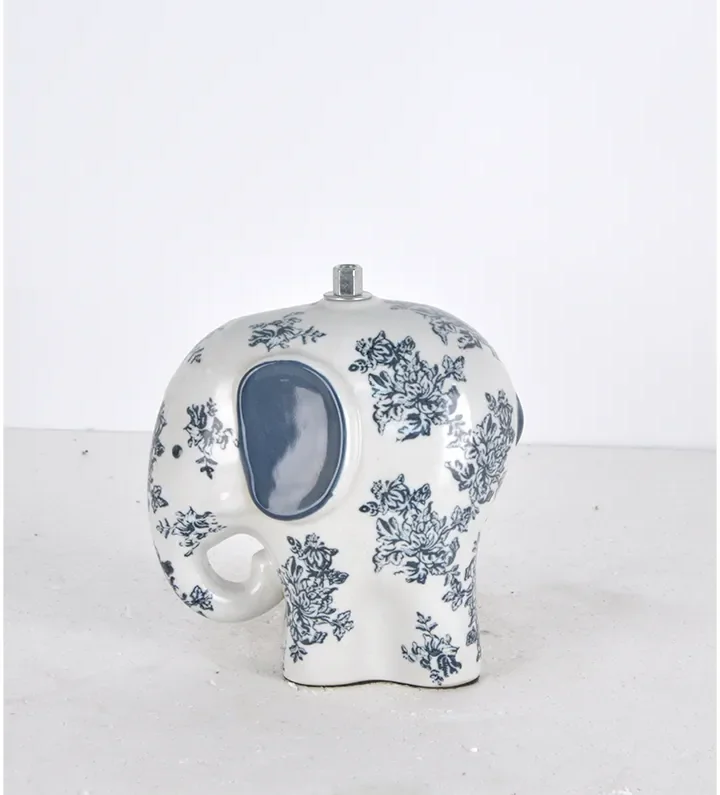
For brands and retailers, this decorative range creates room for coordinated finishes, patterns, shades, and packaging presentation. For designers, it means the lamp can repeat an existing material or introduce one controlled accent. JC Home Decor can discuss visible product directions such as body form, finish, shade relationship, and packaging, while electrical and battery details should be confirmed for the intended market and use.
A Simple Placement Test
Before finalizing a rechargeable lamp location, use the room in its normal way. Sit down, walk past the table, open nearby doors, and reach for objects around the lamp. Then check the following points:
- The base sits fully on a stable surface.
- The light does not shine directly into common sightlines.
- The lamp does not obstruct doors, drawers, or daily objects.
- Heat, water, and direct sunlight are not nearby.
- The switch and charging connection remain accessible.
- General lighting still supports safe movement through the room.
This short test is more reliable than styling from a front-facing photograph alone. It connects the decorative composition with the way people actually move through the space.
FAQ
Where should a rechargeable table lamp go in a living room?
Place it on a stable side table, console, or shelf where it supports a specific seating or display zone. Keep bright parts outside direct seated sightlines and use general lighting for circulation.
Can a rechargeable lamp work as a bedside light?
Yes, especially when an outlet is inconvenient or a visible cable would disrupt the arrangement. Confirm that the light distribution suits wind-down use or reading, and maintain a clear charging routine.
Are rechargeable lamps suitable for reading corners?
They can be, but brightness and beam direction matter more than portability. Test the page from the actual seated position and add another task light if illumination is uneven.
How do I choose the right lamp size for a small table?
Start with the base footprint and the table depth. The complete base should sit securely with space left for normal use, while the lamp height should remain comfortable from nearby seated positions.
Do two bedside rechargeable lamps need to match?
Not necessarily. Different bodies can work together when their visual height, shade scale, finish family, or light character creates a clear relationship.
Can I use a rechargeable lamp in a kitchen?
Use it only in a dry, stable area away from sinks, heat, steam, and active preparation. Confirm the product’s intended conditions rather than assuming protection from its appearance.
What color rechargeable lamp works in a modern neutral room?
Muted green, stone, cream, warm gray, and blue-and-white can all work. Choose a finish that either repeats an existing room color or provides one intentional accent.
How should rechargeable lamps be charged safely?
Follow the product instructions and use the specified charging equipment. Keep the charging area away from heat and direct sunlight, and stop using the battery if you notice damage, unusual heat, odor, leaking, shape change, or unusual sounds.
Conclusion
The strongest rechargeable table lamp ideas connect flexible placement with a clear lighting role. Living rooms, bedrooms, reading corners, entryways, shelves, and dining-adjacent surfaces can all benefit when scale, glare, stability, charging access, and surrounding light are considered together. For coordinated rechargeable lamp forms and finishes, review the JC Home Decor collection or contact the lighting team with your target room, style direction, and product requirements.
References
-
Canadian Centre for Occupational Health and Safety: Lighting Ergonomics – General – Supports the discussion of glare, shadows, visual tasks, and layers of artificial lighting.
Back -
European Commission: Light Sources – Provides official context on LED light sources and European ecodesign and energy-labelling coverage.
Back -
U.S. Fire Administration: Battery Fire Safety – Supports the battery charging, storage, heat, and damage warning guidance.
Back