J.C Home Decor and Lighting Manufactory


Introduction
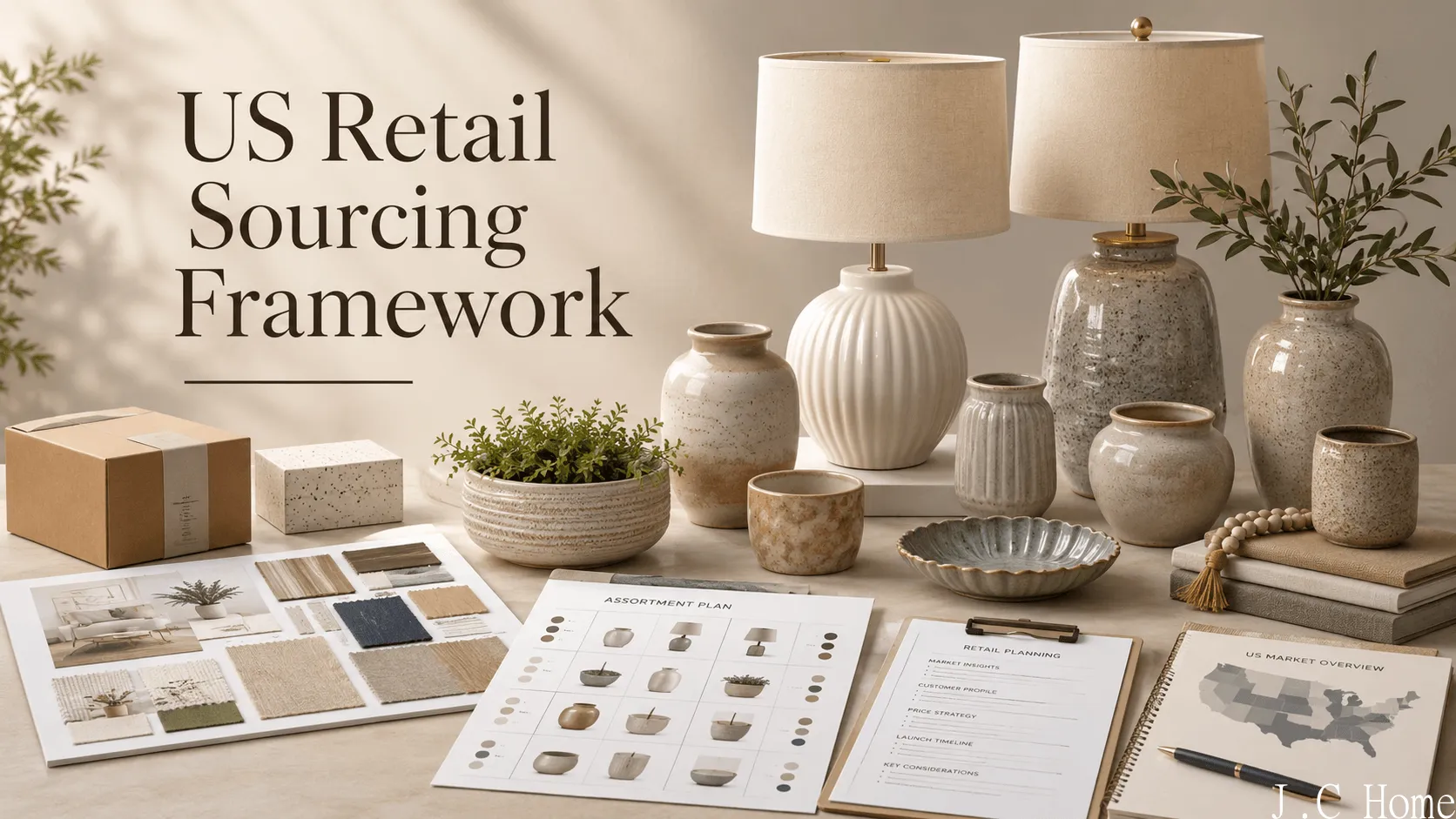
You need a home decor manufacturer China strategy when your U.S. retail program depends on coordinated products, reliable packaging, and repeatable seasonal assortments. In the U.S. retail market, you also need import planning, product safety checks, and distribution-ready packaging before a collection reaches stores or online channels. Before selecting styles, you should decide how each SKU supports merchandising, margin structure, and replenishment. This framework helps you connect supplier strategy, product assortment, import planning, and retail distribution into one practical sourcing system.
What Strategic Sourcing Means for US Retailers
Strategic sourcing is not only about finding a factory. Instead, it means building a repeatable method for choosing products, confirming supplier capability, planning import requirements, and preparing assortments for retail channels.
For U.S. home decor retailers, this approach is especially useful because decorative products often sit between trend, function, packaging, and logistics. A ceramic table lamp, vase, pot, or tabletop accessory must look attractive in store. However, it also needs stable production details, safe packaging, and clear product information.
A good framework should answer five questions:
- Which product categories support the retail story?
- Which supplier can support repeat collections?
- Which details must be confirmed before import?
- Which packaging format fits retail distribution?
- Which products should be reordered, refreshed, or replaced?
JC Home Decor supports lighting and decor categories, including table lamps, rechargeable battery lamps, floor lamps, ceiling pendants, ceramic vases, pots, and tabletop accessories. Therefore, the sourcing conversation can focus on product families instead of isolated SKUs.
Start With Retail Assortment, Not Individual Products
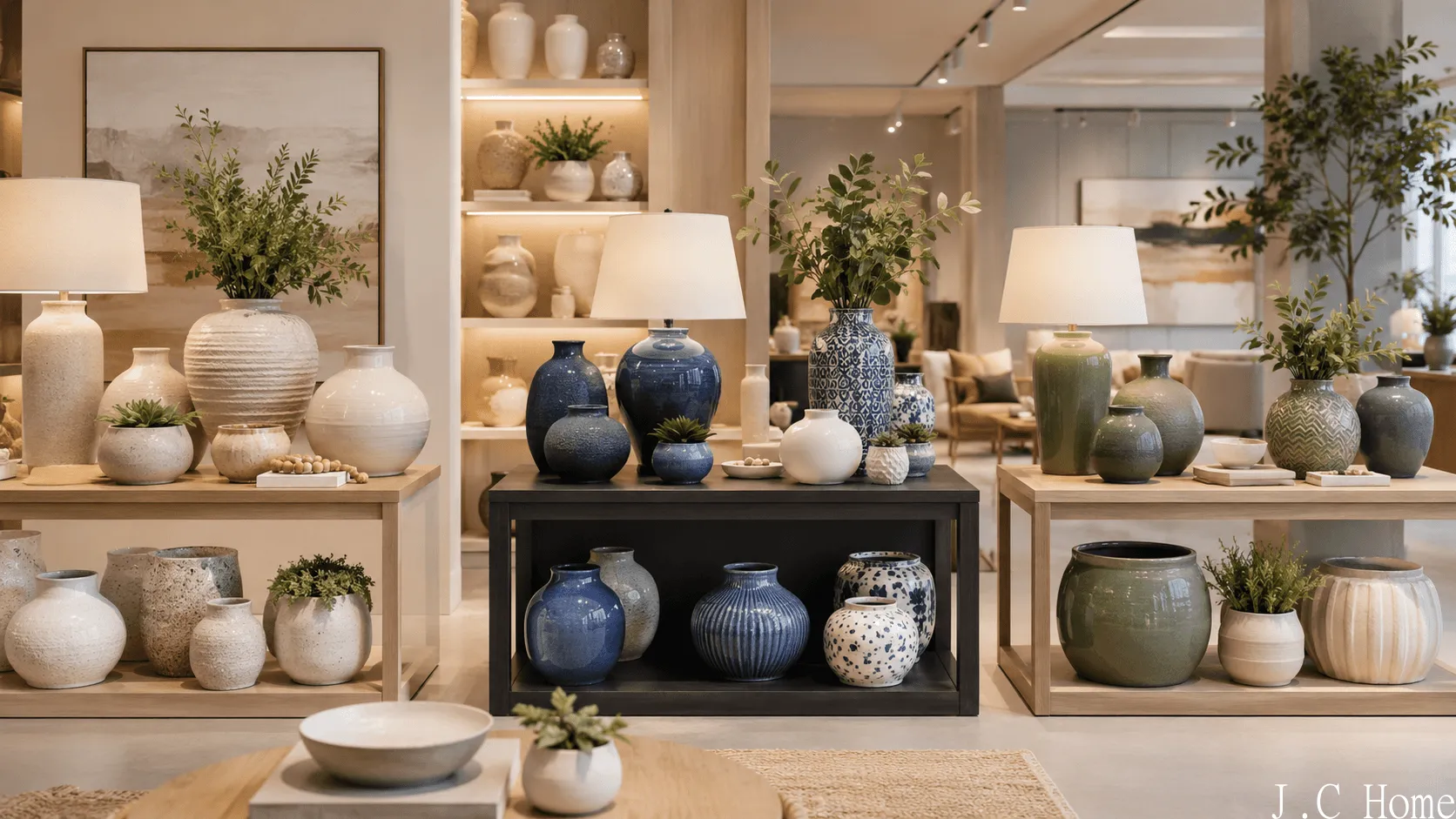
A product assortment is the collection of SKUs a retailer presents to customers across a season, display theme, channel, or price tier. Because home decor is visually driven, assortments should feel coordinated even when products come from different categories.
For example, a U.S. retailer may combine ceramic table lamps, vases, and tabletop accessories in one neutral living room story. Another retailer may plan a bolder color collection for seasonal display, gift channels, or online bundles.
Instead of asking only for a catalog, buyers should prepare an assortment brief. This brief should explain the style direction, target retail channel, product mix, preferred materials, and packaging needs.
| Assortment Question | Why It Matters | What to Prepare |
|---|---|---|
| Which room or display story will the products support? | It helps the manufacturer suggest compatible forms, finishes, and sizes. | Living room, bedroom, entryway, shelf display, or seasonal table setting |
| Which categories should work together? | It prevents a disconnected product line. | Lamps, vases, pots, tabletop accessories, or mixed decor |
| Which color direction fits the U.S. customer base? | It guides glaze, finish, and surface choices. | Neutral, warm, coastal, rustic, modern, or seasonal palette |
| Which channel will sell the products? | Retail stores, e-commerce, and wholesale distribution may need different packaging. | Store display, drop ship, carton shipment, or marketplace selling |
| Which items need replenishment? | It separates trend products from long-term repeat styles. | Core line, seasonal line, limited refresh, or trial SKU |
This is where a manufacturer relationship becomes more useful than a one-time product search. Moreover, an organized brief helps both sides discuss realistic customization, production consistency, and retail presentation.
Match Product Categories to Retail Roles
Different home decor categories play different roles in retail merchandising. Therefore, U.S. buyers should not evaluate every product with the same criteria.
Lighting often acts as a higher-attention category because it changes the mood of a room. In contrast, vases and tabletop accessories can support faster visual refreshes. Pots may fit both decorative and lifestyle displays, especially when paired with greenery or seasonal styling.
| Product Category | Retail Role | Sourcing Focus | Useful Internal Link |
|---|---|---|---|
| Ceramic table lamps | Anchor product for room displays | Shape, glaze, shade style, carton protection, electrical details | ceramic table lamps |
| Rechargeable battery lamps | Flexible lighting for shelves, cafes, and compact spaces | Battery details, charging interface, finish consistency, instructions | rechargeable battery lamps |
| Floor lamps | Larger visual statement | Stability, shade proportion, carton strength, retail positioning | lighting collections |
| Ceramic vases | Seasonal and decorative display | Size mix, glaze color, surface texture, coordinated sets | wholesale ceramic vases |
| Pots and tabletop accessories | Add-on decor and lifestyle styling | Finish variety, packaging efficiency, shelf compatibility | JC Home Decor solutions |
Because ceramic is highly flexible in color, glaze, and surface texture, it works well for coordinated retail stories. However, buyers should still confirm which finish details are suitable for repeat production before placing larger orders.
A strong retail assortment is just a larger catalog selection. False
A larger catalog can still feel unfocused. Retailers need a clear style story, channel plan, packaging direction, and replenishment logic before choosing final SKUs.
Coordinated categories improve retail presentation. True
When lamps, vases, pots, and tabletop accessories share a clear material or color direction, retailers can build stronger displays and easier product stories.
Build a Supplier Strategy Around Repeatability
A U.S. retailer should evaluate a home decor manufacturer China partner by looking at repeatability, not only product variety. Trend speed matters, but retail teams also need products that can be reordered with stable appearance and packaging.
Repeatability includes several practical areas. First, the manufacturer should understand the approved sample. Then, the production team should manage color, surface, shape, and carton details during batch production. Finally, communication should remain clear when the buyer adjusts packaging, labels, or assortment quantities.
For ceramic-led decor, repeatability is especially important because glaze, firing, and surface texture can create natural variation. Some variation can add character. However, retail buyers need an acceptable range before production begins.
What to Confirm Before Scaling
U.S. retailers should confirm these points early:
- Approved sample reference
- Product dimensions and acceptable tolerance
- Finish direction and color range
- Carton structure and inner protection
- Labeling and country-of-origin marking needs
- Retail packaging or master carton requirements
- Reorder plan for core SKUs
- Target market requirements for lighting or general decor
This step keeps sourcing practical. In addition, it prevents the supplier discussion from becoming only about price.

Include Import Planning From the Start
Import planning should begin before final SKU approval. Although many home decor products look simple, import requirements can still affect documentation, labeling, product safety confirmation, and customs entry.
U.S. Customs and Border Protection explains that importers and the importing community share responsibility for compliance with laws and regulations. Therefore, retailers should treat classification, value, country of origin, and supporting documents as part of the sourcing workflow, not as a final shipping task. Buyers can review CBP importing guidance1 before confirming repeat shipments.
Country-of-origin marking also matters for imported goods. For this reason, buyers should verify label placement and wording before packaging artwork is finalized. The U.S. rules are detailed in 19 CFR Part 1342, which covers country-of-origin marking requirements and exceptions.
If the assortment includes lamps or other regulated consumer products, buyers should also confirm relevant product safety and certification needs. CPSC notes that manufacturers and importers of general use products subject to consumer product safety rules must certify compliance, and CPSC also highlights eFiling requirements for many regulated imports beginning July 8, 2026. Review CPSC certification guidance3 when planning U.S. lighting and decor programs.
Design Packaging for Retail Distribution
Packaging should protect the product, support retail presentation, and fit the distribution route. However, these goals are not always the same.
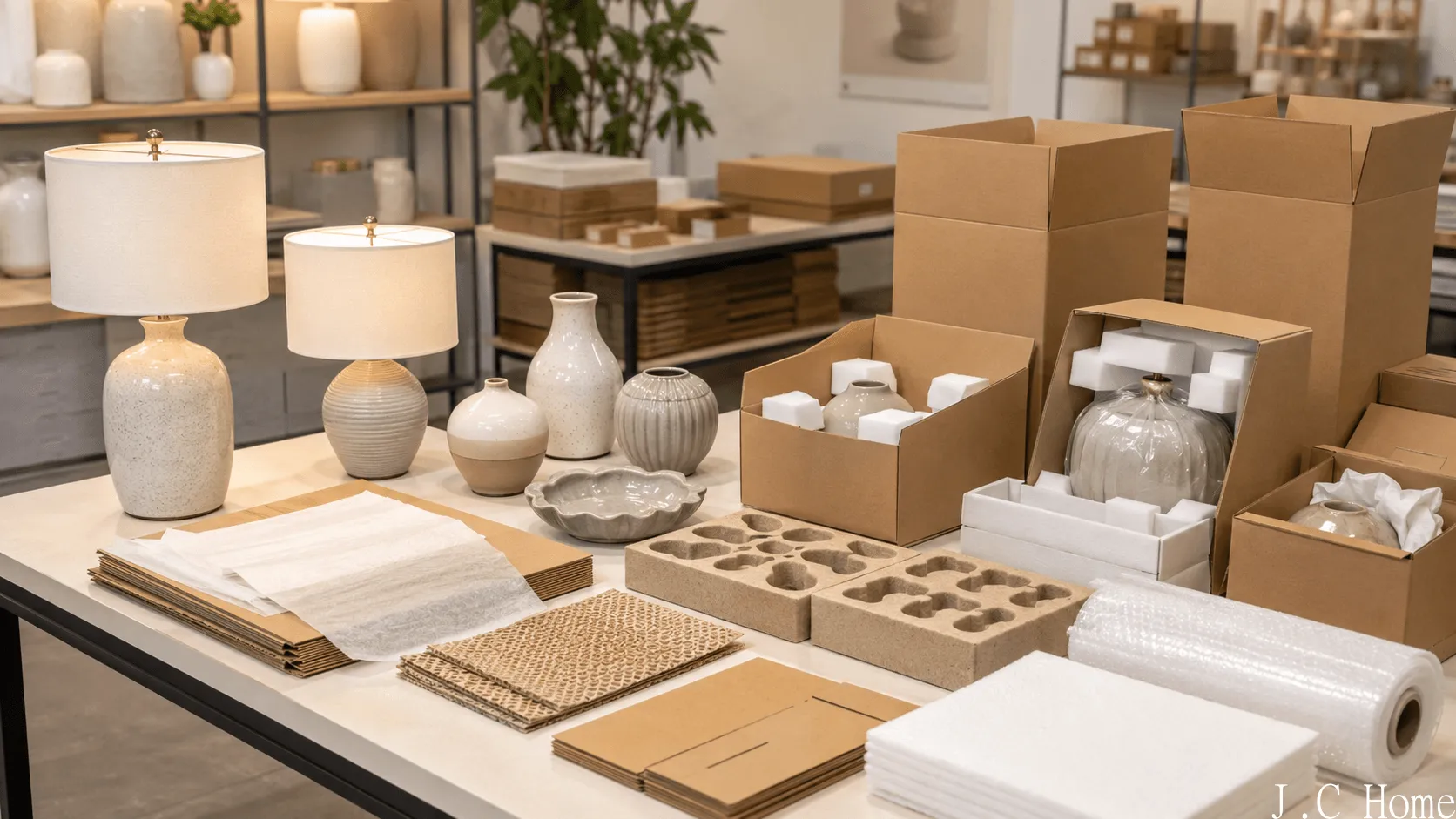
A ceramic lamp may need stronger inner protection because the base, shade, and fittings can move during transit. A vase may need impact protection around the rim and body. Meanwhile, a retail-ready box may require clear product information, barcode space, and shelf-friendly presentation.
ISTA test procedures cover different packaging test types, from early screening to simulations of transport hazards. Therefore, buyers can use ISTA packaging test procedures4 as a reference when discussing packaging expectations with internal teams, freight partners, or test providers.
| Distribution Route | Packaging Priority | Buyer Should Confirm |
|---|---|---|
| Retail store delivery | Shelf presentation and master carton efficiency | Retail box layout, barcode area, carton strength |
| E-commerce shipment | Individual protection and handling resistance | Drop protection, inner cushioning, outer carton size |
| Wholesale distributor | Palletization and mixed-carton clarity | Carton marks, SKU separation, packing list accuracy |
| Seasonal retail program | Fast identification and display readiness | Color labels, item images, set information |
| Replenishment program | Repeat carton structure | Approved packaging sample and reorder consistency |
Packaging should be discussed before final quotation when it affects cost, carton size, or retail presentation. Otherwise, a product may look acceptable at the sample stage but create problems during distribution.
Packaging is only a shipping detail after product approval. False
Packaging affects damage risk, retail display, carton volume, labeling, and distribution handling. It should be part of the sourcing framework from the first quotation stage.
Retail distribution needs packaging decisions early. True
When retailers confirm channel, carton structure, and presentation needs early, the manufacturer can align product design, packing method, and shipment preparation more effectively.
Connect Sourcing to Inventory Planning
Strategic sourcing should also support inventory planning. A retailer that buys too narrowly may miss sales opportunities. However, a retailer that buys too widely may tie up cash in slow-moving SKUs.
The Federal Reserve Bank of St. Louis explains that the retail inventory-to-sales ratio indicates how many months of inventory retailers hold in relation to sales. This makes inventory planning a useful sourcing lens, not only a finance metric. Buyers can review retail inventory-to-sales ratio data5 when considering broader retail inventory pressure.
NRF also notes that retailers are investing in inventory management and supply chain tools to forecast demand, optimize stock levels, and improve logistics efficiency. As a result, sourcing teams should prepare manufacturer discussions around flexible assortment planning, reorder logic, and product line refreshes. NRF’s retail trend coverage provides useful context on inventory management and supply chain priorities6.
A practical home decor sourcing plan can divide products into three groups:
- Core repeat items: stable shapes, neutral colors, and reliable reorder demand
- Seasonal refresh items: color, glaze, or surface updates for visual change
- Test items: smaller quantity styles used to measure customer response
This model helps retailers avoid treating every SKU as equally important. Moreover, it gives the manufacturer clearer direction for production planning and sample development.
Use Customization Carefully
Customization can make a retail assortment more distinctive. However, it should support a commercial goal.
For ceramic lighting and decor, customization may include color, glaze, surface texture, shape adjustment, shade choice, logo placement, retail packaging, or product grouping. Still, each custom detail should be reviewed for production repeatability, packaging impact, and target market requirements.
A retailer should not customize every product at once. Instead, the first step can be adapting an existing form with a market-specific finish. Then, the team can expand into exclusive shapes or complete product families after sales response becomes clearer.
If your team is planning a custom retail line, you can review JC Home Decor solutions and prepare style references, color direction, target channel, packaging requirements, and expected product categories before contacting the manufacturer.
Build a Clear Inquiry Package
A strong inquiry package helps a manufacturer respond with better suggestions. It also reduces back-and-forth communication.
| Inquiry Item | What to Include | Why It Helps |
|---|---|---|
| Target market | United States, retail channel, store type, or online channel | Helps align packaging, labeling, and product expectations |
| Product categories | Table lamps, rechargeable lamps, vases, pots, tabletop accessories | Helps the supplier suggest related product families |
| Style direction | Mood board, finish references, color palette, material preference | Helps avoid vague design communication |
| Packaging needs | Retail box, master carton, barcode area, inner protection | Helps estimate packaging impact early |
| Import notes | Labeling, documentation, regulated product concerns | Helps avoid late compliance surprises |
| Reorder plan | Core styles, seasonal refreshes, test SKUs | Helps evaluate long-term supply fit |
For a more complete discussion, buyers can contact JC Home Decor with product references, target retail channel, and packaging expectations. In addition, sharing the planned assortment structure helps the team recommend more relevant lighting and decor options.
FAQ
How do U.S. retailers choose a home decor manufacturer China partner?
U.S. retailers should evaluate product category fit, repeat production ability, communication, packaging support, and import planning awareness. In addition, they should confirm whether the manufacturer can support coordinated assortments instead of only single products.
What should a retail sourcing brief include?
A useful sourcing brief should include target market, product categories, style direction, size range, color palette, packaging needs, and expected distribution channel. Moreover, buyers should clarify whether the products are for core replenishment, seasonal refresh, or market testing.
Why is product assortment important in home decor sourcing?
Product assortment matters because home decor products sell through visual stories. Therefore, lamps, vases, pots, and tabletop accessories should work together in material, color, scale, or room setting.
Should retailers customize products from the first order?
Customization can be useful, but retailers should begin with clear commercial goals. For example, a finish update or packaging adjustment may be more practical than developing a new shape immediately.
What import details should U.S. buyers confirm?
Buyers should confirm product description, classification support, country-of-origin marking, packaging labels, certificates when applicable, and documentation needs. However, final compliance decisions should be verified with qualified customs, legal, or testing professionals.
How does packaging affect retail distribution?
Packaging affects damage risk, carton efficiency, shelf presentation, and e-commerce handling. Therefore, buyers should confirm the distribution route before approving final packaging.
Can one manufacturer support both lighting and decor assortments?
Yes, if the manufacturer has relevant product categories and development capability. JC Home Decor supports lighting and decor categories, which can help retailers plan coordinated collections across lamps, vases, pots, and tabletop accessories.
What is the next step after reading this framework?
The next step is to prepare an assortment brief. Then, send your target categories, style references, packaging needs, and U.S. retail channel requirements through the JC Home Decor contact page.
Conclusion
A home decor manufacturer China strategy for U.S. retailers should start with product assortment, not only supplier search. When retailers connect category roles, import planning, packaging, and reorder logic, they can build a more stable sourcing system.
JC Home Decor can support lighting and decor discussions across table lamps, rechargeable battery lamps, vases, pots, and tabletop accessories. To move forward, prepare your retail assortment brief, target market, product categories, customization direction, and packaging needs. Then, review the relevant lighting category or contact JC Home Decor to discuss your next retail collection.
References
-
U.S. Customs and Border Protection — Tips for New Importers and Exporters — Supports the need to treat import requirements as part of sourcing planning.
↩ -
Electronic Code of Federal Regulations — 19 CFR Part 134 — Supports the discussion of country-of-origin marking for U.S. imports.
↩ -
U.S. Consumer Product Safety Commission — General Use Products Certification and Testing — Supports product safety certification and importer responsibility considerations.
↩ -
International Safe Transit Association — Test Procedures — Supports packaging test discussion for distribution and transit risk.
↩ -
FRED, Federal Reserve Bank of St. Louis — Retailers: Inventories to Sales Ratio — Supports the inventory planning discussion for retail sourcing decisions.
↩ -
National Retail Federation — 2026 Retail Trends and Predictions — Supports the discussion of inventory management, forecasting, and supply chain priorities in retail.
↩
Buyer Checklist Before Requesting a Quote
| Information to Prepare | Why It Helps |
|---|---|
| Product category and target use | Helps confirm the right lighting or decor direction. |
| Target market | Supports electrical, packaging, labeling, and document discussion. |
| Material, color, and finish direction | Reduces misunderstanding during sample communication. |
| Packaging and label needs | Important for fragile products and retail-ready planning. |
| Reference images or collection mood | Helps align design language before quotation. |
Clear buyer information helps reduce misunderstanding before sample and order communication.