J.C Home Decor and Lighting Manufactory

Introduction
If you import home decor for Europe or the United States, a wholesale home decor supplier should help you build a clear category system, not only quote single items. You also need a strategy that balances multi-category sourcing, supplier diversification, product consolidation, and market-specific compliance from the first sample review. For this reason, this guide explains how global importers can structure lighting, vases, pots, and tabletop accessories into a more stable wholesale procurement model. By the end, you can use the framework to compare product categories and prepare clearer requirements before contacting a manufacturer such as JC Home Decor.
Why Multi-Category Sourcing Changes Import Strategy
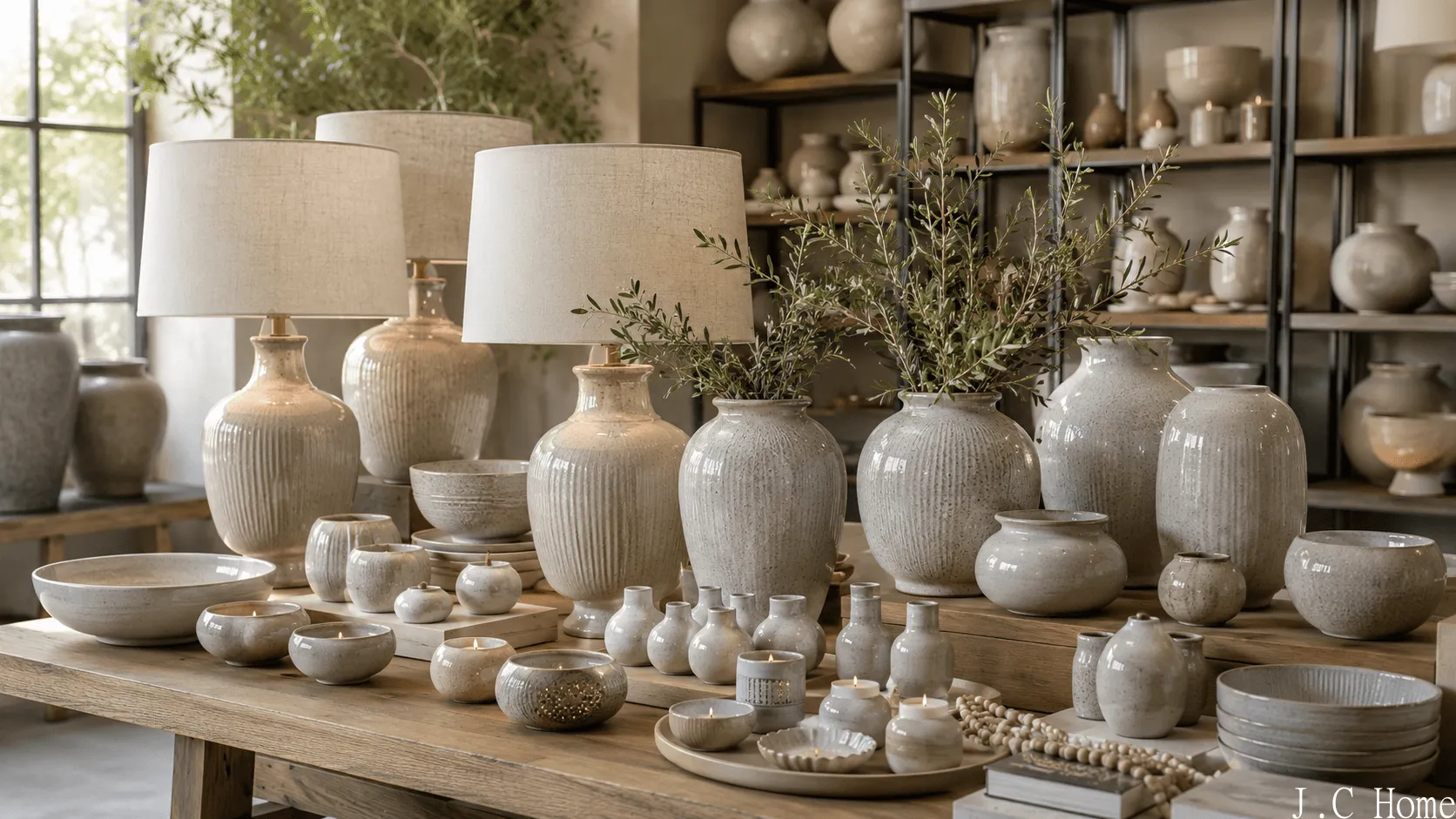
Multi-category sourcing means building a coordinated product range across several decor categories instead of treating every item as a separate purchase. For a home decor importer, this may include table lamps, floor lamps, rechargeable lamps, ceiling pendants, vases, pots, and tabletop accessories.
However, the strategic value is not “more products.” The value comes from better assortment control. When a retail buyer or importer controls the style direction, material story, packaging logic, and replenishment plan across categories, the whole range becomes easier to sell, display, and repeat.
In Europe, importers also need to check health, safety, environmental, technical, packaging, and labelling rules before products enter the market. The European Commission’s import guidance explains that imported goods must meet applicable EU requirements and that customs clearance may require documents such as commercial invoices, origin certificates, test results, or inspection certificatesEU import preparation and document checks1. Therefore, assortment strategy should include category compliance planning, not only design selection.
For importers selling into the United States, CPSC resources remind businesses to understand laws and regulations that apply to manufacturing, importing, or selling consumer productsconsumer product safety responsibilities2. In practice, this means lighting, decorative objects, and packaging may need different confirmation steps before shipment.
Build a Category Architecture Before Selecting Products
A global importer should start with category architecture. This means deciding the role of each product group in the total collection.
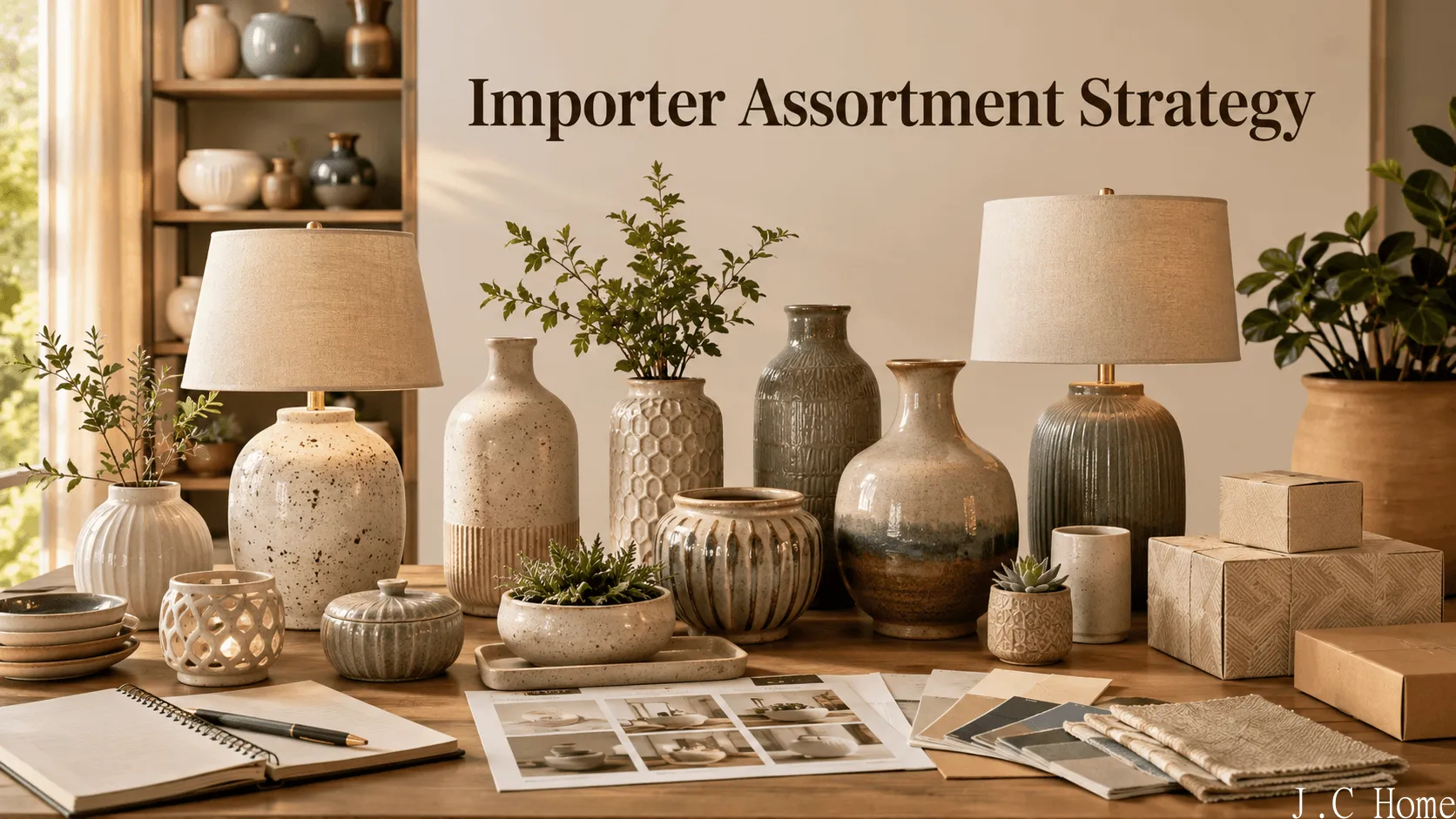
For example, ceramic table lamps may act as anchor products because they carry strong visual weight and support higher perceived value. Decorative vases can extend the same colour story across shelves and room settings. Meanwhile, pots and tabletop accessories can add seasonal flexibility, gift-channel options, and easier basket building.
JC Home Decor’s current product scope includes table lamps, floor lamps, rechargeable battery lamps, ceiling pendants, vases, pots, and tabletop accessories. Because ceramic remains the core material direction, importers can plan coherent collections around glazing, texture, shape, and colour while still adding complementary materials when needed.
| Category Role | Suitable Product Types | Strategic Purpose | Key Planning Question |
|---|---|---|---|
| Anchor products | Ceramic table lamps, floor lamps | Create visual identity and higher-value displays | Which products define the collection style? |
| Range extenders | Vases, pots, tabletop accessories | Add shelf depth and merchandising flexibility | Which items repeat the same colour or texture story? |
| Functional accents | Rechargeable lamps, ceiling pendants | Support use-case variety in retail and interior projects | Which technical details need confirmation? |
| Seasonal refresh items | Smaller decor, giftable accessories | Create newness without rebuilding the full range | Which finishes or shapes can change each season? |
Strong architecture prevents one common problem: a large catalogue with weak visual connection. Instead of adding random SKUs, buyers can group products by style family, material story, and selling environment.
Large catalogues always create stronger import programmes. False
A large product list can increase complexity if categories do not share a clear style direction, packaging logic, or replenishment plan.
Clear category architecture improves product consolidation. True
When lamps, vases, pots, and tabletop accessories follow one collection logic, buyers can reduce scattered communication and improve retail presentation.
Use Supplier Diversification Without Losing Collection Control
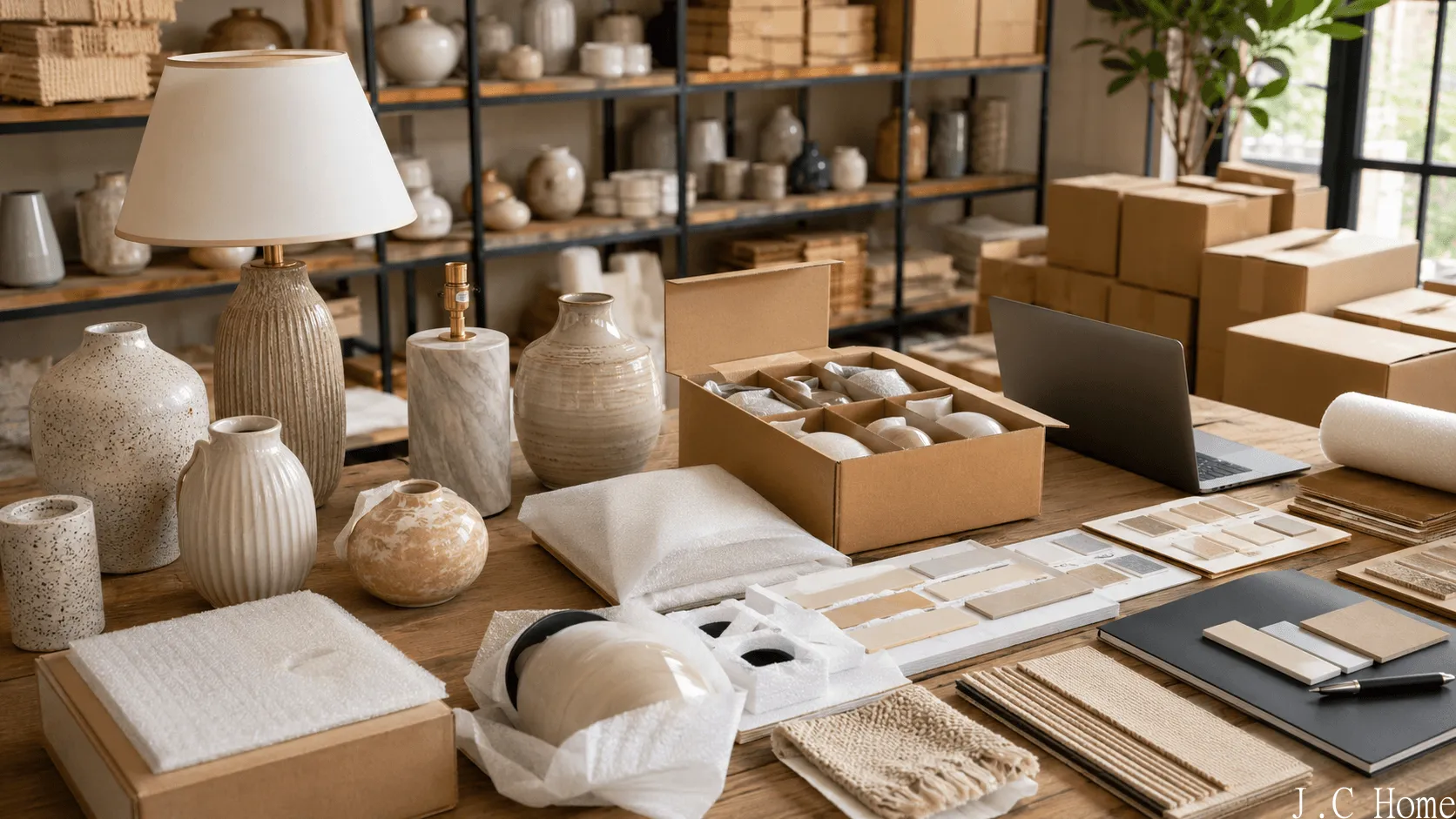
Supplier diversification protects importers from overreliance on one production source. However, too much diversification can weaken consistency if every supplier follows a different colour, finish, packaging, and inspection standard.
A balanced model separates “strategic category partners” from “supplementary suppliers.” The strategic partner should support categories that need design consistency and repeat production. Additional suppliers can then support niche materials, limited seasonal items, or products outside the main factory scope.
For ceramic-led home decor, importers often benefit from keeping the core visual family with one main supplier. As a result, glazing tone, shape language, and surface texture remain easier to control across lamps and decor. Meanwhile, secondary suppliers may cover items that require unrelated materials or special processes.
| Supplier Model | When It Works | Main Risk | Better Control Method |
|---|---|---|---|
| Single-source model | Stable core categories with repeat orders | Dependency on one factory | Confirm backup plans and capacity limits |
| Dual-source model | Similar products across two capable suppliers | Colour and finish mismatch | Use shared master samples and written specs |
| Category-specialist model | Different factories for lighting, decor, textiles, or furniture | Fragmented collection identity | Assign one internal style standard |
| Core-plus-supplement model | Main supplier handles core range; others add niche items | Uneven packaging and documentation | Create one import checklist for all partners |
Therefore, supplier diversification should not mean uncontrolled supplier expansion. A better approach is to decide which categories need deep consistency and which categories can remain flexible.
Product Consolidation: Fewer Decisions, Stronger Ranges
Product consolidation means reducing unnecessary SKU fragmentation while keeping enough variety for retail and wholesale channels. It is especially useful when importers manage several markets, sales teams, or store formats.
For instance, a ceramic lamp body may support different shade colours, finishes, or packaging directions. In addition, a vase series may include several sizes under one finish family. This method creates variety without forcing the importer to manage too many unrelated development paths.
Consolidation also supports cleaner forecasting. Instead of forecasting every isolated product from zero, importers can analyse a style family. Because related products share materials, colours, and production logic, the buyer can plan repeat orders with more confidence.
At JC Home Decor, buyers can explore decor categories through the wholesale home decor supplier page and compare them with lighting categories such as rechargeable battery lamps. This helps importers decide whether a range should focus on retail display, cordless lighting, gift channels, or interior styling.
Match Product Categories to Importer Business Models
Different importers need different multi-category strategies. A retail chain may need coordinated shelf stories. Wholesale distributors may care more about repeatable ranges that work across many accounts. Interior design suppliers may value material texture, finishes, and project adaptability.
Because of this, the same wholesale home decor supplier should not offer every buyer the same assortment logic. Instead, product selection should start from the buyer’s channel and sales environment.
| Importer Type | Strong Category Mix | Strategy Focus | What to Prepare Before Inquiry |
|---|---|---|---|
| Home decor retail chain | Table lamps, vases, pots, tabletop accessories | Retail-ready collection stories | Store style, target price range, packaging needs |
| Wholesale distributor | Repeatable decor and lighting families | Stock continuity and broad account fit | Core SKUs, reorder logic, market regions |
| Lifestyle brand | Ceramic lamps, decorative vases, custom finishes | Brand identity and product differentiation | Mood boards, colour palette, label requirements |
| Interior design supplier | Lamps, pendants, vases, decor accents | Project coordination and finish consistency | Space type, size direction, material preference |
| Gift or seasonal channel | Small decor, rechargeable lamps, giftable accessories | Seasonal refresh and packaging presentation | Holiday theme, carton needs, label direction |
This model keeps the article’s focus on strategy rather than narrow purchasing tactics. More importantly, it helps the importer avoid a common mistake: asking for a mixed catalogue before defining how the products will be sold.
Build Compliance Thinking Into the Assortment
Compliance planning becomes harder when an importer adds more categories. A decorative vase may involve material and packaging questions. Rechargeable lamps may involve electrical specifications, battery details, labelling, and market-specific checks.
For EU sales, the General Product Safety Regulation has applied from 13 December 2024 and covers consumer products, including products sold online. The European Commission also highlights stronger risk assessment and accountability for economic operatorsGeneral Product Safety Regulation requirements3. As a result, importers should classify products by risk level before finalising the range.
The World Customs Organization explains that the Harmonized System is used by more than 200 countries and economies for customs tariffs and trade statistics, and it covers over 98% of merchandise in international tradeHarmonized System classification4. Therefore, HS classification should sit inside assortment planning, especially when one collection includes both decor and lighting.
Decor products and lighting can use the same compliance checklist. False
Decor, electrical lighting, rechargeable lamps, packaging, and labelling can trigger different confirmation steps, especially across EU and US markets.
Compliance planning should start before final assortment approval. True
Early category screening helps importers identify documentation needs, technical details, labelling questions, and customs classification issues before production planning.
Create a Multi-Category Requirement Sheet
A requirement sheet turns a broad sourcing idea into a practical development brief. Without it, suppliers may quote products that look attractive but do not fit the importer’s market, packaging, or category strategy.
The sheet should cover category roles, target market, material direction, finish needs, packaging type, compliance questions, and replenishment expectations. Also, it should separate “confirmed requirements” from “open discussion points.”
| Requirement Area | What to Define | Why It Matters |
|---|---|---|
| Product categories | Lighting, vases, pots, tabletop accessories | Helps the supplier confirm production scope |
| Market destination | EU, United States, or other markets | Supports documentation and specification planning |
| Material direction | Ceramic-led, mixed-material, or seasonal material | Keeps the collection visually coherent |
| Style family | Modern organic, classic, coastal, colourful, minimalist | Guides sample selection and development |
| Packaging format | Export carton, retail box, mail-order carton | Reduces shipping and presentation mismatch |
| Custom needs | Size, finish, shade, label, logo, colour | Clarifies development workload |
| Replenishment plan | Test order, seasonal order, repeat range | Helps plan stability and future updates |
When sending an inquiry to JC Home Decor, importers can include product category, target market, quantity direction, preferred style references, material requirements, and packaging needs through the Contact Us page. A clearer brief usually leads to a more useful first response.
How a Wholesale Home Decor Supplier Supports Consolidation
Useful wholesale home decor suppliers do more than send a catalogue. The supplier should help buyers understand which categories can share finishes, which products belong in one display story, and which items need separate technical confirmation.
For ceramic-led collections, this support can include glaze direction, surface texture, body shape, shade pairing, vase series planning, and packaging coordination. Moreover, a supplier with lighting and decor categories can help importers avoid the gap between “lamp supplier” and “decor supplier.”
JC Home Decor positions itself around ceramic-driven lighting and decor manufacturing, with table lamps and ceramic vases as core categories. The company also supports complementary materials and custom options for wholesale and OEM markets. Importers who want to understand the factory background can review About JC Home Decor before preparing a multi-category request.
FAQ
What is multi-category sourcing in home decor?
Multi-category sourcing means planning several related home decor categories together, such as lamps, vases, pots, and tabletop accessories. Instead of buying isolated items, importers build a coordinated product range with shared style, material, and packaging logic.
Why should importers work with a wholesale home decor supplier?
A wholesale home decor supplier can help importers compare category options, consolidate product families, and prepare repeatable ranges. However, buyers should still confirm production scope, documentation needs, market requirements, and product specifications before ordering.
Is supplier diversification always better?
Supplier diversification can reduce supply risk, but it can also create inconsistency. Therefore, many importers keep a core supplier for the main visual range and use secondary suppliers for niche or seasonal products.
How does product consolidation help importers?
Product consolidation reduces unnecessary SKU complexity. For example, one ceramic finish family can support lamps, vases, and pots, which makes forecasting, display planning, and repeat orders easier.
What categories fit a multi-category home decor strategy?
Lighting, ceramic vases, pots, tabletop accessories, rechargeable lamps, and ceiling pendants can fit this strategy. The right mix depends on the importer’s channel, market, display concept, and compliance needs.
Should compliance be checked before or after samples?
Compliance should be considered before sample approval. Early checks help buyers identify electrical details, labelling needs, packaging requirements, documentation, and customs classification questions.
Can one supplier support both lighting and decor?
Some suppliers can support both categories, while others specialise in only one area. Importers should ask for product scope, material capability, custom options, quality control process, and market-specific documentation support before building a full range.
What information should importers send for a multi-category inquiry?
Buyers should send target categories, style references, destination market, quantity direction, preferred materials, custom needs, packaging requirements, and expected sales channel. In addition, they should explain whether the range is for retail, wholesale distribution, design projects, or seasonal programmes.
Conclusion
A global importer strategy for multi-category home decor sourcing should begin with assortment architecture, not random product selection. The right wholesale home decor supplier can help buyers connect lighting, vases, pots, and tabletop accessories into a more coherent product system.
However, category expansion only works when importers manage supplier diversification, product consolidation, compliance planning, and replenishment logic together. Therefore, buyers should prepare a clear requirement sheet before requesting samples or quotes.
If you are building a ceramic-led lighting and decor range, explore JC Home Decor’s decor collections and table lamp category. Then, send your category plan, target market, style references, quantity direction, and packaging needs through the Contact Us page for a more focused discussion.
References
-
European Commission Access2Markets: Guide for Import of Goods — Supports EU import preparation, product requirements, customs documents, and buyer readiness checks.
↩ -
U.S. Consumer Product Safety Commission — Supports the need for importers and sellers to understand consumer product safety laws and regulations in the United States.
↩ -
European Commission Access2Markets: General Product Safety Regulation — Supports EU product safety, risk assessment, and economic operator accountability points.
↩ -
World Customs Organization: What Is the Harmonized System? — Supports HS classification and customs planning for multi-category international trade.
↩
Buyer Checklist Before Requesting a Quote
| Information to Prepare | Why It Helps |
|---|---|
| Product category and target use | Helps confirm the right lighting or decor direction. |
| Target market | Supports electrical, packaging, labeling, and document discussion. |
| Material, color, and finish direction | Reduces misunderstanding during sample communication. |
| Packaging and label needs | Important for fragile products and retail-ready planning. |
| Reference images or collection mood | Helps align design language before quotation. |
Clear buyer information helps reduce misunderstanding before sample and order communication.