J.C Home Decor and Lighting Manufactory

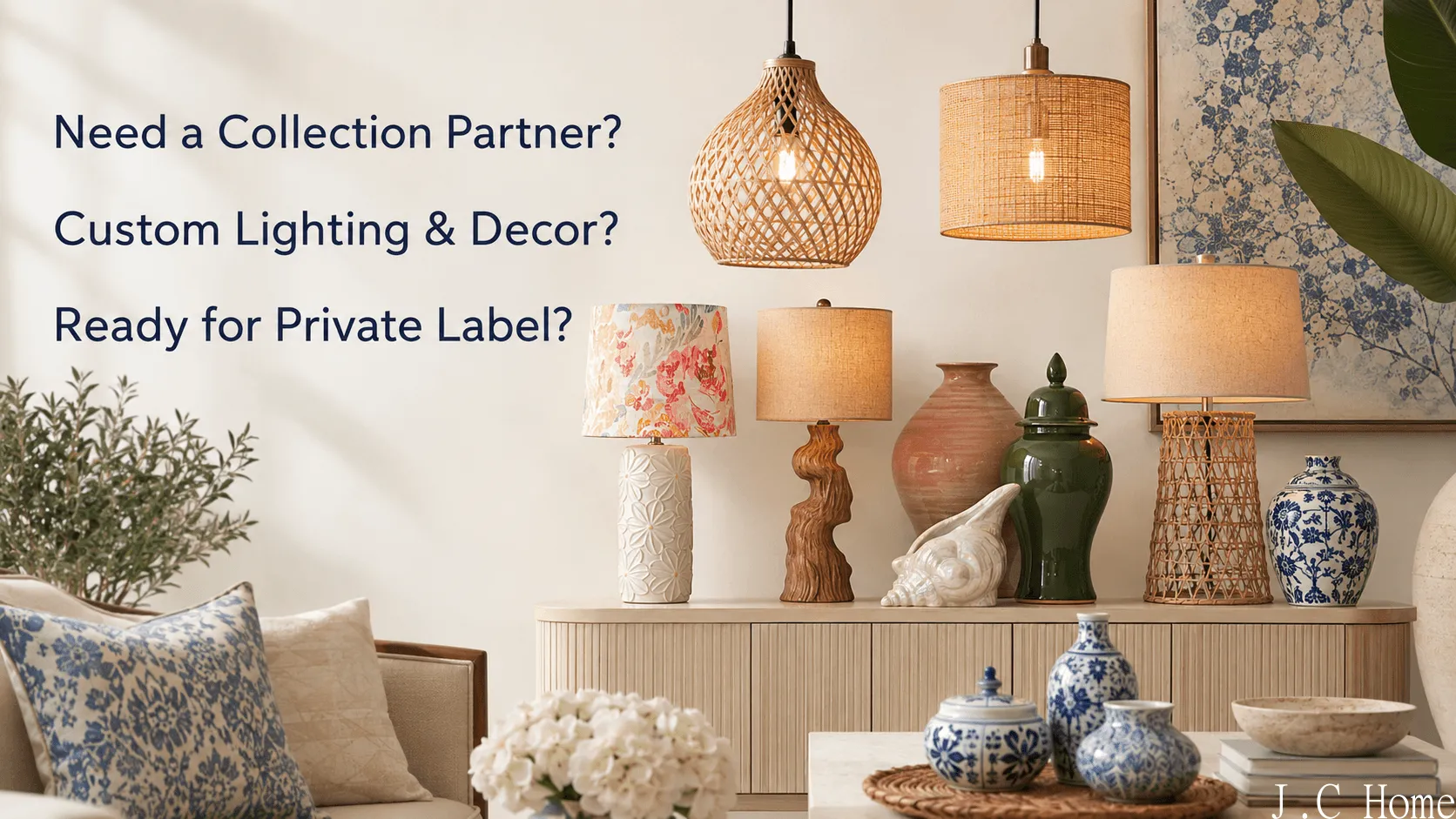
An OEM home decor manufacturer helps furniture brands, homeware retailers, interior suppliers, and hospitality buyers turn design concepts into repeatable products. This guide is for buyers who want GlobeWest-style product thinking: coordinated furniture, lighting, homewares, texture, color, and private label presentation.
GlobeWest is a useful design reference because it presents furniture and homewares as curated collections for residential and commercial interiors, rather than isolated products. GlobeWest describes its business around furniture, homewares, design development, and curated collections1. For buyers building a similar collection strategy, the right manufacturing partner should support style consistency, product development, packaging, and long-term supply.
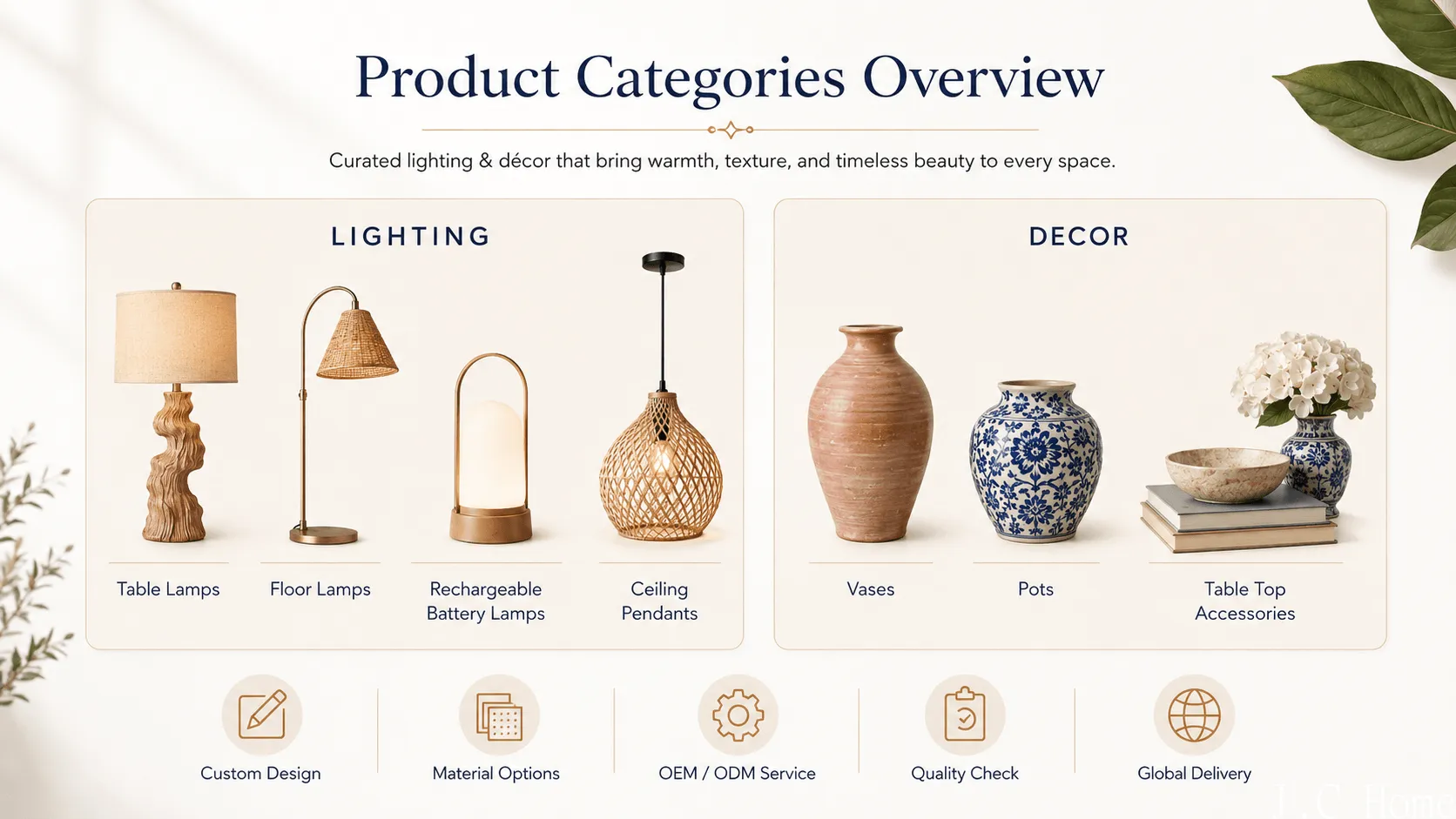
JC Home Decor works with lighting and decor categories such as custom lighting, table lamps, floor lamps, rechargeable lamps, ceiling pendants, decorative vases, pots, and tabletop accessories. If your collection also includes sofas, cushions, rugs, mirrors, or outdoor furniture, you should confirm the factory’s exact production scope before starting development.
What Does an OEM Home Decor Manufacturer Do?
An OEM home decor manufacturer produces products based on the buyer’s brand direction, design requirements, material choices, packaging needs, and target market standards. In private label home decor, the buyer controls the brand experience. The manufacturer supports product development, sampling, production, inspection, and export preparation.
This model is different from buying ready-made wholesale home decor. In a standard wholesale order, the buyer selects existing products. In OEM and custom home decor manufacturing, the buyer may adjust shape, finish, material, packaging, lamp shade, logo placement, color direction, or product series planning.
For a furniture-led brand, this matters because decorative accessories and lighting should not feel separate from the furniture range. A table lamp, vase, planter, mirror, cushion, or rug may all support the same room story. Therefore, buyers should treat OEM home decor as collection development, not only product sourcing.
| Sourcing Model | How It Works | Suitable For | Buyer Risk to Check |
|---|---|---|---|
| Standard wholesale | Buyer chooses existing products from a catalog | Fast product expansion and smaller trials | Limited uniqueness |
| Private label home decor | Existing or adjusted products use buyer branding | Retailers and homeware brands | Packaging, label, and repeat order consistency |
| OEM home decor manufacturing | Factory produces based on buyer requirements | Brands with clear design direction | Sampling accuracy and technical details |
| Contract homewares manufacturing | Factory supports repeated production under agreed terms | Long-term programs and seasonal collections | Quality records and communication process |
| Multi-category sourcing | Buyer coordinates decor, lighting, and furniture suppliers | GlobeWest-style collection planning | Style mismatch across factories |
Why GlobeWest-Style Buyers Need Collection Thinking
A GlobeWest-style product strategy focuses on a complete interior look. Buyers do not only select one table lamp or one vase. They build a product family that can support a dining room, living room, bedroom, hotel suite, showroom, or retail display.
This is where an OEM home decor factory becomes useful. The factory should understand how materials, finishes, and proportions work together. For example, a ceramic table lamp may need to match a decorative vase series. A planter finish may need to connect with a side table, cushion, or rug palette. A rechargeable table lamp may need to suit restaurant tables and hotel lounges.
JC Home Decor’s lighting and decor categories can support this kind of coordinated sourcing. Buyers can review lighting products and decor products before sending a custom brief.
An OEM home decor manufacturer only needs to copy a design drawing. False
A drawing is only the starting point. Buyers also need to confirm material limits, finish stability, packaging, safety needs, target market rules, and repeat production requirements.
A strong private label collection needs product consistency. True
Lighting, vases, planters, mirrors, cushions, and furniture should share a clear style language. This helps retail buyers and interior clients understand the collection faster.
Product Categories to Plan Before Contacting a Factory
Before you contact an OEM home decor manufacturer, you should define the product categories in your collection. This helps the factory judge whether it can support your project directly or whether some categories require other specialist partners.
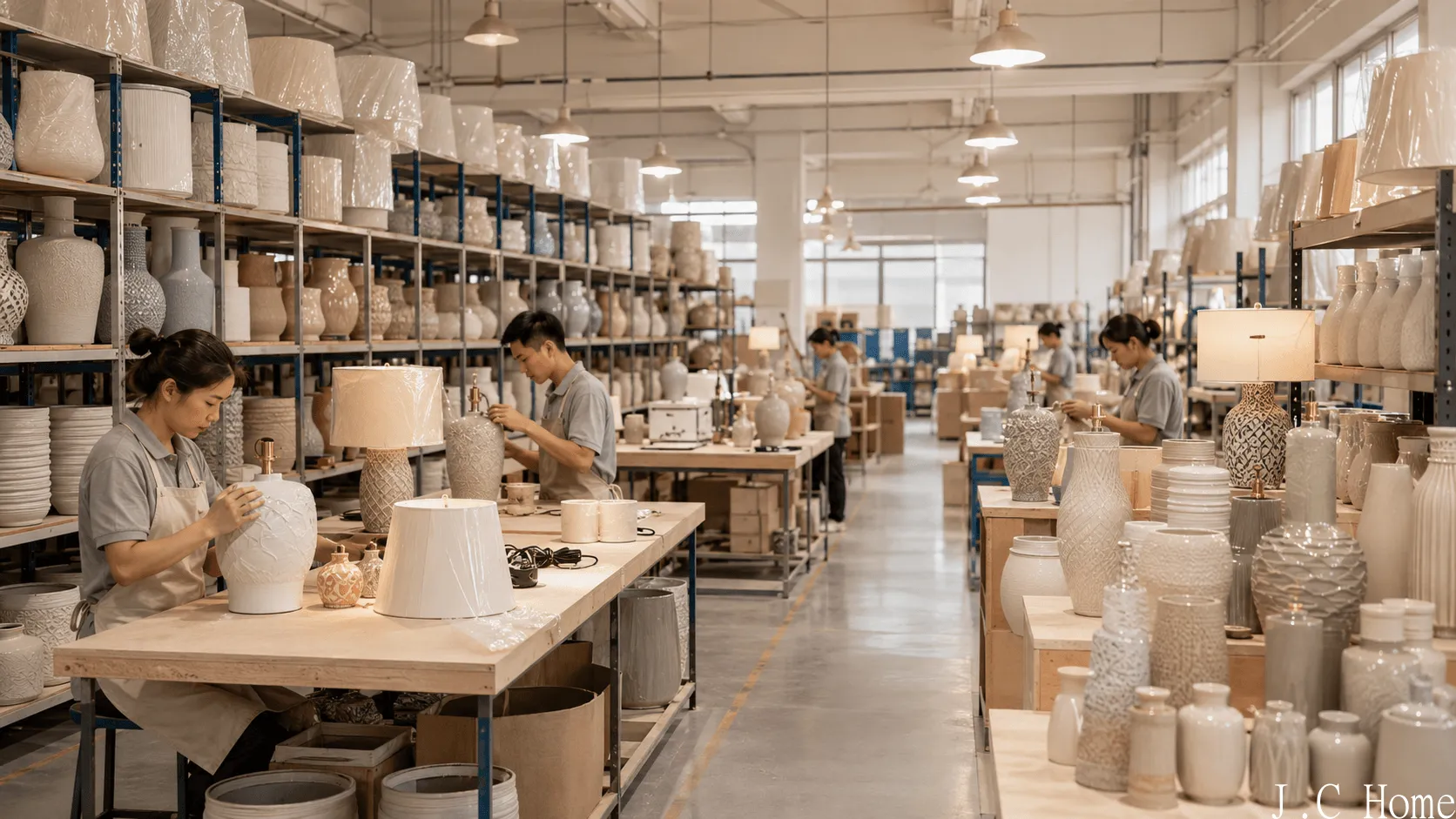
JC Home Decor is most relevant for decorative lighting and home decor accessories. This includes custom lighting manufacturing, OEM table lamp supplier support, OEM vase production, OEM planters supplier needs, and OEM decorative accessories.
| Product Direction | Common OEM Options | Buyer Should Prepare |
|---|---|---|
| Table lamps | Base shape, ceramic finish, shade material, wiring direction, packaging | Style reference, size range, target market, lamp function |
| Floor lamps | Base material, shade type, height direction, finish, packaging | Room setting, material preference, safety needs |
| Rechargeable lamps | Body finish, charging method, battery-related requirements, logo, packaging | Usage scene, target market, electrical details to confirm |
| Ceiling pendants | Finish, shade material, canopy direction, cable style | Installation market, safety standard needs |
| Vases and pots | Shape, glaze, color, texture, surface detail, carton protection | Collection mood board, size family, packing method |
| Tabletop accessories | Material, finish, color set, gift packaging | Retail display idea and price positioning |
| Cushions, rugs, mirrors, furniture | Usually require specialist production lines | Confirm whether the supplier can produce or coordinate these categories |
If your project includes furniture OEM Australia, OEM outdoor furniture, custom cushion manufacturer needs, custom rugs manufacturer needs, or OEM mirror supplier requirements, you should separate them clearly in the brief. A good sourcing plan can still keep the collection consistent, even when different specialist factories produce different categories.
OEM vs ODM vs Private Label: Which Model Fits Your Collection?
Many buyers use OEM, ODM, private label, and contract manufacturing in the same conversation. However, these terms do not always mean the same thing.
OEM is suitable when the buyer has clear design control. ODM is useful when the factory provides existing designs that can be adjusted. Private label home decor is often about branding, packaging, and market presentation. Contract furniture manufacturing or contract homewares manufacturing usually focuses on repeated production under a clear agreement.
| Model | Buyer Control | Factory Role | Good Fit |
|---|---|---|---|
| OEM | High | Produces according to buyer specifications | Custom furniture production, OEM table lamps, OEM vases |
| ODM | Medium | Offers existing designs for adjustment | Faster product launch and style testing |
| Private label | Medium to high | Supports branding, labels, packaging, and repeat supply | Retailers and home decor private labeling |
| Contract manufacturing | High | Produces repeated orders under defined standards | Commercial interior OEM and hospitality furniture OEM programs |
| Hybrid sourcing | Flexible | Combines custom and existing products | Seasonal collections and residential furniture manufacturing support |
For JC Home Decor projects, buyers can start with existing lighting or decor categories and then discuss custom changes. For example, a buyer may begin with blue and white porcelain table lamps, then adjust size, shade, finish, or packaging direction.
Customization Options Buyers Should Confirm
Custom home decor manufacturing should be structured. Buyers should avoid sending a vague request such as “make this style for my brand.” Instead, the buyer should define what can change and what must stay stable.
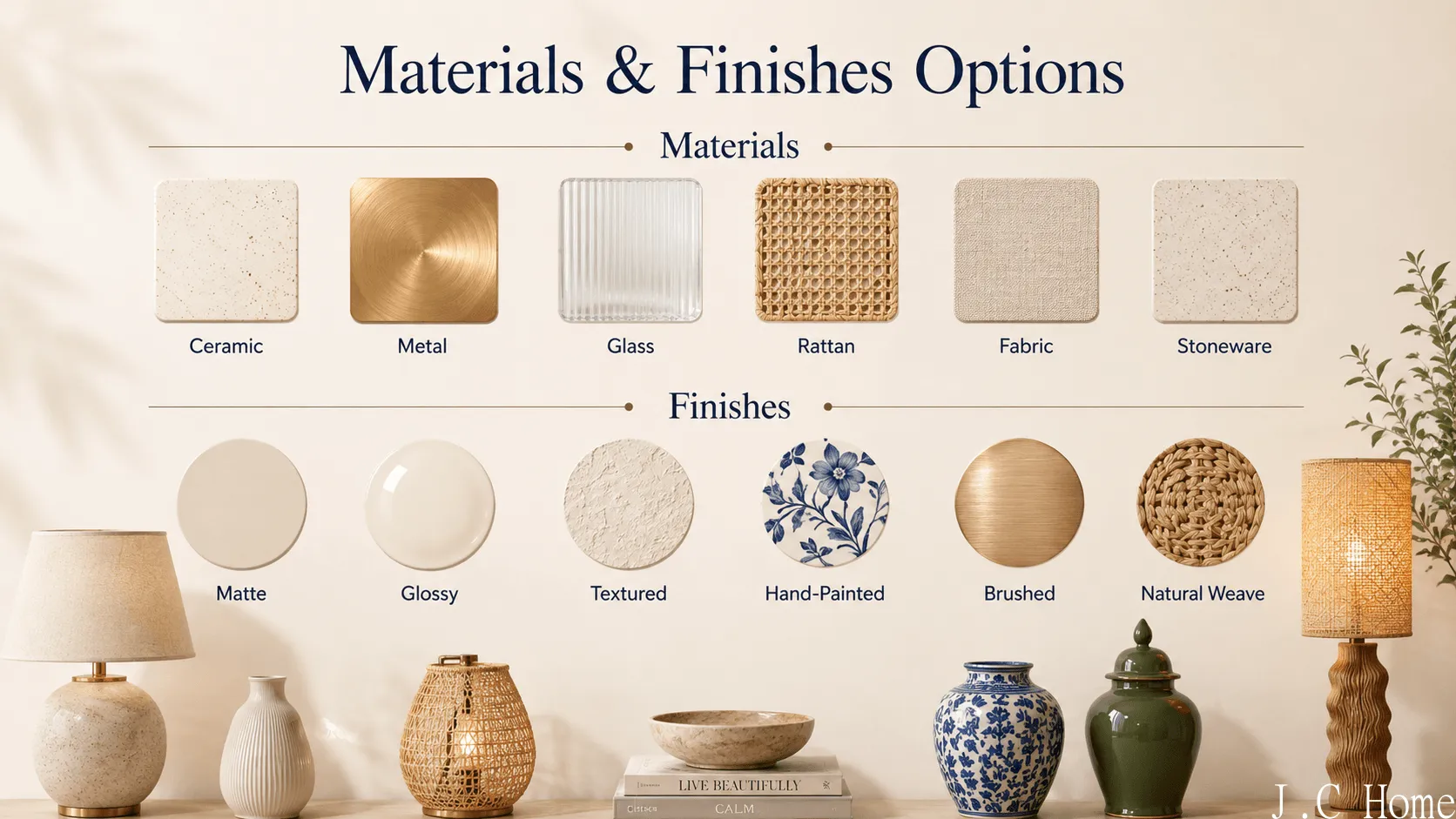
For lighting and decorative accessories, the most common custom areas include material, color, finish, size direction, shade, packaging, logo position, carton protection, and market documentation. However, exact options depend on product category and factory capability.
Useful Customization Checklist
| Custom Area | Examples | Why It Matters |
|---|---|---|
| Material | Ceramic, metal, glass, resin, marble-look, rattan-look | Material affects weight, finish, cost, packaging, and appearance |
| Finish | Matte, glossy, textured, hand-painted, metallic | Finish consistency affects repeat orders |
| Size family | Small, medium, large, grouped sets | A collection needs balanced proportions |
| Lighting function | Plug-in, rechargeable, dimmable, touch control | Electrical details must match target market needs |
| Private label | Logo, care card, carton mark, insert, retail box | Brand presentation affects retail and online sales |
| Packaging | Mail-order pack, project pack, retail carton | Different sales channels need different protection |
| Compliance documents | Electrical, material, labeling, safety-related information | Buyers must confirm target market requirements before ordering |
For lighting projects, buyers can also review JC Home Decor’s Green Rechargeable Table Lamp NA04-8×16.5 as an example of a rechargeable decorative lamp direction before preparing custom requirements.
Quality, Compliance, and Target Market Checks
A serious OEM home decor manufacturer should help buyers discuss quality expectations early. This does not mean the factory can promise every certification for every product. It means both sides should confirm what applies to the product, sales market, and intended use.
For the EU market, buyers should confirm product safety responsibilities under the General Product Safety Regulation2. For electrical lighting, buyers should also check whether the product falls under the EU Low Voltage Directive3. For the U.S. lighting market, buyers may need to discuss standards such as UL 1598 for luminaires and UL 8750 for LED equipment4.
For furniture-related products, the U.S. Consumer Product Safety Commission provides a guide to United States furniture compliance requirements5. For EU chemical concerns in articles, buyers should also monitor the ECHA Candidate List of substances of very high concern6 when materials, coatings, finishes, or soft goods are involved.
These checks are not just paperwork. They affect material selection, labeling, packaging, testing plans, and the final quote.
A good sample always means stable mass production. False
A sample only proves one approved version. Buyers still need production records, approved materials, finish standards, packaging confirmation, and inspection criteria before repeat orders.
Compliance should be discussed before the quotation stage. True
Target market rules can affect components, labels, packaging, testing, and production cost. Early confirmation helps avoid redesign after sampling.
Packaging and Private Label Presentation
Private label home decor depends heavily on packaging. The product must look right when it arrives. It must also support the sales channel.
A retail store may need shelf-ready packaging, hang tags, product inserts, barcode areas, and clear carton marks. An online seller may need stronger drop-test thinking and better inner protection. A hotel or commercial interior project may need project labels, room-by-room packing, and easy installation identification.
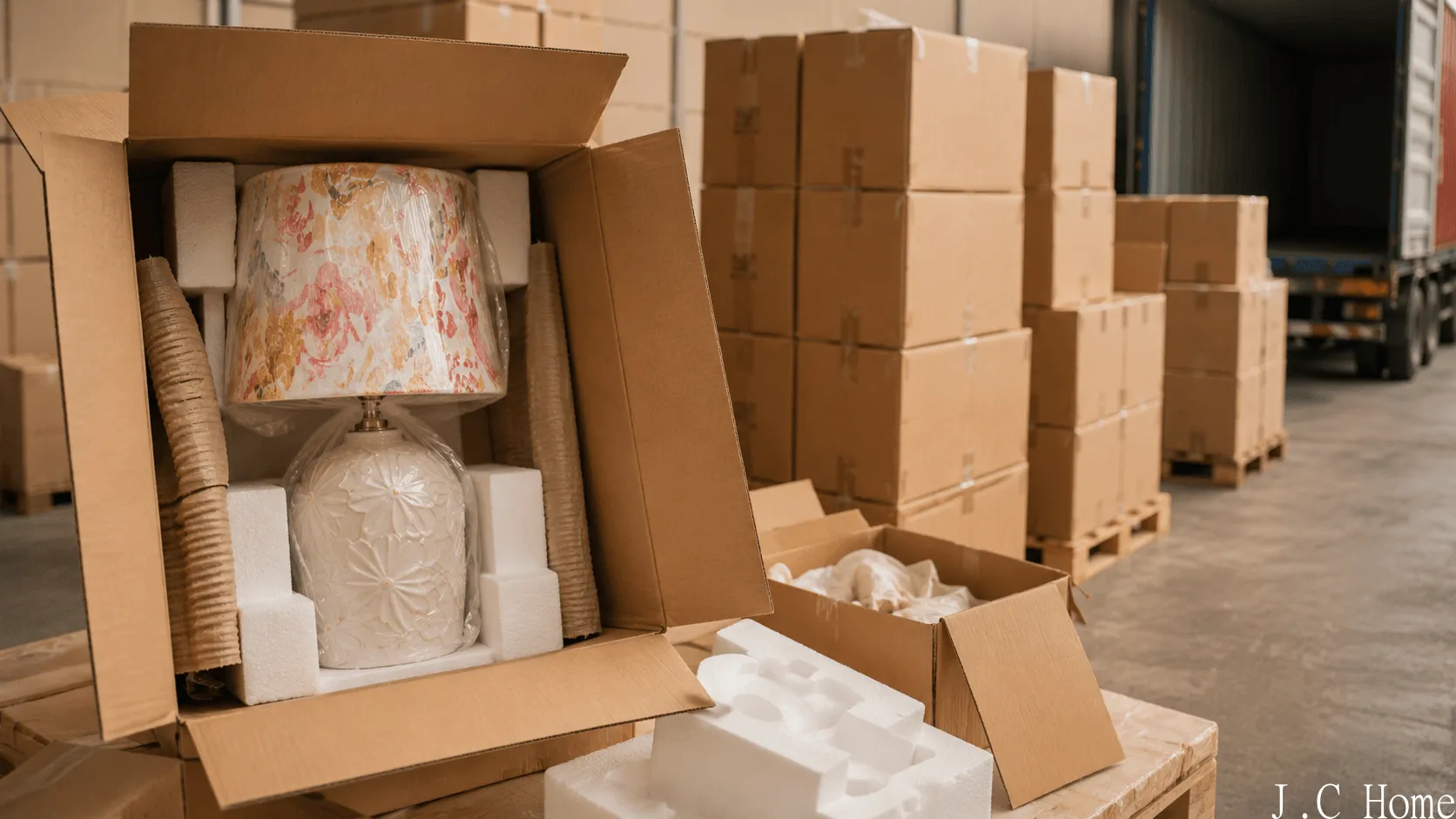
Buyers should prepare packaging requirements before asking for a final quote. This is especially important for fragile ceramic lamps, glass vases, decorative pots, mirrors, and tabletop accessories. Packaging can change carton size, weight, loading quantity, labor process, and damage risk.
For coordinated lighting and decor programs, buyers can compare JC Home Decor’s wholesale home decor and lighting buying guide before preparing a private label brief.
How to Write a Clear OEM Inquiry
A clear inquiry saves time. It also helps the manufacturer give a more useful answer. Buyers should avoid sending only a photo and asking for a price. The factory needs enough information to understand the product, market, and production direction.
OEM Inquiry Checklist
| Information to Send | Example |
|---|---|
| Product category | Table lamp, vase, planter, mirror, cushion, rug, decorative accessory |
| Target market | EU, U.S., Australia, hotel project, retail store, online channel |
| Design reference | Mood board, style direction, drawing, sample photo |
| Material preference | Ceramic, metal, glass, resin, fabric, rattan-look, marble-look |
| Size direction | Approximate dimensions or size family |
| Finish direction | Matte, glossy, textured, hand-painted, neutral, metallic |
| Function needs | Rechargeable, dimmable, touch control, plug-in, decorative only |
| Packaging needs | Retail box, mail-order carton, project packing, private label insert |
| Quantity range | Trial order, seasonal order, repeat program |
| Compliance needs | Electrical, product safety, labeling, chemical-related checks |
If your project fits JC Home Decor’s product scope, you can contact JC Home Decor with your custom requirements. You can include project type, target market, category, material direction, quantity range, and packaging needs.
Supplier Evaluation for Long-Term Programs
An OEM home decor manufacturer should be evaluated beyond price. Price matters, but it is not the only factor. A long-term collection needs stable communication, repeatable finish control, and category focus.
Buyers should check whether the supplier understands the difference between residential furniture manufacturing, hospitality furniture OEM needs, commercial interior OEM projects, and wholesale home decor manufacturer supply. These channels do not use products in the same way.
Retailers care about sell-through, packaging, margin, and repeat supply. Hospitality buyers care about durability, project coordination, replacement planning, and room consistency. Interior designers care about style, material, texture, and the ability to support a full design concept.
For background checking, buyers can review JC Home Decor’s factory and capability information before sending a formal OEM brief.
FAQ
What is an OEM home decor manufacturer?
An OEM home decor manufacturer produces home decor products according to a buyer’s design, brand, or product requirements. The service may include sampling, material selection, private label packaging, production, inspection, and export preparation.
Is OEM different from private label home decor?
Yes. OEM usually starts from the buyer’s design or technical requirement. Private label home decor can use existing or modified products with the buyer’s branding, packaging, and label direction.
Can one factory produce furniture, lighting, cushions, rugs, mirrors, vases, and planters?
Some factories cover many categories, but many specialize in only part of the collection. Buyers should confirm exact production scope before starting. JC Home Decor is most relevant for decorative lighting, table lamps, rechargeable lamps, vases, pots, and tabletop accessories.
Why does a GlobeWest-style collection need OEM support?
A GlobeWest-style collection depends on coordinated interiors, not single products. OEM support helps buyers align finishes, colors, packaging, materials, and repeat production across a product family.
What should I prepare before asking for an OEM quote?
You should prepare product category, target market, design reference, material direction, size range, quantity range, function needs, packaging requirements, and compliance expectations. A clear brief helps the manufacturer answer faster and more accurately.
Can JC Home Decor support private label lighting?
JC Home Decor supports lighting categories such as table lamps, floor lamps, rechargeable battery lamps, and ceiling pendants. Buyers can discuss private label lighting requirements such as finish, shade, logo, packaging, and target market details.
What compliance details should buyers check for lighting products?
Buyers should confirm the target market first. For example, EU lighting projects may involve product safety and electrical safety checks, while U.S. lighting projects may need discussion around relevant UL standards. The exact requirement depends on product design and market use.
Are decorative vases and planters easier to source than lighting?
They may have fewer electrical concerns, but buyers still need to check material safety, finish consistency, packaging protection, and market labeling needs. Fragile products also need careful carton design and drop protection planning.
How can I reduce sampling mistakes?
You can reduce sampling mistakes by sending clear drawings, mood boards, target dimensions, material references, finish samples, packaging expectations, and compliance needs. You should also approve one standard sample before mass production.
Conclusion
An OEM home decor manufacturer should help buyers build a product collection, not only produce isolated items. For GlobeWest-style sourcing, buyers should think in terms of coordinated rooms, private label presentation, stable materials, packaging protection, and target market requirements.
If your program includes decorative lighting, table lamps, rechargeable lamps, floor lamps, ceiling pendants, vases, pots, or tabletop accessories, you can start by reviewing JC Home Decor’s lighting category and decor category. Then send your project type, target market, style direction, material request, quantity range, and packaging needs through the contact page for a custom discussion.
References
-
GlobeWest. “About Us.” GlobeWest. — This source supports the discussion of GlobeWest as a design-led furniture and homewares collection reference.
↩ -
European Commission. “EU’s General Product Safety Regulation: A New Era of Consumer Protection.” Access2Markets, 6 Jan. 2025. — This source supports the recommendation to confirm EU product safety responsibilities before selling consumer products.
↩ -
European Commission. “Low Voltage Directive.” Internal Market, Industry, Entrepreneurship and SMEs. — This source supports the point that electrical lighting buyers should confirm whether the Low Voltage Directive applies.
↩ -
UL Solutions. “Lighting Standards and Certification.” UL Solutions. — This source supports the discussion of UL 1598, UL 8750, and lighting safety testing for market access planning.
↩ -
U.S. Consumer Product Safety Commission. “A Guide to United States Furniture Compliance Requirements.” CPSC. — This source supports the recommendation to review U.S. furniture compliance topics when furniture-related categories are included.
↩ -
European Chemicals Agency. “Candidate List of Substances of Very High Concern for Authorisation.” ECHA CHEM. — This source supports the recommendation to monitor chemical concerns in articles, coatings, finishes, and soft goods for EU-related programs.
↩