J.C Home Decor and Lighting Manufactory


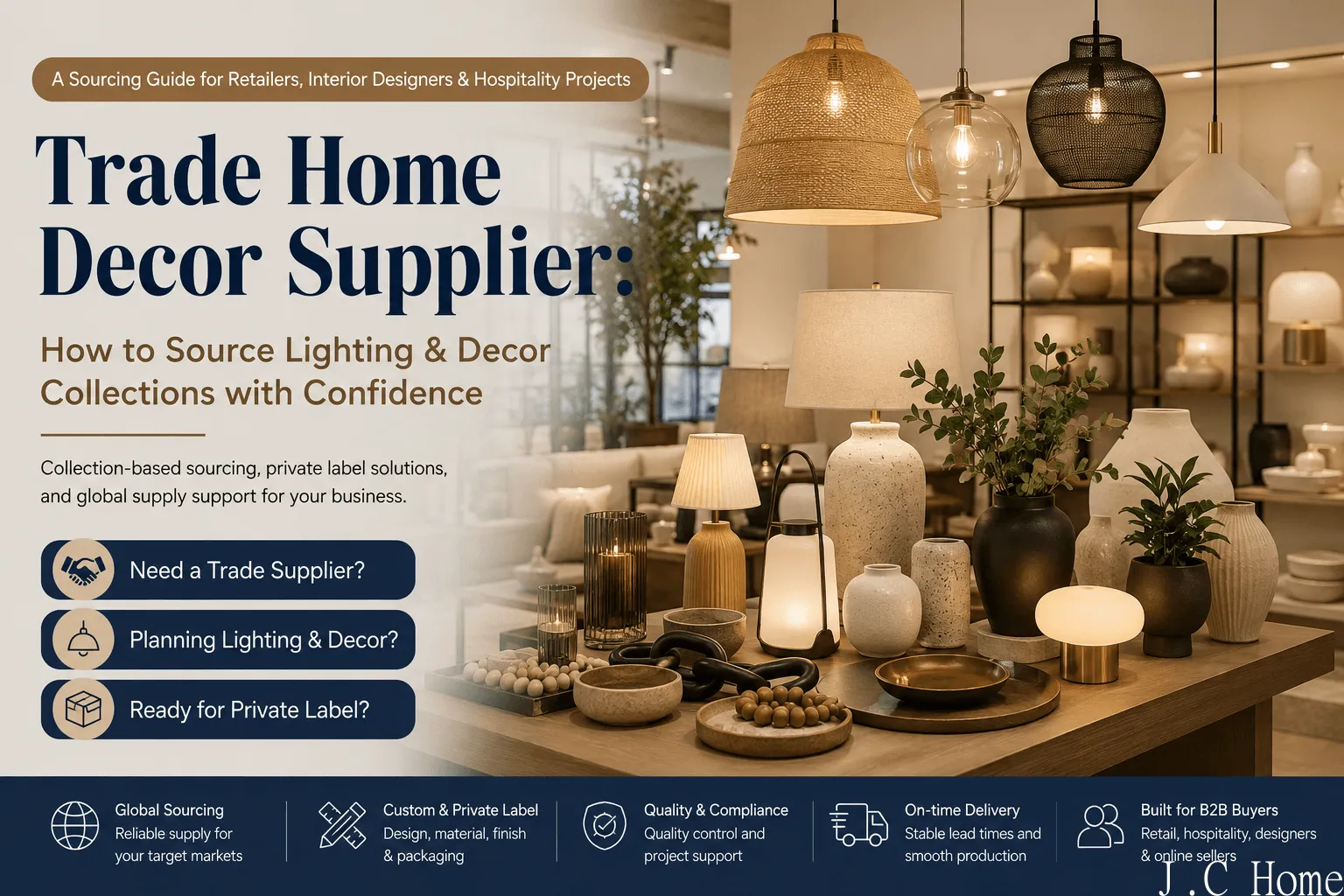
A trade home decor supplier helps retailers, interior designers, hospitality buyers, and project procurement teams source coordinated decor and lighting for repeatable commercial use. This guide uses Palecek as a design reference because Palecek presents furniture, lighting, accessories, outdoor products, and hospitality-related collections in a coordinated trade-facing way. It does not compare suppliers. Instead, it explains what buyers should check before choosing a home decor vendor for lighting, vases, pots, tabletop accessories, private label programs, and commercial interiors.
JC Home Decor works in decorative lighting and decor categories, including table lamps, floor lamps, rechargeable battery lamps, and ceiling pendants, as well as vases, pots, and table top accessories. Therefore, buyers who need coordinated lighting and decorative items can use this guide before preparing a sourcing brief.

What Is a Trade Home Decor Supplier?
A trade home decor supplier serves professional buyers rather than casual retail shoppers. These buyers may include retail home decor stores, interior designers, hotel project teams, procurement companies, gift channels, and importers.
A supplier can act as a wholesale home decor distributor, a decorative lighting distributor, a custom home decor manufacturing partner, or a private label home decor source. However, these roles are not always the same. Buyers should confirm whether the company only distributes existing products or can also support custom design, sampling, production, packaging, and repeat orders.
Palecek is a useful market reference because its official product navigation includes furniture, lighting, accessories, outdoor products, and hospitality-related content. Its lighting section also includes pendants, chandeliers, table lamps, floor lamps, sconces, flush mounts, and outdoor lighting. Palecek’s official website presents lighting, accessories, furniture, outdoor products, and hospitality-related categories1. This shows why many professional buyers think in collections, not single items.
Why Trade Buyers Need Collection-Based Sourcing
Trade buyers usually need products that work together in a room. A hotel lobby may need table lamps, ceiling pendants, vases, decorative pots, and table decor. A retail showroom may need a consistent color story across lighting and accessories. An interior designer may need products that support a residential project mood board.
For this reason, a trade home decor supplier should help buyers think about product fit, not only unit price. Materials, scale, finish, packaging, and restock consistency all affect the final result.
| Buyer Type | Main Need | Supplier Support to Check |
|---|---|---|
| Retail home decor store | Coordinated collections and repeat supply | Product categories, packaging, display appeal, reorder stability |
| Interior designer | Style consistency and project fit | Materials, scale, finish samples, mixed-category sourcing |
| Hotel or restaurant buyer | Durable visual direction and project packing | Lighting function, decor coordination, carton labels, replacement planning |
| Importer or distributor | Reliable supply chain and clear documentation | Export packing, product records, category focus, communication process |
| Gift channel | Decorative appeal and brand presentation | Private label packaging, inserts, logo discussion, seasonal planning |
JC Home Decor’s product scope fits buyers who need decorative lighting and matching decor. Buyers can review the wholesale home decor and lighting manufacturer page to understand the broad category direction before sending a request.
A trade home decor supplier only needs a large catalog. False
A large catalog helps product discovery, but professional buyers also need style consistency, packaging support, quality records, target market checks, and repeat order communication.
Collection thinking makes procurement easier. True
When lamps, vases, pots, and table decor share a clear material and color direction, buyers can build retail displays and interior projects with less mismatch.
Supplier, Distributor, Manufacturer, and Vendor: What Is the Difference?
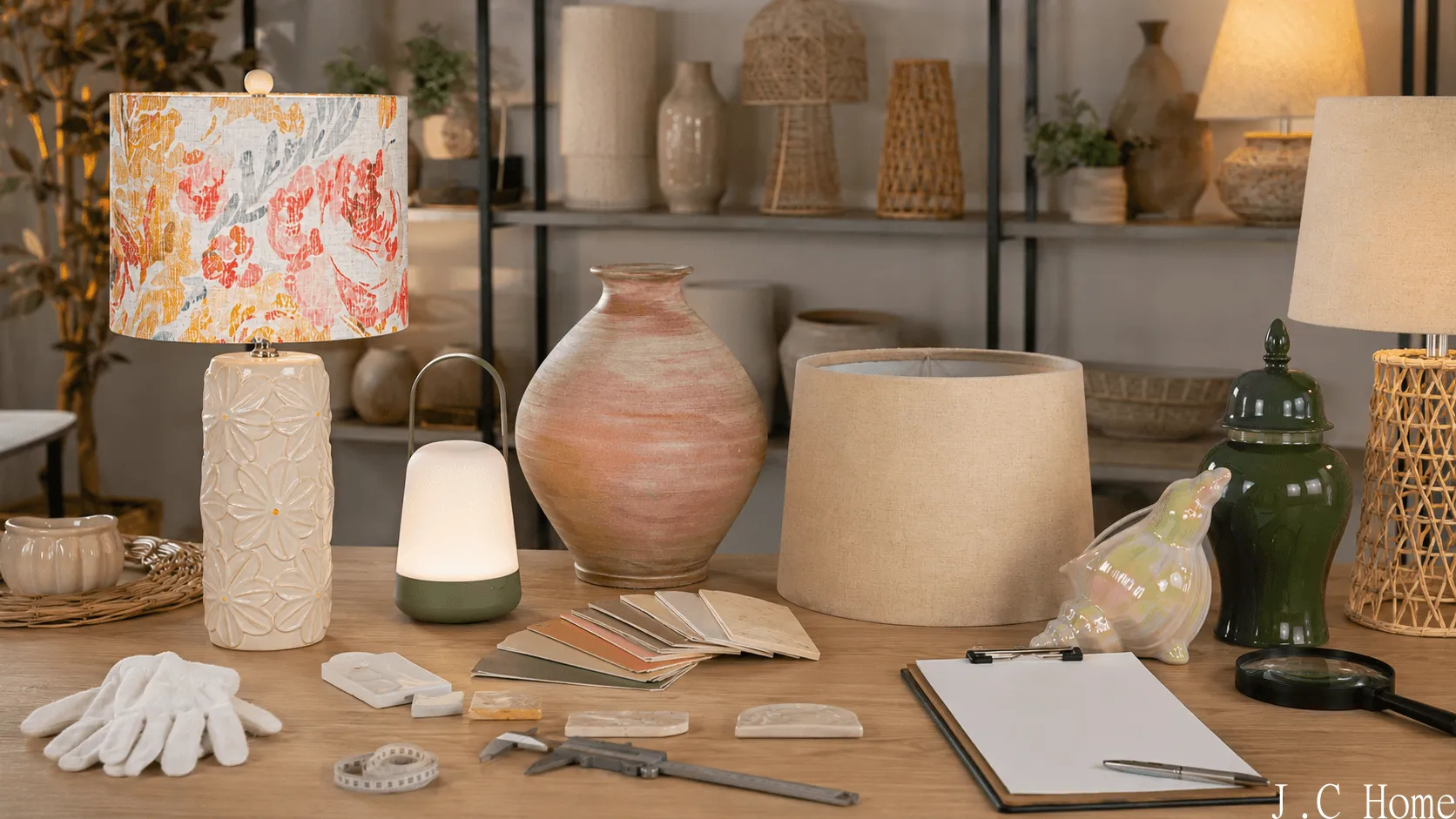
Search results for trade home decor supplier often mix several supplier types. This can confuse buyers. A wholesale home decor distributor may offer ready-made products from many sources. A manufacturer may control production and customization more directly. A vendor may be a general supply contact that handles orders but not production.
The best choice depends on the buyer’s goal. If speed matters most, a distributor may be useful. If private label, custom finish, or repeat production matters, a manufacturing partner may be more relevant.
| Supplier Type | How It Usually Works | Good Fit | Buyer Risk to Check |
|---|---|---|---|
| Wholesale home decor distributor | Offers existing products from stock or catalog | Fast range expansion | Limited customization and possible style overlap |
| Trade showroom decor supplier | Presents curated products for professionals | Interior designers and showrooms | Availability, lead time, and reorder clarity |
| Custom home decor manufacturing partner | Develops products based on buyer requirements | Private label, project work, custom collections | Sampling accuracy and production consistency |
| Decorative lighting distributor | Supplies lighting products in volume | Retail and hospitality lighting programs | Electrical requirements and documentation |
| Home decor vendor | Handles supply or buying relationship | General procurement | Exact production role may be unclear |
JC Home Decor is most relevant when buyers need decorative lighting, home accessories, and custom discussion. For example, buyers can start from table lamps or decorative vases, then discuss material, finish, shade, packaging, and market requirements.
Product Categories a Trade Buyer Should Plan First
A clear product scope helps the supplier respond faster. It also reduces misunderstanding during quotation and sampling. Buyers should separate lighting, decor, furniture, textiles, and wall items before contacting a supplier.
JC Home Decor’s confirmed product direction is strongest in lighting and decor accessories. Buyers who need trade furniture supplier support, cushions, mirrors, rugs, or outdoor furniture should confirm whether the supplier can produce or coordinate those categories before planning a full collection.
| Product Direction | Common Trade Need | Details to Prepare |
|---|---|---|
| Table lamps | Bedside, retail display, living room, boutique hotel use | Base material, shade style, size range, plug market, packaging |
| Floor lamps | Living rooms, hotel lounges, commercial interiors | Height direction, base stability, shade type, finish, carton plan |
| Rechargeable lamps | Restaurants, event tables, cordless hospitality use | Charging method, battery-related requirements, dimming needs |
| Ceiling pendants | Lobby, dining, restaurant, showroom display | Canopy direction, cable style, shade material, installation market |
| Vases and pots | Retail decor, hotel lobby, residential styling | Shape family, glaze, color, texture, carton protection |
| Table top accessories | Gift, display, shelf styling, project decor | Finish, size group, material direction, private label packaging |
For coordinated sourcing, buyers can also explore JC Home Decor’s custom home decor and lighting solutions. This helps buyers connect category planning with custom development.

How to Evaluate a Trade Home Decor Supplier
A professional supplier should make procurement easier. The buyer should look beyond the first product photo. The supplier should answer questions about product scope, materials, finish stability, packaging, documentation, and repeat order control.
1. Check Product Focus
A supplier that understands lighting may not produce ceramic vases. A decor factory may not support electrical products. Therefore, buyers should ask for category coverage early.
For JC Home Decor, the relevant categories include table lamps, floor lamps, rechargeable lamps, ceiling pendants, vases, pots, and table top accessories. This product direction supports buyers who want a lighting-and-decor collection rather than only one isolated item.
2. Review Customization Ability
Private label home decor depends on controlled details. Buyers may need logo placement, carton marks, inserts, custom colors, adjusted lamp shades, or matched ceramic finishes.
However, not every product can change in the same way. Buyers should confirm what can be customized before sampling.
3. Confirm Packaging Expectations
Fragile decor and lighting need careful packaging. A ceramic table lamp, glass accessory, or glazed vase may need inner protection, carton testing discussion, and clear outer carton marking.
In addition, sales channels have different packaging needs. Retail stores may need shelf-ready packaging. Online sellers may need stronger drop-protection thinking. Hotel projects may need room-by-room carton labels.
Quality and Compliance Checks for Trade Decor and Lighting
Trade home decor procurement often includes several markets. Therefore, buyers should confirm target market rules before final quotation. This is especially important for lighting, electrical parts, coatings, labels, and consumer product safety.
For the EU market, buyers should review product safety responsibilities under the General Product Safety Regulation2. For electrical lighting, buyers should also confirm whether the product falls under the EU Low Voltage Directive3.
For U.S. lighting projects, buyers may need to discuss standards and certification routes with qualified testing bodies. UL Solutions lists lighting standards and certification topics, including luminaires and LED equipment. UL’s lighting standards and certification information4 can help buyers understand what to discuss before ordering.
| Check Area | Why It Matters | Buyer Action |
|---|---|---|
| Target market | Rules differ by EU, U.S., Australia, and other markets | State the sales market before quotation |
| Electrical lighting | Components, plugs, labels, and testing may be affected | Ask which documents can be discussed for your market |
| Material and finish | Coatings and materials may affect safety or import checks | Confirm material direction and finish samples |
| Packaging | Damage risk affects cost and customer experience | Define retail, online, or project packing needs |
| Product records | Repeat orders need consistent standards | Keep approved sample, photos, and specification notes |
A good-looking sample proves mass production quality. False
A sample only confirms one approved version. Buyers still need material control, finish standards, packaging confirmation, and inspection criteria before repeat production.
Compliance discussion should start before quotation. True
Target market rules can affect components, labels, packaging, testing, and product cost. Early discussion helps prevent redesign after sampling.

Private Label and Custom Home Decor Manufacturing
Private label home decor gives buyers more control over brand presentation. It may include product labels, carton marks, care cards, retail boxes, inserts, barcode space, and product photography requirements.
Custom home decor manufacturing goes deeper. It may include shape development, finish matching, material changes, lamp shade selection, and coordinated product families. However, buyers should avoid vague requests such as “make it luxury.” A supplier needs practical details.
| Custom Area | Examples | Why Buyers Should Define It |
|---|---|---|
| Material | Ceramic, glass, metal, resin, rattan-look, fabric | Material affects cost, weight, finish, and packing |
| Finish | Matte, glossy, textured, hand-painted, metallic | Finish affects consistency and repeat orders |
| Size family | Small, medium, large, grouped set | Collections need balanced proportions |
| Lighting function | Plug-in, rechargeable, dimmable, touch control | Function affects electrical requirements |
| Private label | Logo, carton mark, care card, insert | Brand presentation affects retail and project use |
| Packaging | Retail box, export carton, project pack | Packaging affects damage risk and loading plan |
Buyers can use JC Home Decor’s Request a Quote page to send project type, target market, quantity range, product category, material direction, color direction, and packaging needs.
Trade Show Thinking: What Buyers Should Learn Before Ordering
A home decor trade show helps buyers compare style direction, materials, scale, and display logic. However, buyers should not only collect product photos. They should also record what made each display work.
A useful trade show review should answer these questions:
- Which materials appeared repeatedly?
- Which lamp sizes looked suitable for retail shelves or hotel rooms?
- Which decorative accessories matched lighting collections?
- Which finishes looked stable enough for repeat orders?
- Which packaging requirements would the sales channel need?
The same thinking works when reviewing supplier catalogs online. Buyers should choose products that fit a room story, not only products that look attractive alone.
How to Write a Clear Trade Home Decor Inquiry
A clear inquiry saves time. It also helps the supplier judge whether the project fits its product scope.
Buyers should not send only one image and ask for a final price. Instead, buyers should share enough information for the supplier to understand the product, use case, market, and customization level.
| Information to Send | Example |
|---|---|
| Product category | Table lamp, rechargeable lamp, vase, pot, table decor |
| Target market | EU, U.S., Australia, hotel project, retail store, online channel |
| Style direction | Natural texture, ceramic glaze, blue-white, modern neutral, warm hotel style |
| Material preference | Ceramic, metal, glass, resin, fabric, rattan-look |
| Size direction | Approximate dimensions or size family |
| Function needs | Plug-in, rechargeable, dimmable, decorative only |
| Packaging needs | Retail box, export carton, mail-order pack, project label |
| Quantity range | Trial order, seasonal order, repeat program |
| Compliance needs | Electrical, product safety, labeling, material-related checks |
For a faster discussion, buyers can contact JC Home Decor with custom requirements. The inquiry should include project type, target market, product category, style reference, quantity range, and packaging needs.
FAQ
What is a trade home decor supplier?
A trade home decor supplier provides decor, lighting, furnishings, or accessories for professional buyers. These buyers may include retailers, interior designers, importers, hotel buyers, and commercial project teams.
Is a trade home decor supplier the same as a wholesale home decor distributor?
No. A wholesale home decor distributor usually sells existing products in volume. A trade supplier may also support custom development, private label packaging, product coordination, and repeat programs.
Why should buyers choose a supplier with lighting and decor categories?
A supplier with both lighting and decor categories can help buyers build a more consistent collection. For example, a ceramic table lamp can match vases, pots, and tabletop accessories in color, texture, and mood.
Can JC Home Decor support private label home decor?
JC Home Decor supports decorative lighting and decor categories. Buyers can discuss private label needs such as packaging, logo placement, carton marks, inserts, and product presentation based on project requirements.
What should buyers confirm before ordering decorative lighting?
Buyers should confirm target market, plug type, electrical requirements, lamp function, shade material, packaging, and documentation needs. They should also approve samples before repeat orders.
What should buyers ask when sourcing hospitality decor?
Hospitality buyers should ask about durability expectations, finish consistency, packaging labels, replacement planning, and project delivery requirements. They should also confirm whether the supplier can support the needed product categories.
How does private label home decor differ from custom manufacturing?
Private label home decor usually focuses on branding and packaging. Custom manufacturing may also change shape, size, material, finish, shade, function, and product family planning.
Can one supplier handle furniture, lighting, vases, pots, and accessories?
Some suppliers cover many categories, but many factories specialize. Buyers should confirm the exact production scope before developing a full collection.
What details help a supplier quote faster?
A supplier can respond faster when buyers provide product category, target market, design reference, material direction, size range, quantity range, packaging needs, and compliance expectations.
Conclusion
A trade home decor supplier should help professional buyers build coordinated collections, not only purchase isolated products. Buyers should review product scope, customization ability, packaging support, quality process, and target market requirements before choosing a partner.
For Palecek-style collection planning, buyers should think about lighting, accessories, material texture, room use, and repeat supply together. If your project needs decorative lighting, table lamps, rechargeable lamps, floor lamps, ceiling pendants, vases, pots, or table top accessories, you can start with JC Home Decor’s lighting categories and decor categories. Then send your product category, target market, style direction, material request, quantity range, and packaging needs through the Request a Quote page.
References
-
Palecek. “PALECEK | Handcrafted Furniture Inspired by Natural Materials.” Palecek. — This source supports the use of Palecek as a design-led reference for furniture, lighting, accessories, outdoor products, and hospitality-related collection thinking.
↩ -
European Commission. “EU’s General Product Safety Regulation: A New Era of Consumer Protection.” Access2Markets. — This source supports the recommendation to confirm EU product safety responsibilities before importing or selling consumer products.
↩ -
European Commission. “Low Voltage Directive.” Internal Market, Industry, Entrepreneurship and SMEs. — This source supports the point that lighting buyers should check whether electrical products fall under EU Low Voltage Directive requirements.
↩ -
UL Solutions. “Lighting Standards and Certification.” UL Solutions. — This source supports the recommendation to discuss relevant lighting standards and certification needs for U.S. lighting projects.
↩