J.C Home Decor and Lighting Manufactory


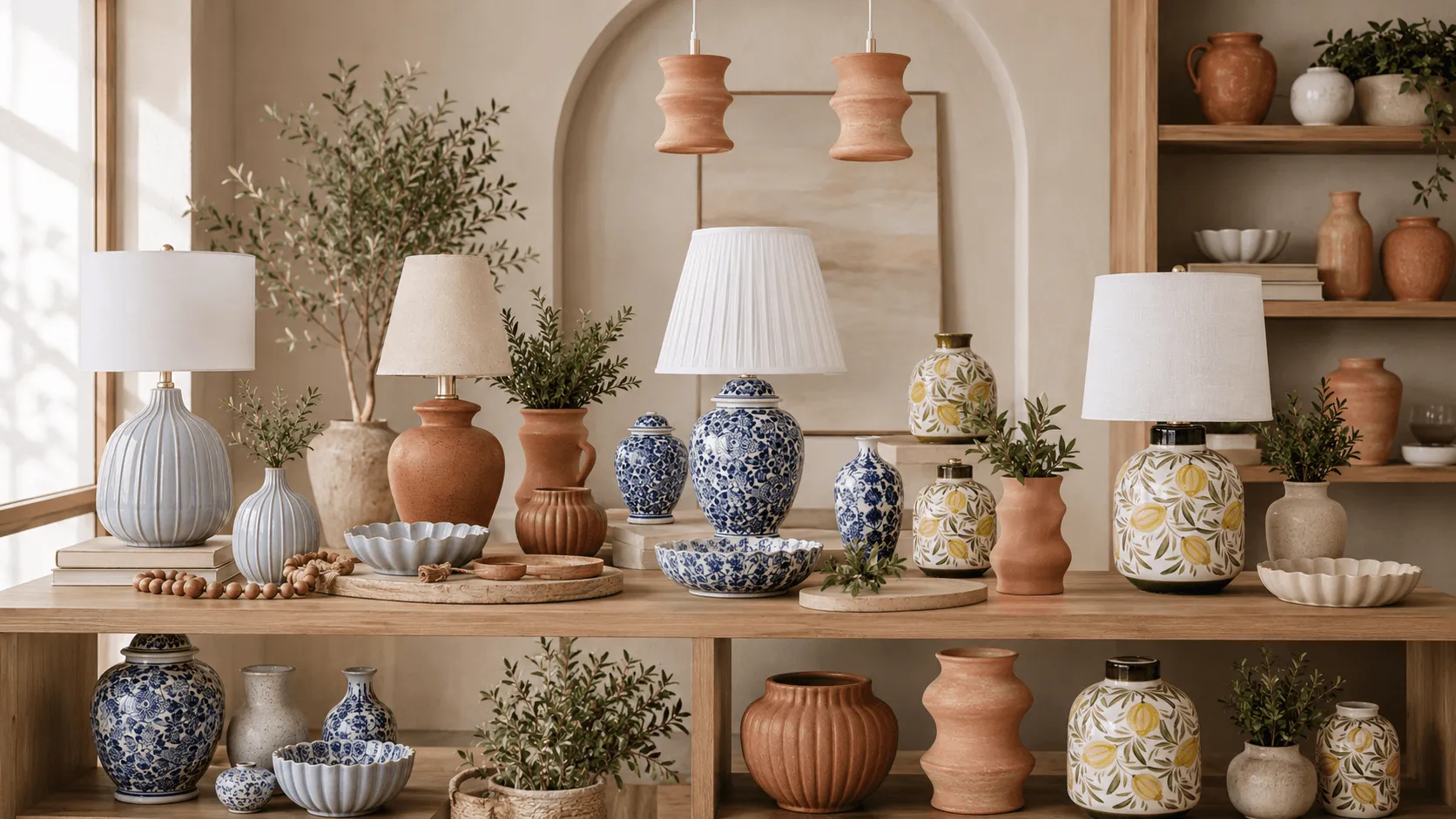
Private label manufacturers do far more than add logos. They help buyers plan products, coordinate finishes, review samples, control packaging, and prepare collections for target markets.
This guide explains how a home decor accessories wholesale manufacturer can support retailers, designers, online sellers, gift distributors, and sourcing teams. It also outlines the questions buyers should ask before confirming a collection.

What Does Private Label Manufacturing Include?
Private label manufacturing connects an existing product base with a buyer’s brand requirements.
Some projects start with standard products and custom packaging. Others require new shapes, colors, finishes, sizes, shades, hardware, or electrical specifications.
A complete private label program typically includes:
- Product and assortment planning
- Standard product selection
- OEM and ODM development
- Material and finish discussions
- Size and proportion adjustments
- Sample development and approval
- Logo, label, and packaging design
- Quality requirements
- Target-market specification review
- Production and shipping preparation
However, every supplier offers different service levels. Buyers should confirm each capability before placing an order.
Catalog Supplier vs Custom Manufacturer
A wholesale catalog helps buyers identify products quickly. A custom manufacturer provides more support when collections require a distinct style.
| Evaluation Area | Catalog-Focused Supplier | Custom Manufacturer | What Buyers Should Confirm |
|---|---|---|---|
| Product selection | Mainly existing models | Existing models plus development options | Which products support changes |
| Colors and finishes | Limited standard choices | Project-based finish discussions | Samples, color references, and tolerances |
| Product size | Usually fixed | Size changes may be discussed | Tooling, structure, and order requirements |
| Cross-category coordination | May be limited | Lighting and decor may share one design direction | Matching colors, materials, and proportions |
| Electrical details | Standard configurations | Target-market options may be reviewed | Voltage, socket, wiring, plug, and documents |
| Branding | Basic label options | Logo, label, carton, and private label packaging | Artwork format and placement |
| Sample process | Standard samples | Standard or custom samples | Sample cost, approval steps, and revisions |
| Quality planning | General inspection | Project-specific checkpoints may be added | Inspection scope and acceptance standards |
| MOQ | Often model-based | Depends on customization level | Quantity per SKU and finish |
| Collection support | Product-by-product | Coordinated assortment planning | Product hierarchy and launch schedule |
Neither model suits every project. Buyers should select the service level that aligns with their brand plan.
How Home Decor Accessories Wholesale Manufacturers Build Collections
1. They Help Define the Collection Direction
A private label collection needs a clear customer profile, price position, style, and intended use.
For example, a home decor supplier for retail stores may organize products by room, color story, or seasonal theme. A supplier for interior designers may organize products around specific project concepts.
A useful starting brief should include:
- Target customer
- Sales channel
- Target market
- Main style
- Preferred colors
- Expected price position
- Product categories
- Approximate quantity
- Planned launch date
This information helps manufacturers suggest a more focused assortment.
2. They Turn References Into Product Requirements
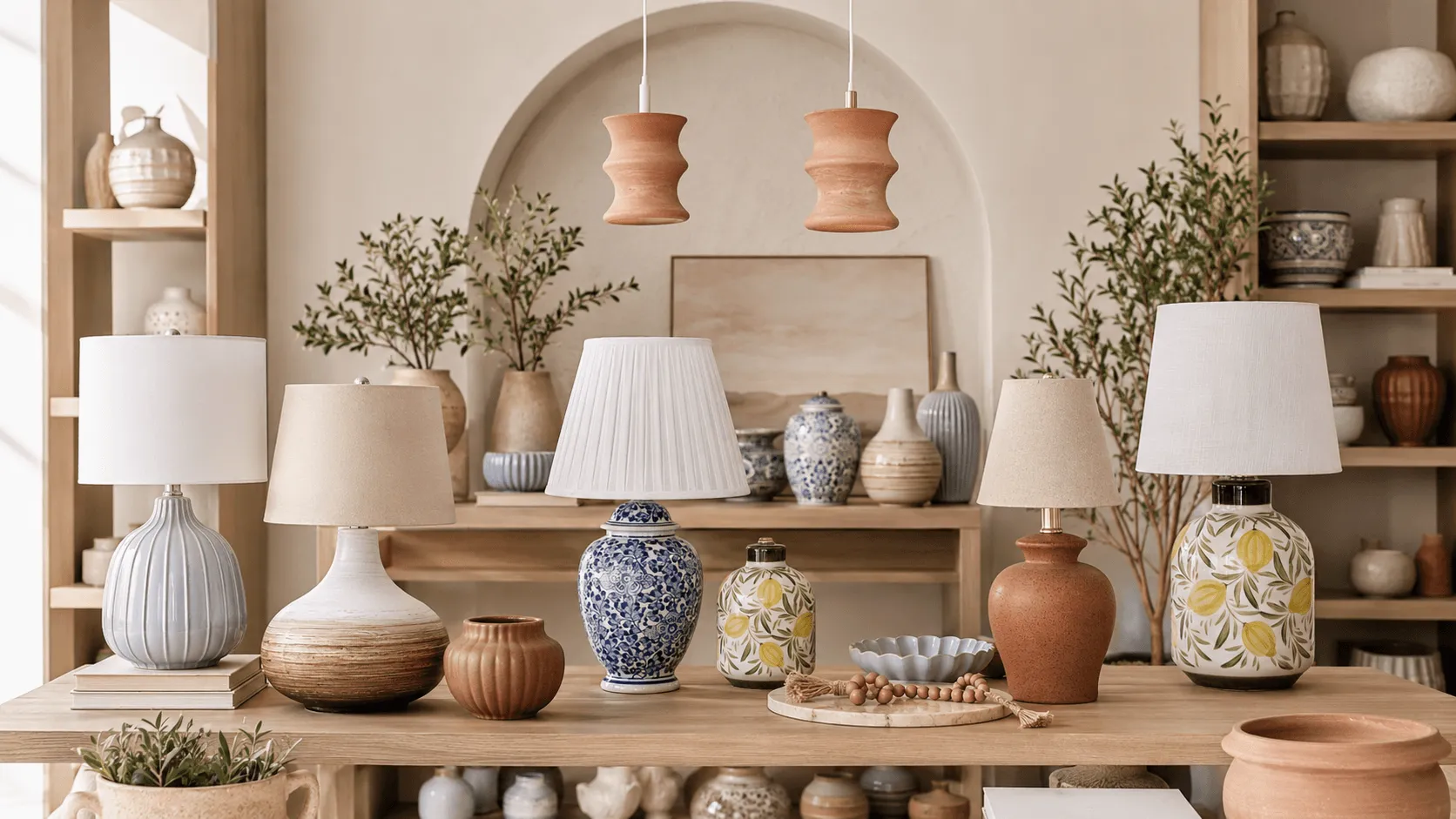
Buyers often start with mood boards, room images, sketches, or reference products.
However, reference images do not provide complete production specifications. Manufacturers still need to identify the intended shape, size, material, texture, color, and function.
For lighting, buyers should confirm:
- Lamp type
- Shade shape and size
- Hardware finish
- Socket and bulb requirements
- Cord, switch, or ceiling canopy details
- Target-market electrical requirements
For decor, buyers should confirm:
- Product size
- Material preference
- Surface finish
- Decorative or functional use
- Opening size where relevant
- Indoor or outdoor requirements
- Packaging and breakage concerns
Clear requirements reduce revisions during sample development.
3. They Coordinate Materials and Finishes
Materials influence cost, weight, appearance, packaging, and production methods.
JC Home Decor’s product scope includes decorative lighting and decor categories. Material and finish options can be discussed according to your selected design and project requirements.
Common lighting and decor material options include:
- Ceramic
- Metal
- Glass
- Crystal
- Marble
- Polymer
- Rattan
- Fabric or fabric-look shades
However, do not select materials by appearance alone. Also review weight, surface consistency, maintenance, packaging, and market use.
4. They Create Consistency Across Product Categories
A private label collection should look connected without making every product identical.
Manufacturers can support consistency through repeated design elements, such as:
- Shared color palettes
- Related ceramic glazes
- Matching metal finishes
- Coordinated shade fabrics
- Repeated curves or geometric forms
- Similar surface textures
- Consistent logo and packaging systems
For example, a terracotta table lamp coordinates with warm decorative pots. A blue and white lamp connects with matching vases or tabletop accents.
This approach helps you build a stronger collection story across different price points.
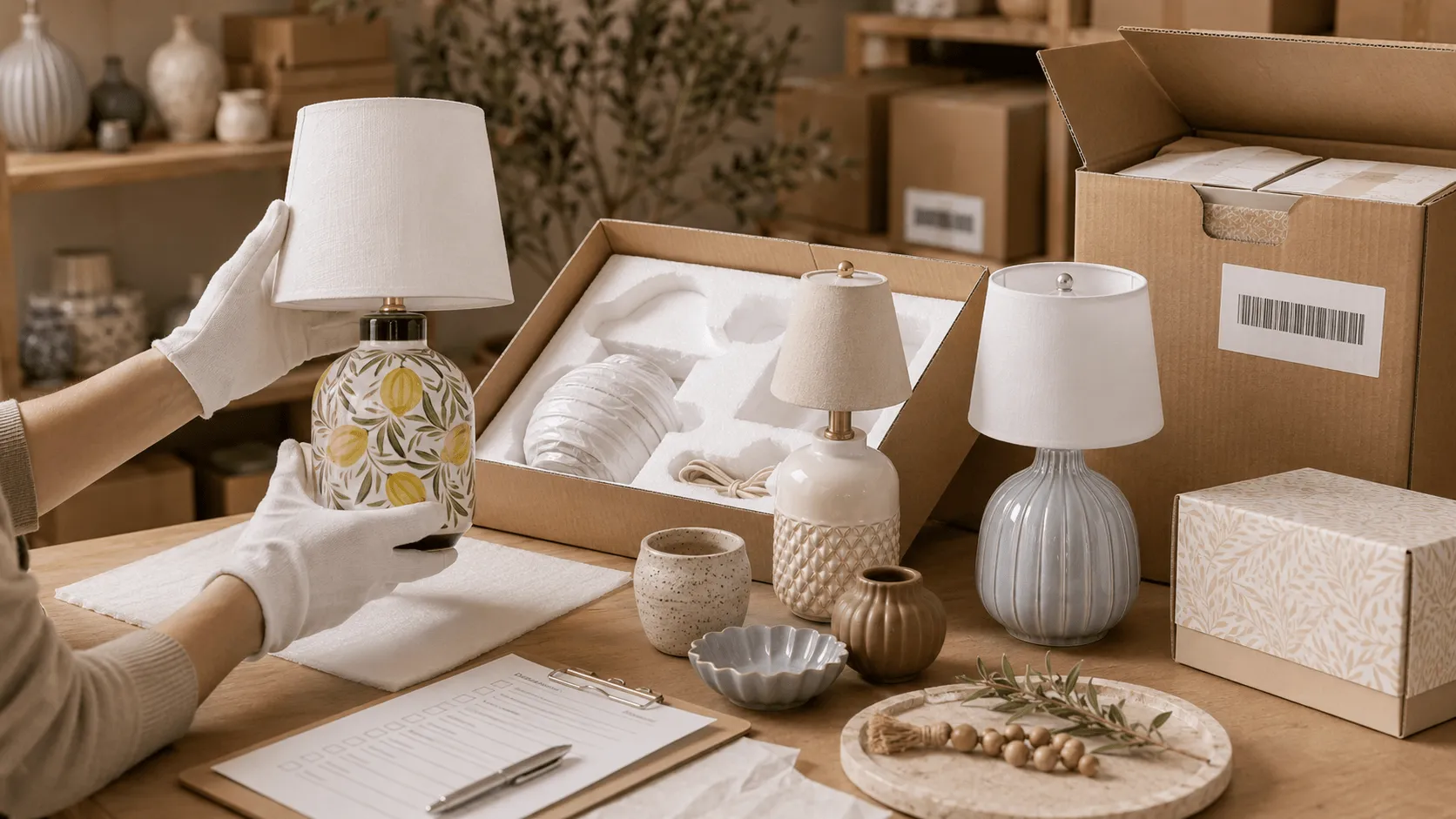
5. They Develop Samples Before Production
Samples let buyers review design details before larger orders.
A sample review should check more than overall appearance. Compare the sample carefully against the approved specification.
Important review points include:
- Overall dimensions
- Shape and proportion
- Color and finish
- Surface texture
- Shade alignment
- Hardware color
- Logo position
- Label information
- Packaging structure
- Electrical details where relevant
Record every approved change in writing to reduce confusion during production.
6. They Support Quality Planning
A good quality plan defines what the supplier and buyer will inspect.
The plan may cover:
- Material and component checks
- Size and proportion checks
- Finish and color review
- Surface defect limits
- Assembly checks
- Stability checks
- Electrical component review
- Packaging checks
- Carton markings
- Pre-shipment inspection requirements
Quality standards should match the product and target market. A ceramic vase requires different checks than a rechargeable lamp.
7. They Prepare Private Label Packaging
Packaging protects the product and presents your brand.
Buyers may request:
- Brand labels
- Hang tags
- Care labels
- Barcode labels
- Product inserts
- Color boxes
- Gift boxes
- Inner protection
- Export cartons
- Carton marks
- Retail-ready packaging
Fragile lighting and ceramic decor need packaging tailored to their shape and weight. Confirm packaging samples or specifications before production.
8. They Help Buyers Plan Production Requirements
Custom changes can affect tooling, sampling, MOQ, cost, and production time.
Separate essential changes from optional ones.
Essential changes typically include:
- Target-market electrical specifications
- Required product size
- Brand color
- Logo and label information
- Packaging required by the sales channel
Optional changes may include:
- New decorative textures
- New body shapes
- Special hardware
- Multiple custom colors
- Additional packaging details
A phased launch reduces risk. Start with a focused group and expand after reviewing sales results.

Product Categories for a Coordinated Private Label Collection
The right category mix depends on your customers and sales channels.
| Product Category | Role in the Collection | Custom Details to Discuss | Key Buyer Questions |
|---|---|---|---|
| Table Lamps | Main decorative lighting item | Body shape, finish, shade, hardware, electrical configuration | Does the lamp fit the target room and furniture scale? |
| Floor Lamps | Adds height and room presence | Overall size, base, pole, shade, switch, wiring | Is the base stable and suitable for the intended space? |
| Rechargeable Battery Lamps | Portable table lighting | Body, battery, charging, dimming, logo, packaging | Which battery and charging details require confirmation? |
| Ceiling Pendants | Supports overhead lighting plans | Shade, size, canopy, cord, socket, electrical details | Does the installation match the target market and project? |
| Vases | Adds decorative color and shape | Size, opening, finish, texture, color | Is the vase decorative or intended to hold water? |
| Pots | Supports plants or decorative displays | Size, finish, drainage, inner surface, packaging | Is the product a planter or a decorative container? |
| Table Top Accessories | Adds lower-priced accents | Shape, set composition, color, finish, gift packaging | Does the item suit retail display and parcel shipping? |
A strong collection typically includes visual anchors and smaller supporting items.
For example, table lamps and pendants can lead the collection, while vases, pots, and table top accessories repeat the same colors and textures.
How Different Buyers Use Custom Lighting and Decor Support
Home Decor Retailers
Retailers need products that work together on shelves, in room displays, and on online category pages.
A suitable supplier should help you review assortment balance and clarify color options, packaging, and quantities per SKU.
Some retailers seek boutique home decor wholesale suppliers for a focused visual identity. In these cases, coordinated finishes matter more than the total number of products.
Interior Designers
Interior designers often need lighting and decor for specific room plans.
A suitable supplier should review scale, finish, installation, and delivery requirements. They should also separate decorative preferences from technical specifications.
When sourcing wholesale modern lighting for interior design projects, provide plans, dimensions, finish references, and target-market information.
Cross-Border Online Sellers
Online sellers need products that photograph well and travel safely.
Review:
- Product dimensions
- Packed dimensions
- Product weight
- Packaging protection
- Image requirements
- Label requirements
- Replacement part concerns
- Target-market compliance
Avoid selecting fragile designs without reviewing parcel delivery risks.
Gift Distributors
Gift channels often need compact products, clear packaging, and strong visual themes.
Table top accessories, small vases, pots, and compact rechargeable lamps may fit these programs. Confirm packaging, labeling, and sales-channel requirements before ordering.
Home Decor Sourcing Teams
Sourcing teams may compare multiple suppliers across categories.
A wholesale home decor catalog helps identify product directions. Also request customization details, MOQ conditions, packaging options, and quality checkpoints.
Buyers building rustic collections may compare modern farmhouse decor wholesale suppliers. Those focused on pottery may request ceramic decorative accessories wholesale catalogs.
How to Evaluate a Private Label Supplier
A product catalog shows what a supplier sells. It does not show how the supplier manages development.
Use this checklist during supplier evaluation.
Product Scope
Confirm whether the supplier covers the categories your collection requires.
A broader product scope simplifies coordination. However, verify the supplier’s experience within each category.
Customization Capability
Ask which changes the supplier can support:
- Size
- Shape
- Material
- Color
- Finish
- Shade
- Hardware
- Electrical configuration
- Logo
- Label
- Packaging
Also ask which changes require new tooling or higher quantities.
Sample Process
Ask how the supplier handles:
- Standard samples
- Custom samples
- Finish samples
- Packaging samples
- Sample approval
- Revision records
- Final approval samples
A clear sample process helps both parties track decisions.
Quality Control
Ask which checks occur during production and before shipment.
For decorative lighting, review both appearance and electrical configuration. For ceramic decor, focus on finish, shape, stability, and packaging.
Communication
The supplier should provide clear answers about confirmed and unconfirmed details.
Be cautious when a supplier confirms unsupported specifications without documentation or samples.
Documentation
Request the documents required by your target market and sales channel.
The exact document list depends on the product. Do not assume one report covers every model or configuration.
Packaging Support
Confirm whether the supplier can support retail, gift, e-commerce, or project packaging.
Packaging should protect the product and match your sales channel.
Common Private Label Mistakes to Avoid
Starting With Too Many SKUs
A large first collection increases sample work, packaging work, and inventory risk. Instead, start with a focused group of coordinated products.
Approving Colors Without Physical References
Screen colors vary between devices. Use finish samples, physical references, or agreed color standards when possible.
Ignoring Product Proportion
A lamp or vase may look suitable in a close-up image but feel too large in a room. Review actual dimensions and room scale.
Treating Packaging as a Final Step
Late packaging decisions affect cost, carton size, and delivery planning. Discuss packaging during product development.
Comparing Only Unit Price
A lower unit price may exclude packaging, labels, testing, inspection, or custom work. Compare the complete specification and service scope.
Mixing Too Many Design Directions
A private label collection loses clarity when every item follows a different style. Define a limited color and material system.
Assuming Compliance Without Confirmation
Electrical and battery-powered products may require market-specific components or documents. Confirm requirements before sample approval and production.
How to Prepare an Effective RFQ
A clear RFQ helps manufacturers review feasibility and provide accurate pricing.
Include the following information:
- Company and sales channel
- Target market
- Product categories
- Reference images or sketches
- Required sizes
- Preferred materials
- Target colors and finishes
- Quantity per SKU
- Logo requirements
- Label requirements
- Packaging requirements
- Electrical requirements
- Battery and charging requirements where relevant
- Required documents
- Target delivery period
- Inspection requirements
Identify which details are fixed and which remain open for supplier suggestions.
Quality and Compliance Notes
Private label lighting requires both visual and technical review.
For table lamps and floor lamps, confirm sockets, cords, switches, plugs, voltage, and available testing documents.
For ceiling pendants, confirm wiring, canopy structure, socket type, installation requirements, and target-market specifications.
Rechargeable battery lamps require additional confirmation. Review battery type, capacity, runtime, charging time, charging components, dimming, transport documents, and available test information.
Decor products require different checks. Review material, size, surface finish, stability, intended use, packaging, and breakage risks.
A certification shown for one product or configuration may not apply to another. Confirm documents for your final model and target market.
Frequently Asked Questions
1. Can one manufacturer supply both lighting and decor?
It depends on the manufacturer’s product scope.
JC Home Decor works with table lamps, floor lamps, rechargeable battery lamps, ceiling pendants, vases, pots, and table top accessories. Confirm availability and customization for each selected model.
2. What is the difference between a wholesale catalog and a private label collection?
A wholesale catalog presents existing products.
A private label collection may add custom colors, finishes, labels, packaging, specifications, or new product development.
3. Can buyers customize every product detail?
Not every detail supports the same level of change.
Confirm technical feasibility, tooling, MOQ, cost, and production requirements for each request.
4. What is the MOQ for private label orders?
No fixed MOQ applies to every project.
MOQ may depend on the product, material, finish, electrical configuration, packaging, and number of custom changes. Provide quantities per SKU for evaluation.
5. Can buyers request samples before production?
Discuss standard and custom sample requirements before confirming production.
Samples help review size, finish, structure, electrical details, branding, and packaging.
6. Can the manufacturer create private label packaging?
JC Home Decor supports packaging customization according to your requirements.
Provide logo files, label text, barcode details, carton specifications, and sales-channel needs.
7. Can interior designers request matching lighting and decor?
Yes, coordinated development can be discussed.
Provide mood boards, room plans, dimensions, finish references, quantities, and target installation details.
8. Can lighting products support different markets?
Discuss US or EU electrical specifications according to your project requirements.
Confirm the final voltage, socket, wiring, plug, installation details, and available documents before ordering.
9. What should buyers check for ceramic accessories?
Review shape, size, surface finish, color, stability, intended use, and packaging.
Confirm whether a vase or pot serves a decorative or functional purpose.
10. How long does private label development take?
Development timing depends on design complexity, sampling, revisions, materials, packaging, quantity, and approval speed.
The available information does not confirm a fixed development or production time.
11. Can buyers combine different categories in one collection?
Yes, coordinated lighting and decor categories can be discussed.
The supplier should confirm production, packaging, quantity, and shipping requirements for each category.
12. What information should buyers send to receive a quotation?
Send product references, sizes, materials, colors, quantities, target market, branding, packaging, and required specifications.
Clear information helps the supplier prepare a more accurate review.
Conclusion
A private label manufacturer should support far more than product sourcing.
The right partner helps you plan an assortment, coordinate materials, review samples, define quality checks, prepare packaging, and confirm market requirements.
Start with a clear brief. Then confirm the products, quantities, custom details, packaging, documents, and approval process.
Explore the relevant lighting and decor categories below. After selecting a direction, contact JC Home Decor with your project requirements.
Internal Link Suggestions
Lighting Categories
Decor Categories
- Wholesale vases for home decor
- Bulk decorative pots
- Table top accessories wholesale
- Wholesale home decor collection
Related Product Pages
- Blue and white patterned table lamp LFY6753
- Hand-thrown style table lamp LHM0001
- Ceramic ceiling pendant P0665
- Compact ceiling pendant P0648
Company and Inquiry Pages
Authoritative External Reference
For European electrical safety reference, buyers can review the European Commission Low Voltage Directive before confirming product requirements:
This reference does not confirm that a specific product or configuration complies with the directive.